

Top 5 ICP-MS Instruments in Canada 2026 — High-Sensitivity Solutions for Industrial and Automotive Labs
Inductively Coupled Plasma Mass Spectrometers (ICP-MS) are the go-to instruments for ultra-trace elemental and isotopic analysis in Canadian industrial and automotive laboratories. For 2026, the category emphasizes high sensitivity, robust matrix tolerance, and throughput needed for materials testing, fuel and contamination screening, failure analysis, and regulatory compliance. Canadian buyers favor systems that deliver parts-per-trillion detection limits, reliable interference removal for complex matrices such as fuels and battery materials, strong vendor support in Canada, and low total cost of ownership. Priorities in the market include proven accuracy for ISO and ASTM methods, fast sample turnaround for production and R&D, automation and data integration for modern lab workflows, and service coverage across major provinces. These trends make ICP-MS a critical tool for automotive supply chain testing, emissions and environmental monitoring, and materials qualification in manufacturing and research.
Inception's AI took the time to understand this market in Canada · · How we pickWe may earn a commission on purchases. It never affects our rankings.
Top Picks Summary
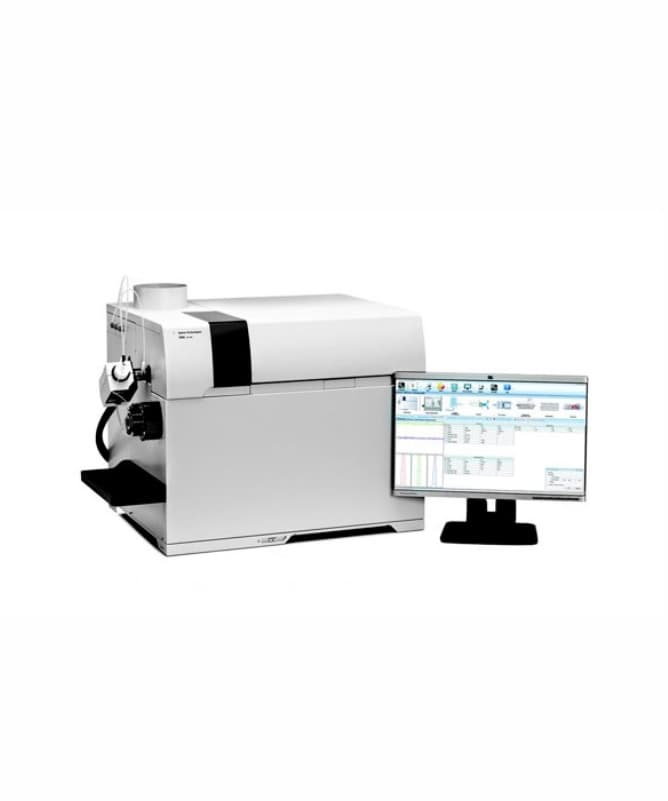
Agilent 7850 ICP-MS
The Agilent 7850 is positioned as a best-in-class single‑quadrupole ICP‑MS for routine trace analysis, valued for its reliable low detection limits, compact design and affordable total cost of ownership compared with high-end triple‑quadrupole systems. It strikes a balance between sensitivity and operational simplicity, making it a cost-effective choice versus the higher-capability Agilent 8900 and PerkinElmer NexION 5000 while offering more advanced performance than many entry-level bench systems such as the Shimadzu ICPMS-2050. For labs that need strong routine performance and lower running costs rather than the absolute interference removal of MS/MS instruments, the 7850 is a pragmatic market-leading option.
Estimated$300,000 – $450,000
Thermo Scientific iCAP RQ ICP-MS
The Thermo Scientific iCAP RQ is designed for high-throughput routine laboratories, offering robust performance, straightforward maintenance and competitive acquisition cost that undercuts many ultra-high-sensitivity platforms. While it may not match the interference-removal capability of triple‑quadrupole systems like the Agilent 8900 or the extreme matrix tolerance claimed by the NexION 5000, the iCAP RQ provides an attractive blend of analytical performance and lower lifecycle cost for regulated routine testing. Its user-friendly workflow and reliable uptime make it a practical leader for labs prioritizing productivity and predictable operating budgets.

Estimated$250,000 – $400,000
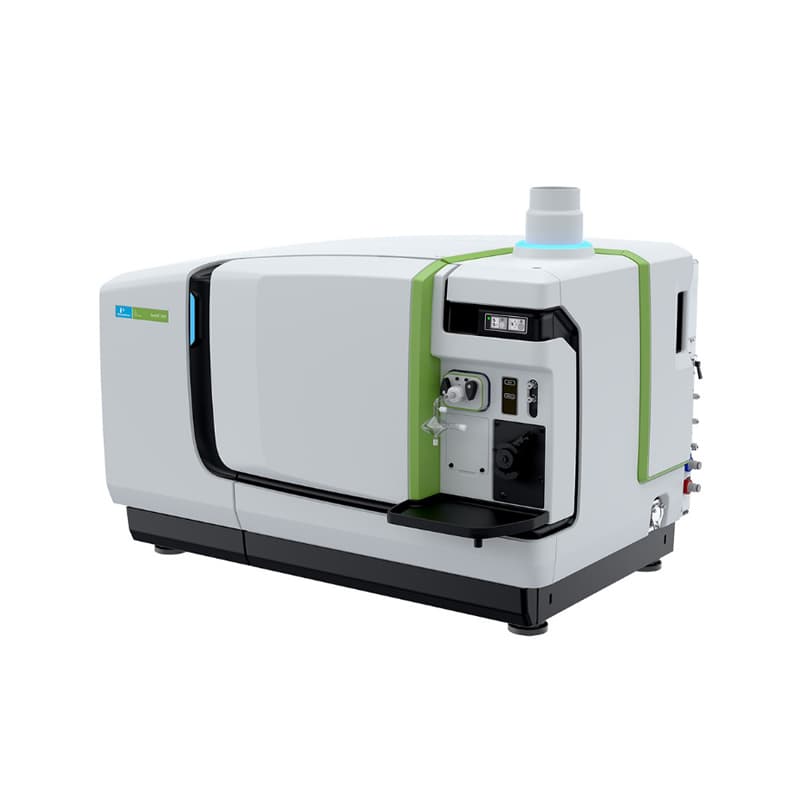
PerkinElmer NexION 5000 ICP-MS
The PerkinElmer NexION 5000 stands out as a market leader for demanding trace‑level work in complex matrices thanks to high sensitivity and advanced cell technology that improves interference removal without necessarily requiring MS/MS. It targets labs that need near‑triple‑quadrupole performance for challenging sample types but prefer the single‑quadrupole architecture for throughput and cost reasons, positioning it between the single‑quadrupole Agilent 7850/Thermo iCAP RQ and the higher‑cost Agilent 8900. Although it typically carries a higher upfront price than simpler systems like the Shimadzu ICPMS-2050, the NexION 5000 can lower per‑sample preparation and reanalysis costs for difficult matrices.
Estimated$400,000 – $700,000
Shimadzu ICPMS-2050
The Shimadzu ICPMS-2050 is a compact, user‑oriented ICP‑MS that delivers reliable routine performance at a more accessible price point, making it attractive for labs with constrained capital budgets or straightforward analytical needs. It offers good sensitivity and uptime for everyday elemental analysis but does not aim to compete with the specialized interference‑removal or ultra‑trace sensitivity of the Agilent 8900 or PerkinElmer NexION 5000. For facilities seeking low lifecycle cost and ease of use rather than top‑end MS/MS capability, the ICPMS-2050 is a sensible market choice.
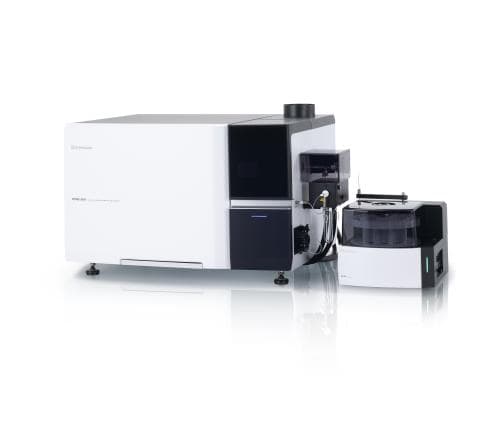
Agilent 8900 Triple Quadrupole ICP-MS
The Agilent 8900 Triple Quadrupole (ICP‑QQQ) is positioned as the market leader for the most challenging inductively coupled plasma mass spectrometry tasks, offering unmatched interference removal and ultimate selectivity through MS/MS that outperforms single‑quadrupole and cell‑based designs. Its superior capability reduces the need for extensive sample cleanup and method development, which can justify the higher capital and operational costs compared with single‑quadrupole instruments such as the 7850, Thermo iCAP RQ and Shimadzu 2050, and in many cases it rivals or exceeds the NexION 5000 for the toughest matrices. Laboratories that require definitive trace quantitation in complex samples typically view the 8900 as a mission‑critical investment despite its premium price.

Why ICP-MS Works: Research-Backed Benefits for Ultra-Trace Analysis
Peer-reviewed research and technical evaluations consistently show that modern ICP-MS instruments deliver the sensitivity, precision, and interference control required for ultra-trace elemental and isotopic work. Studies published in journals such as Analytical Chemistry and the Journal of Analytical Atomic Spectrometry demonstrate how collision/reaction cells and triple-quadrupole designs reduce polyatomic interferences and lower limits of detection, while advances in sample introduction and ion optics improve matrix tolerance and precision. For newcomers, these findings mean ICP-MS can reliably quantify trace metals and isotopes in complex samples — from engine oils and fuels to battery cathode materials — with confidence in both regulatory and investigative contexts.
Detection limits: Modern ICP-MS routinely achieves parts-per-trillion (ppt) detection limits for many elements, enabling identification of ultra-trace contamination.
Interference control: Collision/reaction cells and triple-quadrupole configurations reduce polyatomic interferences, improving accuracy in complex matrices such as fuels and alloys.
Isotopic precision: High-resolution mass filtering and optimized ion optics deliver reproducible isotopic ratios for forensic and materials studies.
Matrix tolerance and throughput: Improvements in sample introduction and robust plasma performance allow higher matrix loads and faster sample throughput without sacrificing data quality.
Application evidence: Multiple studies report successful ICP-MS use for battery metal quantification (Li, Ni, Co), fuel contamination screening (metals and sulfur species), and failure analysis of automotive components.
Frequently Asked Questions
Which ICP-MS is best for routine trace analysis?
Agilent 7850 ICP-MS fits routine trace analysis because it’s a single‑quadrupole ICP‑MS with reliable low detection limits and integrated collision/reaction cell to reduce polyatomic interferences; it’s rated 4.6.
What interference control feature does the Agilent 7850 include?
Agilent 7850 ICP-MS includes an integrated collision/reaction cell that reduces polyatomic interferences for more accurate results; it has an average rating of 4.6.
How does the Thermo iCAP RQ compare on price and lab value?
Thermo Scientific iCAP RQ ICP-MS is designed with competitive acquisition cost that undercuts many ultra-high-sensitivity platforms while keeping optimized sensitivity and stability for reliable low-level trace analysis; rating is 4.5.
Who should choose the PerkinElmer NexION 5000 ICP-MS?
PerkinElmer NexION 5000 ICP-MS is for demanding trace-level work in complex matrices, using multi-mode cell and plasma technologies to improve interference removal; it’s rated 4.4.
Conclusion
In the Canadian context, the 2026 top five ICP-MS choices deliver the sensitivity, robustness, and vendor support labs need for industrial and automotive testing. The Agilent 7850 ICP-MS and Thermo Scientific iCAP RQ ICP-MS both offer dependable performance and strong workflows, while the PerkinElmer NexION 5000 ICP-MS and Shimadzu ICPMS-2050 bring advanced matrix tolerance and practical lab features. The Agilent 8900 Triple Quadrupole ICP-MS stands out as the best choice on this list for the most demanding interference removal and lowest detection limits. We hope you found the instrument profile that fits your lab needs; refine or expand your search using the site search to compare specifications, service options, and pricing across Canada.