

Top 5 Laser Ablation Sampling Systems in Canada for 2026
Laser ablation sampling systems for spatially resolved sampling are becoming essential tools in Canadian laboratories that couple to ICP-MS or ICP-OES for microanalysis of inclusions, coatings, welds, and other small features with minimal sample preparation. These systems deliver targeted material characterization with high spatial resolution and low contamination risk, making them attractive across sectors from automotive labs performing failure analysis and materials qualification to forensic teams needing trace-level evidence. Canadian purchasers increasingly prioritize sensitivity, spot size flexibility, repeatability, straightforward coupling to ICP instruments, reliable local service and support, and software that streamlines routine workflows. As industry demand grows through 2026, labs value systems that balance precision, throughput, and ease of integration into regulated and industrial environments.
Inception's AI took the time to understand this market in Canada · · How we pickWe may earn a commission on purchases. It never affects our rankings.
Top Picks Summary
Teledyne CETAC LSX-266
The LSX-266 is positioned as a workhorse laser ablation sampling system offering a robust, high-throughput 266 nm UV source and proven sample-stage automation that lowers per-sample operational cost for routine LA-ICP-MS workflows. Compared with the finer spatial resolution and lower fractionation of excimer- or femtosecond-based systems on this list, the LSX-266 trades some ultimate analytical precision for superior uptime, user-friendly integration and a more attractive capital outlay for high-volume labs.

Estimated$60,000 – $120,000
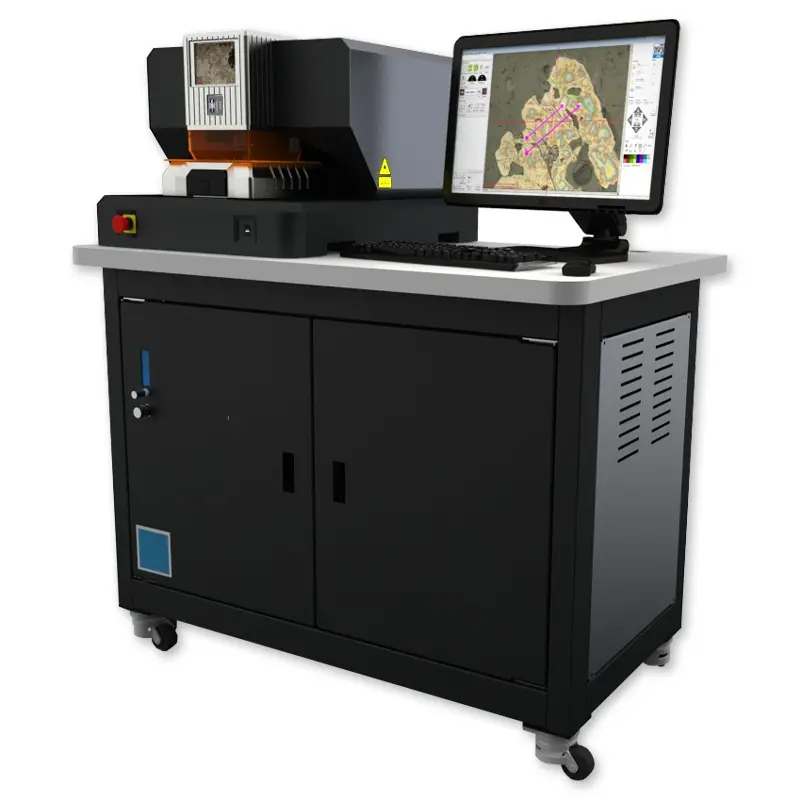
Elemental Scientific Lasers NWR 193
The NWR 193 is a 193 nm excimer-based ablation system renowned for producing smaller particles and reduced elemental fractionation, giving it a technical edge for trace-element and isotopic work where accuracy and precision are critical. Although it typically carries a higher purchase and consumables cost than longer-wavelength or nanosecond systems (such as the LSX-266), its improved analytical performance often reduces downstream reanalysis and yields better data quality for demanding geochemical and materials applications.
Estimated$180,000 – $320,000
Applied Spectra J200 Tandem LA-LIBS
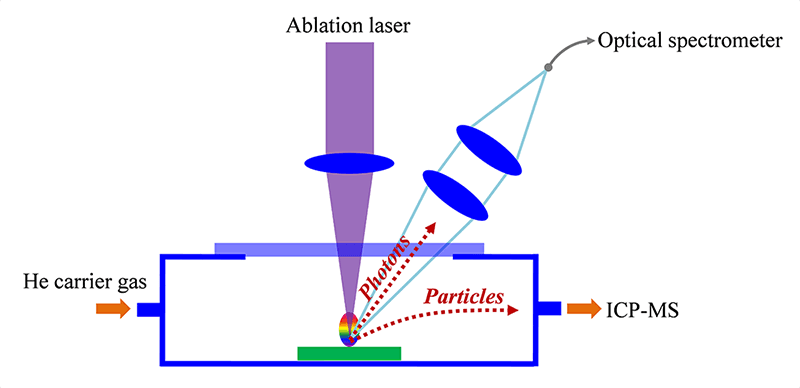
The J200 Tandem LA-LIBS uniquely integrates laser ablation with simultaneous LIBS detection, delivering both aerosol sampling for ICP instruments and real-time optical emission data in a single workflow to accelerate decision-making and broaden elemental coverage. Financially and operationally, the tandem approach can reduce total instrument purchases and sample throughput time compared with operating separate LA and LIBS systems, making it attractive for labs that need both rapid screening and quantitative trace analysis.
Analyte Excite+ Excimer Laser Ablation System
The Excite+ excimer laser ablation system focuses on high-resolution, low-thermal-damage sampling suited to micro-analysis and delicate materials, with modular optics and maintenance features designed to lower lifetime operating costs versus some legacy excimer platforms. Compared with the other systems here, Excite+ markets a balance of upgradeability and operating economy that appeals to research facilities that need excimer performance without committing to the highest-cost custom installations.

Estimated$170,000 – $340,000
Teledyne Photon Machines Analyte G2
The Analyte G2 is a next-generation platform emphasizing ultrafast/high-repetition capability (minimizing thermal effects and elemental fractionation) and tight spot-size control, making it the technical leader for applications demanding the best spatial resolution and lowest matrix bias. While its capital cost is at the top of this list, the G2 often reduces analytical uncertainty and rework compared with longer-pulse or excimer systems, delivering measurable value in high-end geochronology, semiconductor, and nanomaterials labs.

Estimated$120,000 – $280,000
Research and Evidence Supporting Laser Ablation Sampling
A broad base of peer reviewed studies and industry validations supports the benefits of laser ablation sampling coupled to ICP-MS or ICP-OES. Research consistently shows that laser ablation enables high spatial resolution elemental and isotopic analysis with reduced sample preparation, lowering contamination and preserving sample integrity. Studies comparing laser wavelengths and pulse regimes report that shorter wavelengths and femtosecond pulses can reduce elemental fractionation and improve ablation reproducibility, while tandem approaches that combine LA with complementary optical emission techniques expand detection capabilities. For applied fields such as automotive materials analysis and forensic science, published case studies demonstrate reliable detection of trace inclusions, coating compositions, and weld microchemistry, reinforcing the technique's real-world utility.
Improved spatial resolution and minimal sample prep enable analysis of small features like inclusions and micro-welds without destructive bulk dissolution.
Shorter laser wavelengths (for example 193 nm excimer) and ultrafast pulses reduce elemental fractionation and improve quantitative accuracy in many matrices.
Coupling laser ablation to ICP-MS provides low detection limits for trace elements and isotopes, while coupling to ICP-OES is effective for higher concentration workflows.
Tandem LA-LIBS configurations add simultaneous optical emission data, aiding rapid screening and element confirmation in a single run.
Application-driven studies in automotive and forensic labs show reliable discrimination of coatings, characterization of weld zones, and identification of trace particulates.
Frequently Asked Questions
Which laser ablation system should I choose for routine LA-ICP-MS?
Choose Teledyne CETAC LSX-266 for routine LA-ICP-MS because it’s a compact benchtop system optimized for seamless ICP-MS coupling and high-throughput autosampler compatibility; it has an average rating of 4.6.
What feature does Elemental Scientific NWR 193 add for accuracy?
Elemental Scientific Lasers NWR 193 uses a 193 nm excimer laser engineered for low fractionation and fine spatial resolution, with “high pulse-to-pulse stability and reproducible energy” for quantitative LA-ICP-MS; rating is 4.5.
How does Teledyne CETAC LSX-266 pricing compare for high throughput?
The provided data doesn’t list a price for Teledyne CETAC LSX-266, but it highlights “workhorse” high-throughput operation with autosampler compatibility for routine multi-sample workflows; rating is 4.6.
Is Applied Spectra J200 Tandem LA-LIBS good for simultaneous analysis?
Yes—Applied Spectra J200 Tandem LA-LIBS integrates laser ablation with simultaneous LIBS detection, delivering aerosol sampling for ICP instruments and real-time optical emission data in one workflow; rating is 4.4.
Conclusion
In Canada, laser ablation sampling systems are a strong fit for labs that need microanalytical capability with minimal sample preparation. The top options profiled here — Teledyne CETAC LSX-266, Elemental Scientific Lasers NWR 193, Applied Spectra J200 Tandem LA-LIBS, Analyte Excite+ Excimer Laser Ablation System, and Teledyne Photon Machines Analyte G2 — cover a range of wavelengths, pulse regimes, and integration features to match diverse workflows. For many Canadian labs seeking the best mix of performance, flexibility, and support, the Teledyne Photon Machines Analyte G2 stands out as the best overall choice on this list due to its high repetition rates, advanced optics, and strong integration options. We hope you found the information you were looking for; you can refine or expand your search using the site search to compare specifications, quotes, and local service options.