

Top 5 X Ray Fluorescence Spectrometers in Canada for 2026
X-ray fluorescence (XRF) spectrometers are non-destructive analyzers, available as both benchtop and portable systems, that give rapid elemental analysis and coating thickness measurements for metals, paints, and plastics. In Canada these instruments are widely adopted across mining, metal fabrication, automotive supply chains, recycling and e-waste processing, and environmental and quality control laboratories. Buyers in Canada typically prioritize accuracy, speed, ruggedness for cold-weather and field use, long battery life for portable units, straightforward software and reporting for regulatory compliance, and reliable local service and calibration support. The ability to perform on-site alloy verification, RoHS/WEEE screening and material sorting without sample destruction has driven strong demand from manufacturers and recyclers focused on traceability and circular-economy goals.
Inception's AI took the time to understand this market in Canada · · How we pickWe may earn a commission on purchases. It never affects our rankings.
Top Picks Summary
Thermo Scientific Niton XL5 Plus
The Thermo Scientific Niton XL5 Plus earns a best-in-class spot for handheld XRF by balancing fast, on-site elemental analysis with an intuitive user interface and a broad ecosystem of calibrations, making it cost-effective for field teams. Compared with Bruker and SPECTRO models that emphasize lab-grade precision, the XL5 Plus leans into portability and workflow integration, offering financial advantages for organizations that need multiple units and rapid operator training.

We may earn a commission on purchases. It never affects our rankings.
$67,720.00CAD
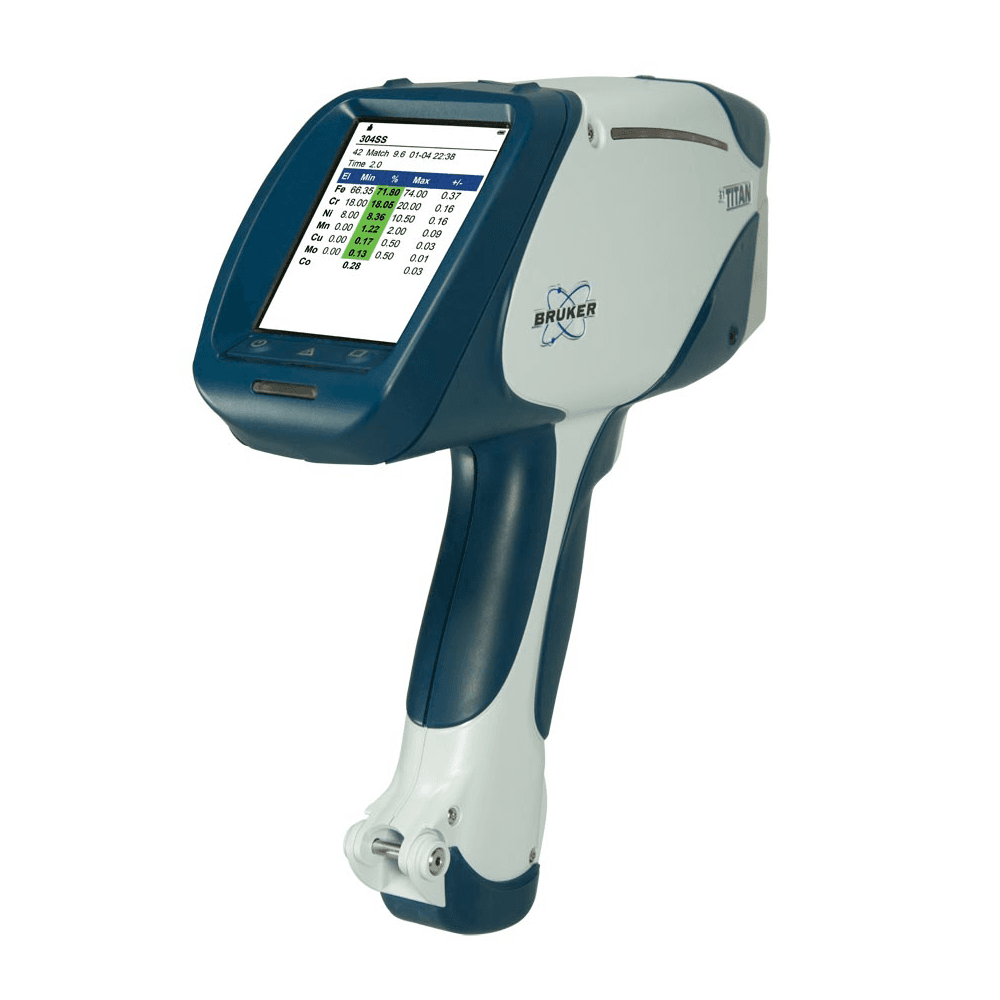
Bruker S1 TITAN
The Bruker S1 TITAN is positioned as a market leader for precision and analytical depth among handheld XRF instruments, delivering high-resolution performance and extensive application libraries that reproduce lab-like results in the field. It typically commands a higher upfront price than some competitors, but its stronger detection limits and advanced software justify the investment for users prioritizing measurement accuracy and regulatory compliance.
Estimated$30,000 – $50,000
Olympus Vanta Element
The Olympus Vanta Element is recognized for its rugged design and efficient workflow that delivers reliable alloy identification and coating measurements at a competitive price point. Compared with Bruker and SPECTRO’s focus on top-tier accuracy, Vanta emphasizes durable hardware and simplified calibrations that reduce total cost of ownership for industrial users.
Estimated$28,000 – $45,000
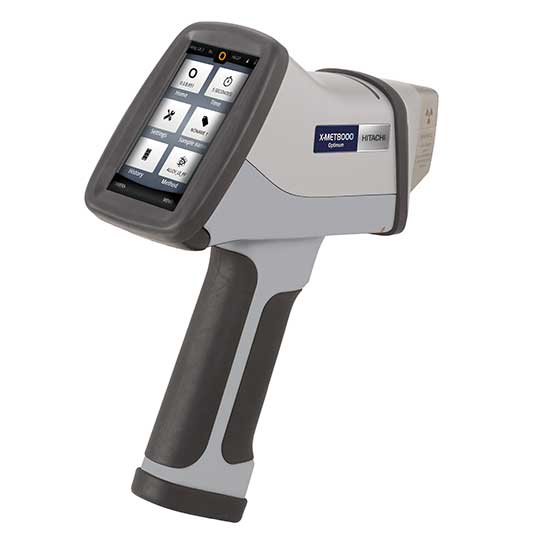
Hitachi X-MET8000
The Hitachi X-MET8000 stands out as a value-driven XRF spectrometer offering fast screening speeds and low operating costs for routine field analysis. It competes well with the Thermo and Olympus models by delivering solid performance for common industrial applications while often being more budget-friendly for entry-level fleets.
Estimated$24,000 – $40,000
SPECTRO xSORT
The SPECTRO xSORT brings high-throughput alloy sorting and advanced software analytics to the portable XRF market, combining rapid measurement cycles with robust data management that appeals to production and scrap-sorting operations. Compared to Bruker’s lab-like precision, SPECTRO emphasizes throughput and streamlined reporting, providing financial benefits where speed and integrated material tracking reduce processing bottlenecks.

Estimated$22,000 – $38,000
Research and validation behind XRF benefits
XRF technology is well established in peer-reviewed literature and industry standards as an effective, rapid screening method for many elements. Studies and inter-laboratory comparisons routinely show good agreement between XRF and laboratory techniques such as ICP-OES and ICP-MS for mid- and high-atomic-number elements when proper calibration and reference materials are used. Regulators and industry guidelines support XRF for alloy identification, RoHS screening and coating thickness measurement as a first-line or in-field method, while noting laboratory follow-up when trace-level quantitation or low-Z element analysis is required.
Validation: Comparative studies using certified reference materials from organizations such as NIST demonstrate strong correlation between XRF and wet-chemistry results for many metals and alloys when instruments are calibrated and matrix effects are managed.
Speed and throughput: Published evaluations show that XRF delivers actionable results in seconds to minutes, reducing laboratory backlog and enabling immediate on-site decisions for sorting and compliance.
Coating thickness: Research and technical reports highlight XRF’s accuracy for non-destructive coating thickness measurement on metals and layered samples when proper calibration standards are used.
Limitations: Scientific literature notes reduced sensitivity for light elements (for example, sodium, magnesium, and aluminum at shallow depths) and potential matrix and surface effects that require attention during sample prep and calibration.
Standards and best practice: Industry and regulatory frameworks recommend using certified reference materials, routine calibration checks, and trained operators to ensure reliable XRF results.
Frequently Asked Questions
Which handheld XRF spectrometer should I buy for fieldwork?
For on-site elemental analysis in rugged conditions, choose the Thermo Scientific Niton XL5 Plus, which combines a large-area SDD with enhanced sensitivity for light elements down to magnesium and an intuitive user interface, with average rating 4.5.
What exact light-element detection range does Niton XL5 Plus offer?
The Thermo Scientific Niton XL5 Plus uses a large-area silicon drift detector (SDD) with enhanced sensitivity for light elements down to magnesium (Mg), with average rating 4.5.
How does Bruker S1 TITAN pricing compare value-wise?
The Bruker S1 TITAN typically costs more upfront than many handheld alternatives, but it offers high-resolution performance, high count rates, and ppm-level quantification, with average rating 4.6 (no exact price listed).
Does Olympus Vanta Element support vacuum or helium purging?
Yes—Olympus Vanta Element offers vacuum or helium purge options to improve performance on low-Z elements like Mg, Al, and Si, and it’s rated 4.4 (no warranty duration provided).
Conclusion
In Canada the X-ray fluorescence category delivers fast, non-destructive elemental analysis and coating thickness testing for a wide range of industrial applications. The five main options featured here are the Thermo Scientific Niton XL5 Plus, Bruker S1 TITAN, Olympus Vanta Element, Hitachi X-MET8000, and SPECTRO xSORT. Each model serves distinct priorities: the Niton XL5 Plus stands out as the best overall choice for many Canadian buyers thanks to its balance of sensitivity, user-friendly software, and broad service support across Canada. If you need a different balance of portability, throughput or specialized features, the Bruker S1 TITAN, Olympus Vanta Element, Hitachi X-MET8000 and SPECTRO xSORT are excellent alternatives. We hope you found what you were looking for; use the search to refine by features, applications or price if you want to narrow or expand your options further.