

Top 5 Supercritical Fluid Chromatography Systems in Canada 2026: Green, Fast Solutions for Industrial and Automotive Labs
Supercritical fluid chromatography (SFC) systems for industrial and automotive labs deliver greener, high-speed separations tailored to challenges such as chiral resolution, polymer additive profiling, and nonpolar compound analysis. In Canada, where laboratories prioritize lower solvent use, faster turnaround, and alignment with sustainability and carbon management goals, SFC's use of CO2-based mobile phases reduces organic solvent consumption and disposal costs while enabling rapid method development and robust scale-up from R&D to production quality control. Industrial and automotive users prefer systems with proven reliability, strong local service and validation support, automation options for high throughput, compatibility with mass spectrometry and prep-scale hardware, and vendor method libraries that accelerate method transfer and compliance in regulated workflows.
Inception's AI took the time to understand this market in Canada · · How we pickWe may earn a commission on purchases. It never affects our rankings.
Top Picks Summary
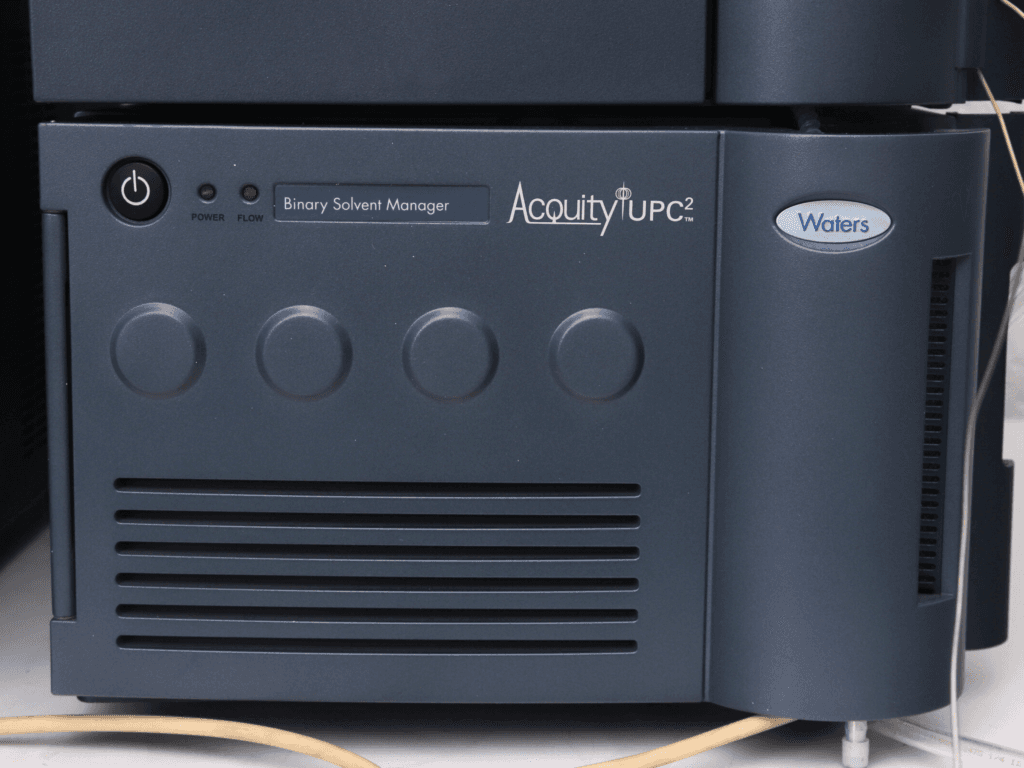
Waters ACQUITY UPC2 System
The Waters ACQUITY UPC2 is widely regarded as best-in-class for analytical SFC in industrial and automotive labs thanks to its proven robustness, broad method libraries and deep integration with Waters detectors and data systems. Compared with the Agilent, Shimadzu and JASCO offerings it delivers the most mature consumables ecosystem and field support, which lowers long-term cost-per-sample in high-throughput QC environments; note that Waters' own Prep 100 addresses scale-up where UPC2 focuses on analytical performance.
Estimated$200,000 – $300,000
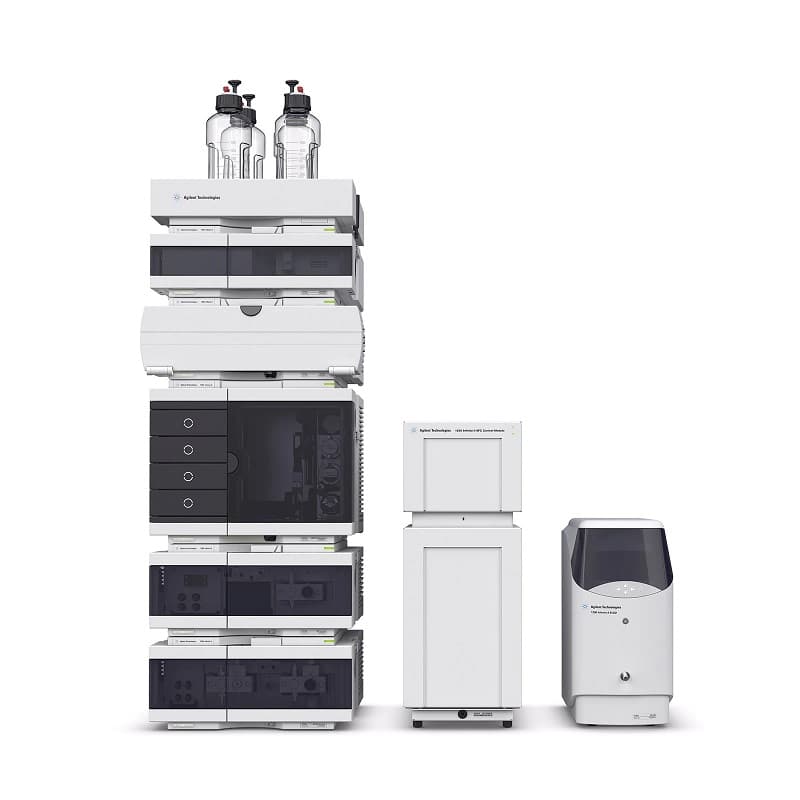
Agilent 1260 Infinity II SFC System
Agilent's 1260 Infinity II SFC combines modularity and backward compatibility with 1260 LC modules, making it a financially attractive upgrade path for industrial and automotive labs that want to leverage existing investments. Technically it competes on detector flexibility and software integration, offering lower retrofit and integration costs than adopting a different ecosystem and a balanced performance-to-capital profile compared with Shimadzu's high-throughput Nexera UC.
Estimated$180,000 – $260,000
Shimadzu Nexera UC System
The Shimadzu Nexera UC emphasizes high-pressure reliability and ultra-fast separations tailored to demanding industrial workflows, giving it an edge where cycle time and method robustness directly impact throughput and operating costs. Versus the Waters UPC2 and Agilent 1260 it often provides higher analytical throughput per footprint, while differing from Waters Prep 100 by focusing on analytical speed and repeatability instead of preparative scale.

Waters Prep 100 SFC System
The Waters Prep 100 is the market leader for preparative SFC in industrial and automotive labs, engineered for efficient scale-up, solvent savings and reliable fraction collection to minimize per-batch purification costs. It complements analytical platforms like the ACQUITY UPC2 by providing a seamless scale-up path and typically delivers lower overall process costs for purification-heavy workflows than analytical-focused systems such as the JASCO SFC-4000.
Estimated$250,000 – $450,000
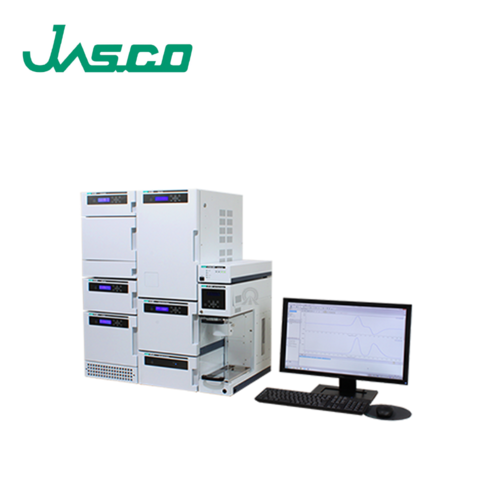
JASCO SFC-4000 Series
JASCO's SFC-4000 Series is a practical market leader for cost-conscious industrial labs requiring dependable routine SFC performance, offering a competitive purchase price and straightforward maintenance that reduce total cost of ownership. While it may not match the throughput optimizations of Shimadzu or the expansive ecosystem of Waters, it provides strong technical value for QC and automotive applications where capital budgets and uptime predictability are primary concerns.
Estimated$120,000 – $200,000
Research-backed benefits of SFC
Peer-reviewed literature and industry reviews describe how CO2-based SFC methods combine the separation power of chromatography with lower solvent volumes and faster run times. The technology is particularly effective for chiral separations, nonpolar analytes, and applications that require straightforward scale-up from analytical to preparative work. For new users, the technical advantages translate into cost savings, reduced environmental footprint, and practical throughput improvements when deployed with modern instrumentation and workflows.
Lower solvent use: published studies and industry reports highlight substantial reductions in organic solvent consumption when CO2-rich mobile phases replace high-volume organic LC solvents, reducing disposal costs and laboratory solvent footprint.
Faster separations and higher throughput: SFC methods often achieve shorter run times for nonpolar and chiral analytes, helping QC and production labs increase daily sample capacity.
Enhanced chiral performance: SFC with dedicated chiral stationary phases provides robust enantiomer resolution for pharmaceuticals and chiral additives used in automotive formulations.
Scalability: methods developed on analytical SFC platforms can be transferred to prep-scale systems for isolation and production, supporting seamless scale-up from R&D to manufacturing support.
Compatibility with detectors: modern SFC systems integrate with UV, PDA, and MS detection to provide sensitive, selective results required for industrial and automotive testing and regulatory reporting.
Frequently Asked Questions
Which SFC system should automotive labs choose and why?
Choose the Waters ACQUITY UPC2 System for industrial and automotive labs needing robust analytical SFC with broad method libraries and deep integration with Waters detectors and data systems; it has an average rating of 4.6.
What exact capability does Waters ACQUITY UPC2 offer in SFC?
The Waters ACQUITY UPC2 is a CO2-based UPC2 platform optimized for fast, high-resolution separations of nonpolar and chiral compounds, with an average rating of 4.6.
How does the Agilent 1260 Infinity II SFC System price compare here?
The provided data lists no price for the Agilent 1260 Infinity II SFC System, so a price-to-value comparison isn’t possible; its average rating is 4.5, with modular 1260 Infinity II architecture for flexible SFC configurations.
Is the Shimadzu Nexera UC good for method transfer?
Shimadzu Nexera UC System unifies SFC and UHPLC capabilities to simplify method transfer between techniques in development labs; it also has an average rating of 4.4.
Conclusion
In the Canadian context, SFC systems offer a compelling combination of greener operation, faster results, and practical scalability for industrial and automotive labs. The leading options to consider are the Waters ACQUITY UPC2 System, Agilent 1260 Infinity II SFC System, Shimadzu Nexera UC System, Waters Prep 100 SFC System, and JASCO SFC-4000 Series. For most industrial and automotive laboratories seeking a broadly adopted, well-supported analytical platform with strong method libraries and proven track record, the Waters ACQUITY UPC2 System is the best overall choice among these models, while the Waters Prep 100 is ideal when preparative scale-up is the priority. We hope you found what you were looking for; you can refine or expand your search using the site search or contact local Canadian vendors and technical reps for demos and validation data.