

Top 5 Strong Anion Exchange (SAX) Columns in Canada for 2026
Published on Saturday, January 24, 2026
Strong anion exchange (SAX) columns feature quaternary ammonium groups to retain negatively charged species across a broad pH range. Ideal for nucleic acids, acidic proteins, and small anions, they offer high capacity and robustness for analytical and preparative workflows. In the Canadian market, buyers favor SAX columns that combine predictable selectivity, high dynamic binding capacity, and long column life with local availability, technical support, and compatibility with common HPLC and FPLC systems. Cost of ownership, lot-to-lot reproducibility, and ease of method transfer are also major purchase drivers for research labs, bioprocess groups, and regulatory-facing clinical and industrial users. As demand grows for nucleic acid purification, carbohydrate analysis, and trace anion profiling, Canadian labs increasingly seek versatile SAX options that deliver reliable separations at both analytical and preparative scales.
Top Picks Summary
Cytiva HiTrap Q HP Column
HiTrap Q HP is a prepacked, high-performance quaternary ammonium strong anion-exchange column optimized for protein and peptide separations, prized for its reproducible binding capacity and plug-and-play convenience in method development. Compared with the other columns in this list it delivers low per-run overhead and rapid scale-up pathways to preparative formats, making it a cost-effective choice for labs that prioritize throughput and predictable performance during process transfer.

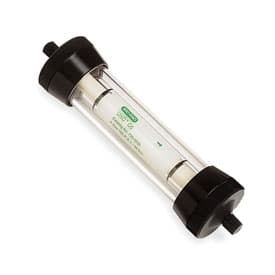
Bio-Rad UNO Q Column
UNO Q uses a robust, high-capacity matrix and flow-optimized design to provide rapid separations and strong chemical stability under demanding conditions common in biologics work. Against the other offerings here it stands out for operational resilience and medium-scale cost efficiency, making it attractive where column lifetime and resistance to harsh clean-in-place cycles matter more than the ultra-high-resolution seen in some analytical-focused SAX columns.
Research and evidence behind SAX column performance
SAX columns work by presenting strong, permanent positive charges (quaternary ammonium ligands) on a stable solid support. Negatively charged analytes are retained by ionic interactions that can be tuned with pH and salt gradients. The practical benefits documented in the literature include broad pH stability, high capacity for anionic biomolecules, and robust performance across analytical and preparative formats. Below are concise, beginner-friendly research-backed points that explain why SAX chemistry is effective and widely used.
Mechanism: Peer-reviewed studies describe how quaternary ammonium groups bind anions through electrostatic attraction, enabling predictable retention as ionic strength or pH changes.
Capacity and selectivity: Method development papers show that modern SAX resins can achieve high dynamic binding capacity for nucleic acids and acidic proteins while maintaining sharp peak shapes for analytical separations.
pH and salt control: Experimental comparisons indicate that careful control of pH and step or gradient salt elution optimizes resolution and recovery for both small anions and large biomolecules.
Particle and pore structure: Research demonstrates that particle size and pore architecture influence mass transfer and preparative throughput, with sub-10 micron media favored for high-resolution analytics and larger-particle, high-capacity supports used for preparative runs.
Application-specific evidence: Comparative evaluations and application notes highlight CarboPac-type columns for carbohydrate and oligosaccharide analysis, while Q-type columns are repeatedly validated for protein and nucleic acid purification.
Reproducibility and validation: Analytical chemistry literature and regulatory guidance emphasize method validation and lot consistency, which are key factors for users performing clinical, bioprocess, or regulated research in Canada.
Frequently Asked Questions
Which SAX column should I pick for protein separation method development?
Choose the Cytiva HiTrap Q HP Column: it’s a prepacked HiTrap format with a quaternary ammonium strong anion-exchange ligand for proteins and peptides, plus reproducible lot-to-lot performance for plug-and-play method development; rating 4.6.
Does the Thermo CarboPac PA200 handle glycans under high-pH?
Yes—the Thermo Scientific CarboPac PA200 Column is tuned for carbohydrate and oligosaccharide separations, with high-resolution performance compatible with high-pH eluents and pulsed amperometric detection; rating 4.7.
How does Bio-Rad UNO Q compare on price and value?
No price information is provided for the Bio-Rad UNO Q Column, so I can’t compare value by cost; what’s documented is its robust, high-capacity matrix with flow-optimized design for rapid separations and good chemical stability; rating 4.4.
Is Bio-Rad UNO Q better for cleaning and repeated use?
Bio-Rad UNO Q is designed with good chemical compatibility for cleaning and regeneration to support repeated use, and it uses a flow-optimized monolithic/resin format for low backpressure; rating 4.4.
Conclusion
In summary, strong anion exchange columns are a versatile choice for Canadian researchers and process groups working with nucleic acids, acidic proteins, and small anions. The five top picks on this page are the Cytiva HiTrap Q HP Column, Bio-Rad UNO Q Column, Thermo Scientific CarboPac PA200 Column, Tosoh TSKgel Q-STAT Column, and Agilent Bio SAX Column. For most labs seeking a balance of high capacity, reproducibility, and broad application support, the Cytiva HiTrap Q HP Column stands out as the best choice among these options. We hope you found what you were looking for — you can refine or expand your search using the search function to compare sizes, formats, and supplier support across Canada.