

Top 5 Ion Exchange Plates in Canada for 2026
Published on Saturday, January 24, 2026
Ion exchange plates are specialized 96-well sample preparation devices designed for targeted extraction of charged analytes, with formats optimized for both anion and cation exchange. In Canada these plates are widely used in industrial and automotive labs for reliable cleanup of complex matrices such as engine oils, coolants, process waters, and manufacturing streams. Engineered for robust buffer handling and consistent performance under harsh sample conditions, ion exchange plates appeal to Canadian buyers because they offer high throughput, reproducible recoveries, compatibility with automated liquid handlers, compliance-friendly documentation, and local distributor support. Buyers prioritize selectivity, solvent and pH stability, turnaround time, and total cost of ownership when choosing plates for regulatory testing, quality control, and failure analysis.
Top Picks Summary
Waters Oasis MAX 96-Well Plate
The Oasis MAX 96-well plate is positioned as a best-in-class mixed-mode anion exchange plate, delivering high recoveries for acidic analytes and excellent matrix tolerance across a wide pH range. It is favored where broad applicability and reliable cleanup are critical, trading a modestly higher price for consistent performance compared with polymeric SAX plates like Phenomenex Strata-X-A and lower-cost alternatives. Against its sister MCX product it is the go-to for anionic chemistries, offering complementary capabilities for labs that need both anion and cation workflows.
Waters Oasis MCX 96-Well Plate
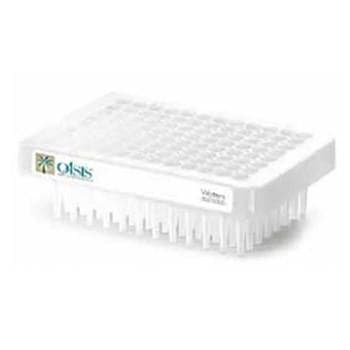
The Oasis MCX 96-well plate is a market-leading mixed-mode cation exchange format optimized for basic compounds, known for strong retention and reproducible cleanup in complex matrices. It stands out for its balance of selectivity and robustness compared with anion-focused plates in this list, often reducing downstream LC-MS maintenance costs versus less selective SAX chemistries. Laboratories that run high-throughput analyses of basic analytes often choose MCX for its consistent recoveries and ease of method transfer versus competing cation technologies.
Phenomenex Strata-X-A 96-Well Plate
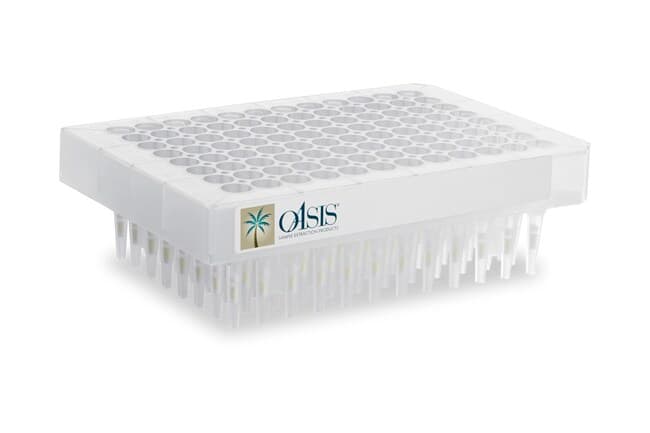
The Strata-X-A 96-well plate is a polymeric strong anion exchange product that delivers high capacity and cost-effective performance for acidic analytes, making it an attractive value alternative to premium mixed-mode plates. Technically it offers competitive retention and throughput versus Waters MAX, though with somewhat less emphasis on extreme matrix tolerance — a trade-off that can lower per-sample costs for routine assays. For labs prioritizing budget and strong anion capacity, Strata-X-A is a sensible middle ground between premium and basic SAX options.

Agilent Bond Elut SAX 96-Well Plate
Agilent Bond Elut SAX 96-well plates are silica-based strong anion exchangers prized for their tight lot-to-lot reproducibility and well-characterized chromatographic behavior, making them a favorite in regulated QC and method-validation settings. They typically command a premium price but offer high selectivity and predictable pH-dependent performance compared with polymeric SAX alternatives, which can reduce validation overhead. When method robustness and documentation are paramount, Bond Elut SAX often outperforms lower-cost plates in long-term operational cost-effectiveness.

Biotage ISOLUTE SAX 96-Well Plate
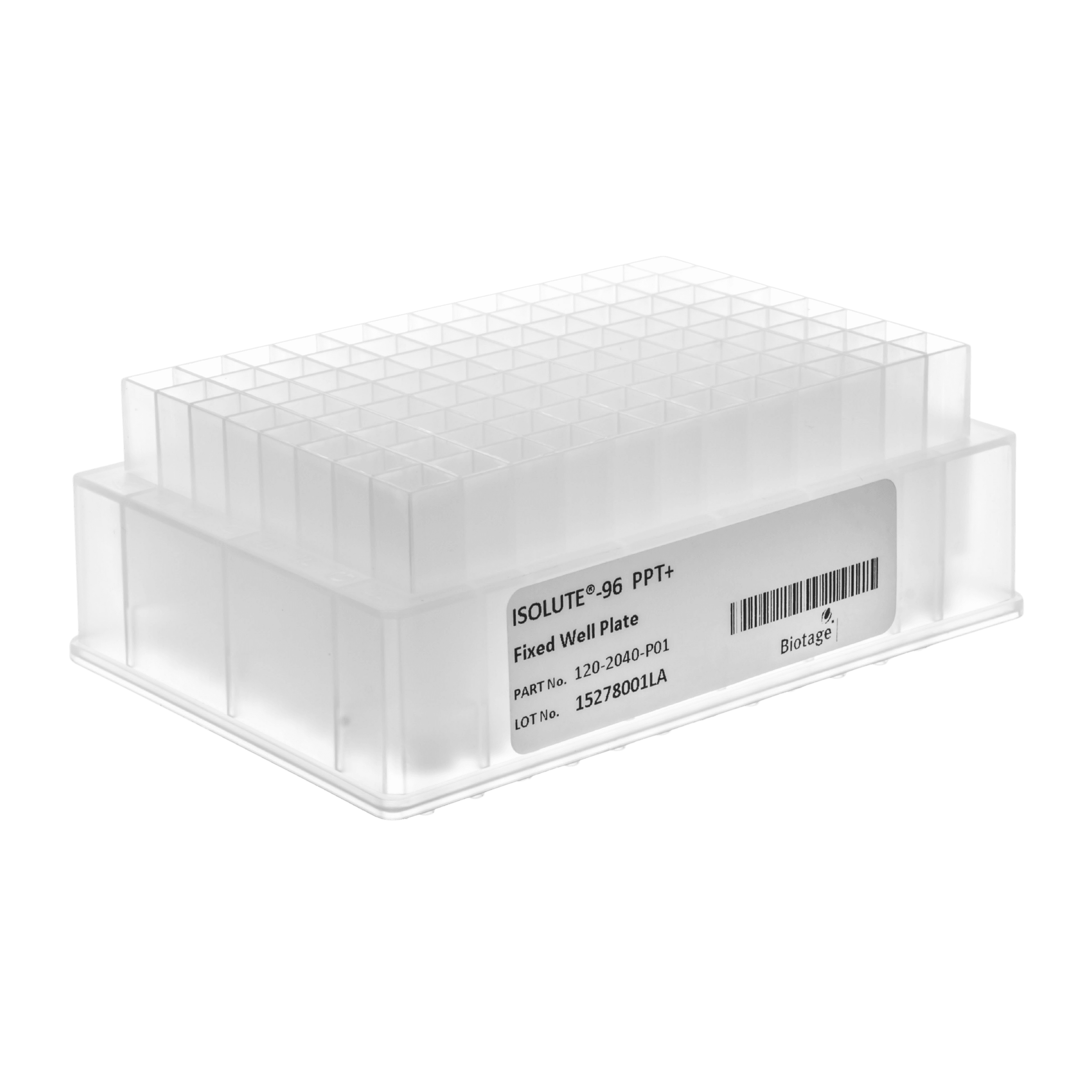
The Biotage ISOLUTE SAX 96-well plate is an automation-friendly strong anion exchange product that combines reliable cleanup with competitive pricing, making it well suited for high-throughput laboratories. It provides performance comparable to other SAX offerings on this list while emphasizing integration with automated workflows and lower per-plate cost, which can translate to faster sample turnaround and reduced labour expense. For labs that prioritize throughput and automation compatibility over maximal capacity, ISOLUTE SAX is a pragmatic choice.
Research and Science Behind Ion Exchange Plates
Ion exchange technology separates charged species by exploiting electrostatic interactions between analytes and functional groups on the sorbent. Cation exchange retains positively charged molecules under controlled pH, while anion exchange selectively binds negatively charged species. Scientific literature, manufacturer application notes, and independent lab reports consistently show that targeted ion exchange can reduce matrix effects, improve method sensitivity for LC-MS and GC-MS, and enhance reproducibility across batches. For labs new to the technique, basic controls such as pH adjustment, appropriate ionic strength, and validated conditioning and elution steps are the primary factors that determine recovery and selectivity.
Selective retention: Ion exchange improves selectivity for charged analytes, lowering interference from neutral matrix components.
Improved sensitivity: Cleaner extracts reduce ion suppression in LC-MS and improve limits of detection, as reported in multiple application studies.
Robustness across pH and buffers: Modern plate chemistries tolerate a range of buffers and ionic strengths, enabling flexible sample workflows.
Higher throughput and reproducibility: 96-well formats support automated workflows and consistent plate-to-plate performance.
Practical tips from research: Control sample pH to ensure analyte charge state, condition plates before loading, and optimize salt strength in elution to maximize recovery.
Frequently Asked Questions
Which Waters ion exchange plate fits acidic analytes best?
Choose the Waters Oasis MAX 96-Well Plate for acidic analytes because it uses mixed-mode reversed-phase plus strong anion-exchange chemistry for high recovery and selectivity, with a 96-well format for high-throughput automation; rating is 4.7.
What sorbent chemistry does Phenomenex Strata-X-A use?
The Phenomenex Strata-X-A 96-Well Plate uses a polymeric strong anion-exchange sorbent optimized for extracting acidic analytes; it also targets wide pH and solvent compatibility for method development, in a 96-well format; rating is 4.5.
How does price compare between Strata-X-A and Waters plates?
The provided data doesn’t list prices or currency for any of these plates, including Phenomenex Strata-X-A 96-Well Plate or Waters Oasis MAX/MCX. It only states Strata-X-A is a “value alternative” and lists ratings (4.5 for Strata-X-A, 4.7 for Waters).
Is Oasis MCX aimed at basic compounds instead?
Yes—the Waters Oasis MCX 96-Well Plate is optimized for basic compounds, using mixed-mode reversed-phase with strong cation-exchange sites for amines and basic pharmaceuticals; it’s designed for reproducible cleanup in complex matrices; rating is 4.7.
Conclusion
In the Canadian context, ion exchange plates are essential tools for industrial and automotive testing where charged analytes and complex matrices are common. The five plates highlighted here — Waters Oasis MAX 96-Well Plate, Waters Oasis MCX 96-Well Plate, Phenomenex Strata-X-A 96-Well Plate, Agilent Bond Elut SAX 96-Well Plate, Biotage ISOLUTE SAX 96-Well Plate — cover a range of anion and cation exchange needs and workflow priorities. For most Canadian industrial and automotive labs seeking the broadest applicability and strongest overall performance, the Waters Oasis MAX 96-Well Plate is our top pick. We hope you found what you were looking for; you can refine or expand your search using the site search to compare specifications, pack sizes, or distributor options.