

Top 5 Polymeric Sorbent Plates in Canada for 2026: High-Capacity SPE 96-Well Solutions
Published on Saturday, January 24, 2026
Polymeric sorbent plates are high-capacity, 96-well solid phase extraction (SPE) solutions engineered for broad-spectrum analyte retention in industrial and automotive laboratories. Designed for high-throughput and rugged workflows, these polymeric plates deliver strong solvent compatibility, high loading capacity, and robust reusability compared with many silica-based alternatives. In Canada, laboratory buyers favor polymeric sorbent plates for their versatility across challenging matrices found in environmental testing, automotive fluids, manufacturing quality control, and industrial process monitoring. Canadian buyers also prioritize supplier reliability, method reproducibility, and lower cost per sample for automated workflows. Trends toward greener lab practices and waste reduction have raised demand for plates that withstand multiple solvent systems and cleaning cycles while delivering consistent recoveries, minimal matrix effects, and predictable performance on automated platforms.
Top Picks Summary
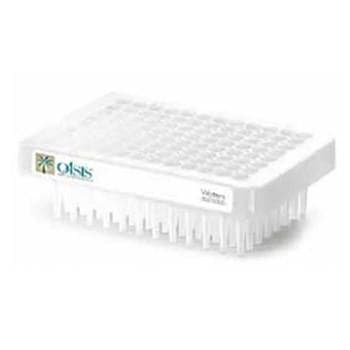
Waters Oasis HLB 96-Well Plate
Within the polymeric sorbent plates category, Oasis HLB 96-well plates are widely regarded as the market leader because their hydrophilic–lipophilic balanced polymer delivers reproducible recoveries across a very broad analyte range, simplifying method transfer. Compared with the other plates in this list, Oasis often reduces method development time and rework due to its universality, and its robustness and long operating life can lower per-sample costs for high-throughput labs.
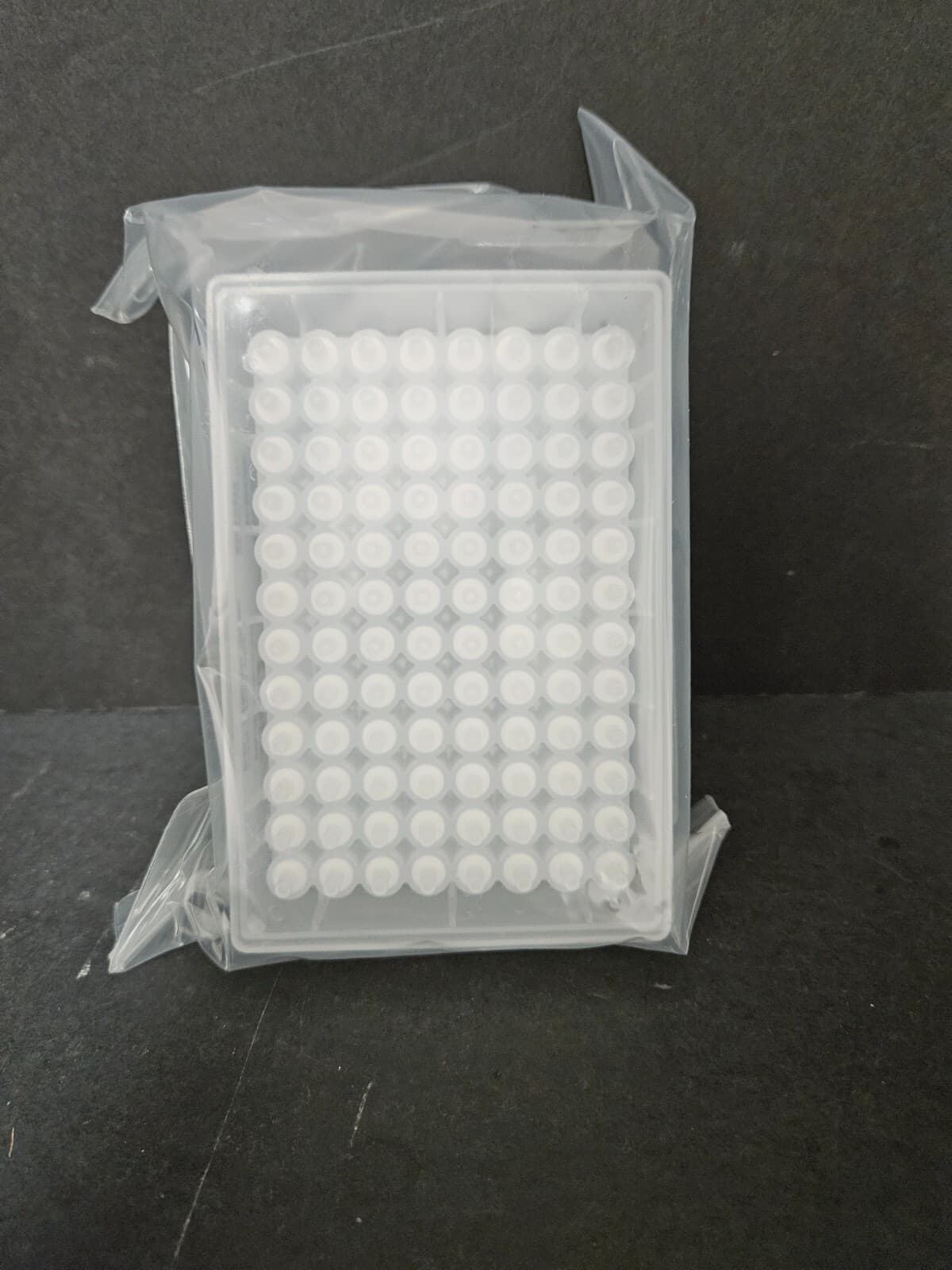
Phenomenex Strata-X 96-Well Plate
As a best-in-class option among polymeric sorbent plates, Strata-X 96-well plates offer finely tuned reversed-phase polymer chemistry that gives consistently high recovery for polar to moderately nonpolar compounds. Versus Oasis HLB and Bond Elut Plexa, Strata-X can provide improved selectivity for certain drug-like analytes and often represents a favorable price-for-performance choice for targeted small-molecule workflows.
Agilent Bond Elut Plexa 96-Well Plate
Bond Elut Plexa plates occupy a leading technical position in polymeric sorbent plates because their proprietary polymer minimizes silanol-like interactions and matrix co-extraction, yielding cleaner extracts and lower ion suppression for LC–MS assays. Compared to Oasis and Strata-X, Plexa’s cleaner baselines and reduced matrix effects can decrease instrument downtime and solvent consumption, translating into a lower total cost of ownership for trace and bioanalytical applications.

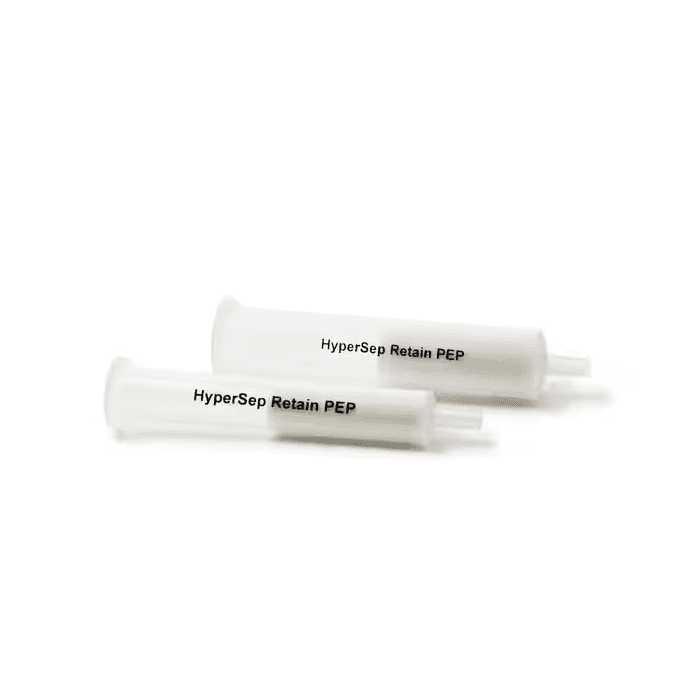
Thermo Scientific HyperSep Retain PEP Plate
Within the polymeric sorbent plates family, HyperSep Retain PEP plates are specialized for peptides and protein fragments, providing high peptide recovery and capacity tuned to proteomics workflows rather than generic small-molecule cleanup. While less universal than Oasis or Strata-X, its targeted chemistry reduces downstream cleanup and LC–MS troubleshooting for peptide work, offering time and reagent savings for labs focused on proteomic assays.
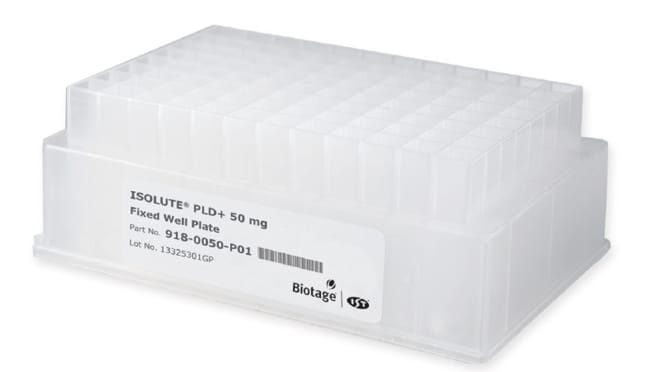
Biotage Isolute PLD+ 96-Well Plate
Isolute PLD+ plates are a specialist option among polymeric sorbent plates designed specifically to remove phospholipids from biological matrices, delivering fast, effective lipid depletion that improves assay robustness for plasma and serum samples. In contrast to the generalist polymeric plates listed above, PLD+ directly targets lipid-related matrix effects, often reducing reanalysis rates and providing a cost-effective cleanup step when phospholipid interference is the primary challenge.
Why polymeric sorbent plates work: evidence and practical points
Polymeric sorbent plates rely on synthetic polymer chemistries that combine hydrophilic and lipophilic retention mechanisms, or incorporate mixed-mode functionalities, to capture a wider range of polar and nonpolar analytes. Compared with traditional silica sorbents, polymeric materials typically tolerate a broader pH and solvent range, resist irreversible fouling, and maintain capacity after repeated use. Peer-reviewed literature and method validation reports commonly cite higher analyte recoveries, reduced matrix interference, and improved ruggedness when polymeric plates are selected and conditioned correctly. For a beginner-friendly approach, focus on three performance metrics: recovery (how much analyte you retain and elute), reproducibility (consistency well-to-well and plate-to-plate), and solvent compatibility (which solvents and pH ranges the sorbent tolerates).
Broad-spectrum retention: Hydrophilic-lipophilic balance (HLB) and mixed-mode polymer chemistries retain a wide polarity range without frequent cartridge changes.
Solvent and pH tolerance: Polymeric sorbents generally handle extreme pH and organic solvent mixtures better than silica, supporting diverse automotive and industrial extraction protocols.
Reusability and cost efficiency: Studies and vendor validation reports show polymeric plates can tolerate multiple clean cycles, lowering per-sample cost when validated for a workflow.
Improved matrix cleanliness: Method comparisons in journals like Journal of Chromatography A and Analytical Chemistry report lower matrix effects and better limits of detection with optimized polymeric SPE.
Automation friendly: Consistent particle morphology and plate design reduce clogging and support high-throughput robotics used in Canadian commercial and regulatory labs.
Frequently Asked Questions
Which polymeric 96-well plate fits broad analyte methods best?
Choose the Waters Oasis HLB 96-Well Plate if you need broad-polarity coverage: its hydrophilic–lipophilic balanced copolymer is designed for reproducible recoveries across a very broad analyte range, helping simplify method transfer (rating 4.7).
What sorbent chemistry is in Phenomenex Strata-X 96-well plate?
Phenomenex Strata-X 96-Well Plate uses a polymeric reversed‑phase sorbent optimized for polar and mid‑polarity analytes, with a 96‑well format built for high‑throughput LC‑MS automation (rating 4.6).
Is Waters Oasis HLB or Agilent Bond Elut Plexa better value?
The provided data doesn’t list prices for the Waters Oasis HLB 96-Well Plate or the Agilent Bond Elut Plexa 96-Well Plate, so I can’t compare value by cost; ratings are 4.5 (Oasis) vs 4.5 (Plexa).
Which polymeric plate is for cleaner LC–MS extracts?
Agilent Bond Elut Plexa 96-Well Plate is aimed at cleaner LC–MS extracts: its proprietary Plexa polymer reduces matrix co-extraction and ion suppression, minimizing silanol-like interactions (rating 4.5).
Conclusion
This selection highlights five leading polymeric sorbent plates suited to Canadian industrial and automotive lab needs: Waters Oasis HLB 96-Well Plate, Phenomenex Strata-X 96-Well Plate, Agilent Bond Elut Plexa 96-Well Plate, Thermo Scientific HyperSep Retain PEP Plate, and Biotage Isolute PLD+ 96-Well Plate. Each product targets rugged, high-capacity workflows, with Waters Oasis HLB 96-Well Plate standing out for broad applicability and widespread validation across matrices, making it an excellent first choice for many labs. We hope you found what you were looking for; you can refine or expand your search using the site search to compare specifications, capacity, and vendor support for any of these plates.