

Top 5 Hyperspectral and Multispectral Imaging Systems in Canada (2026)
Hyperspectral and multispectral imaging systems capture detailed spectral information across many wavelength bands to identify materials, detect surface and subsurface defects, and support process monitoring in automotive and manufacturing labs. In Canada these systems are increasingly used for inline process control, sorting, and predictive quality analytics where color and spectral signatures are critical. Buyers prefer solutions that combine robust spectral range, high spatial resolution, reliable integration with machine learning, and strong local support or service. Key Canadian use cases include coating inspection, contamination detection, automated sorting, and real-time quality assurance in production lines. Recent trends in 2026 show growing adoption of compact and airborne sensors for site surveys, tighter integration with AI models for predictive maintenance, and demand for turnkey systems that reduce setup time and accelerate return on investment.
Inception's AI took the time to understand this market in Canada · We may earn a commission on purchases. It never affects our rankings.
Top Picks Summary
Specim FX17 Hyperspectral Camera
Specim's FX17 is a high-speed SWIR pushbroom hyperspectral camera that balances broad spectral coverage with high frame rates, making it a go-to for airborne mapping and fast industrial inspection. It secures a best-in-class position by offering a strong mix of sensitivity and throughput at a more accessible price than fully cooled systems like Telops, while delivering higher speed and spectral range than many entry-level lab systems such as the Resonon Pika L.

Where to buy Specim FX17 Hyperspectral Camera in Canada: we track one retailer, Specim, and show the price we last observed there; the price you see at checkout may differ.
We may earn a commission on purchases. It never affects our rankings.
$60,000 – $120,000
Resonon Pika L Hyperspectral Imaging System
The Resonon Pika L is a modular, laboratory-grade pushbroom hyperspectral imaging system notable for its affordability, dealer-friendly support, and easy integration into research workflows. It stands out as a cost-effective market leader for academic and R&D customers by undercutting premium airborne and cooled instruments on price and offering turnkey calibration and software, though it concedes the ultimate spectral resolution and cooled sensitivity delivered by systems like Telops.
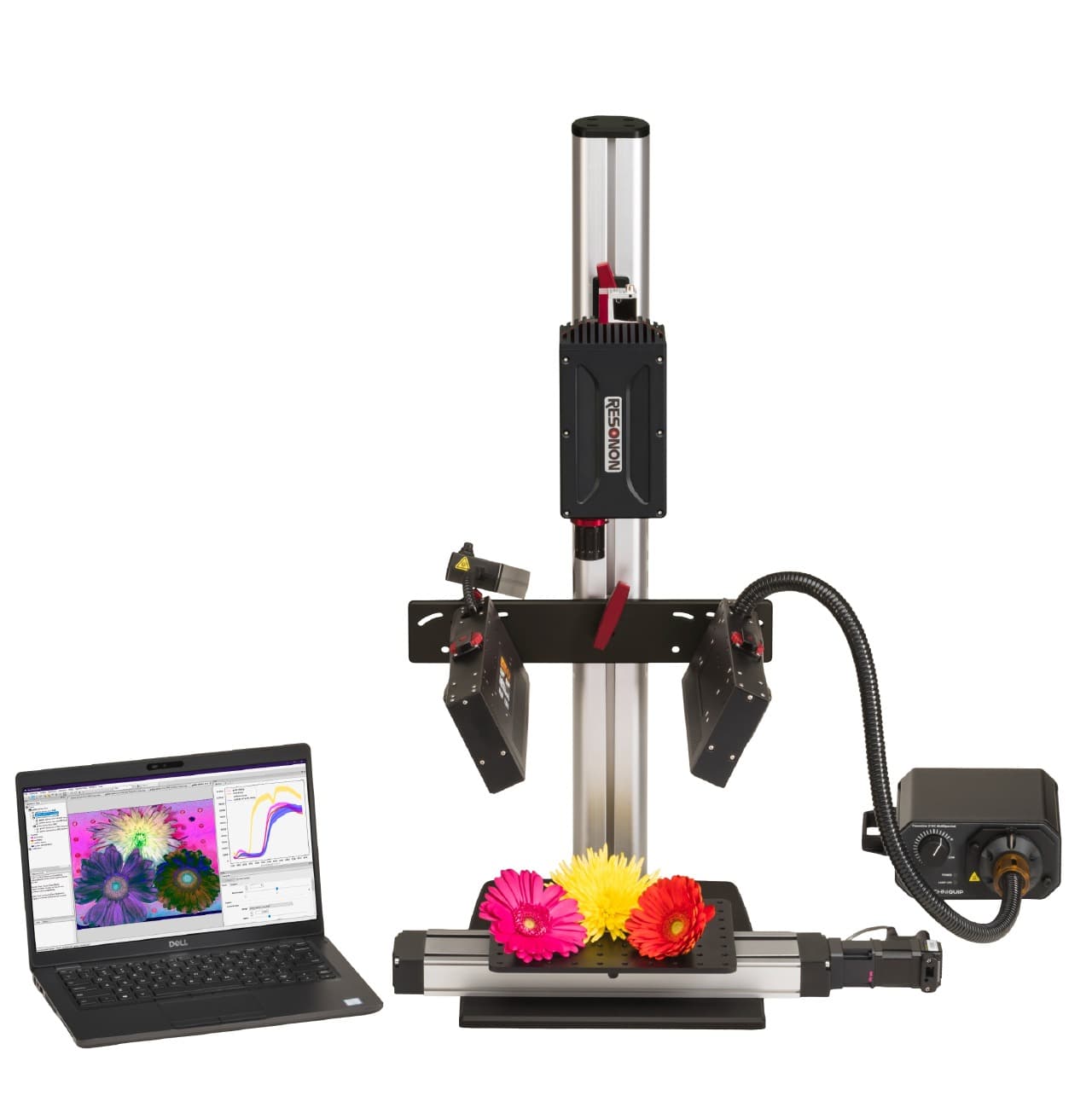
Where to buy Resonon Pika L Hyperspectral Imaging System in Canada: we track one retailer, Resonon, and show the price we last observed there; the price you see at checkout may differ.
We may earn a commission on purchases. It never affects our rankings.
$40,000 – $90,000
Headwall Photonics Hyperspec MV.X
Headwall's Hyperspec MV.X is an OEM-focused, rugged VNIR line-scan imager tailored for machine vision and industrial automation, prized for radiometric stability and tight mechanical/software integration. It competes strongly with Specim on industrial deployments by reducing total integration cost and time for production systems, while offering a more application-ready package than research-oriented models such as the Resonon Pika L or compact snapshot cameras like IMEC SNAPSCAN.
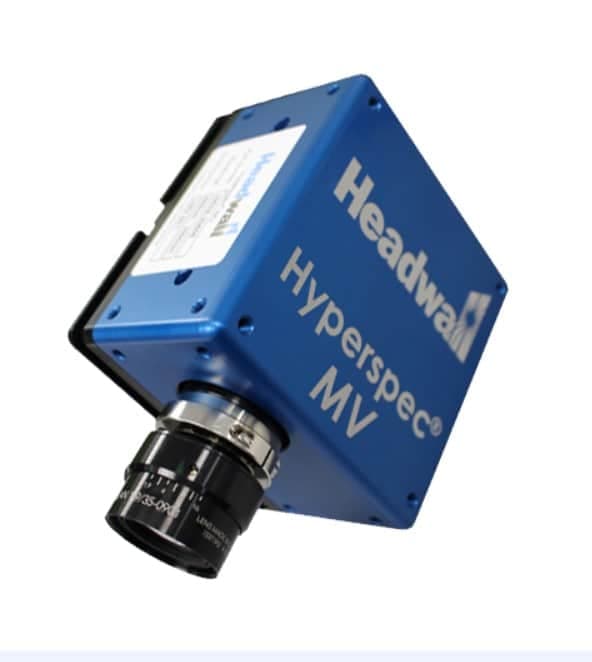
Where to buy Headwall Photonics Hyperspec MV.X in Canada: we track one retailer, Visratek, and show the price we last observed there; the price you see at checkout may differ.
We may earn a commission on purchases. It never affects our rankings.
$80,000 – $200,000
IMEC SNAPSCAN Hyperspectral Camera
IMEC's SNAPSCAN is a compact snapshot hyperspectral camera built on advanced sensor architectures to enable motion-tolerant, real-time capture in UAV and handheld roles. It differentiates itself technically by avoiding the line-scan constraints of pushbroom systems (e.g., Specim and Resonon), delivering low SWaP and immediate datacubes for dynamic scenes, and offering a mid-market price-performance tradeoff between inexpensive lab systems and the high-cost cooled airborne instruments from Telops.

Where to buy IMEC SNAPSCAN Hyperspectral Camera in Canada: we track one retailer, Imechyperspectral, and show the price we last observed there; the price you see at checkout may differ.
We may earn a commission on purchases. It never affects our rankings.
$30,000 – $80,000
Telops Hyper-Cam Airborne
Telops' Hyper-Cam Airborne is a cooled, high-spectral-resolution hyperspectral imager engineered for demanding airborne, defense, and scientific missions where MWIR/LWIR sensitivity and exceptional signal-to-noise are required. It occupies the premium end of the market—priced higher than snapshot and uncooled options like IMEC and Resonon—but its cooled detectors and fine spectral discrimination enable measurements and target detections that lower-cost systems cannot reliably achieve.
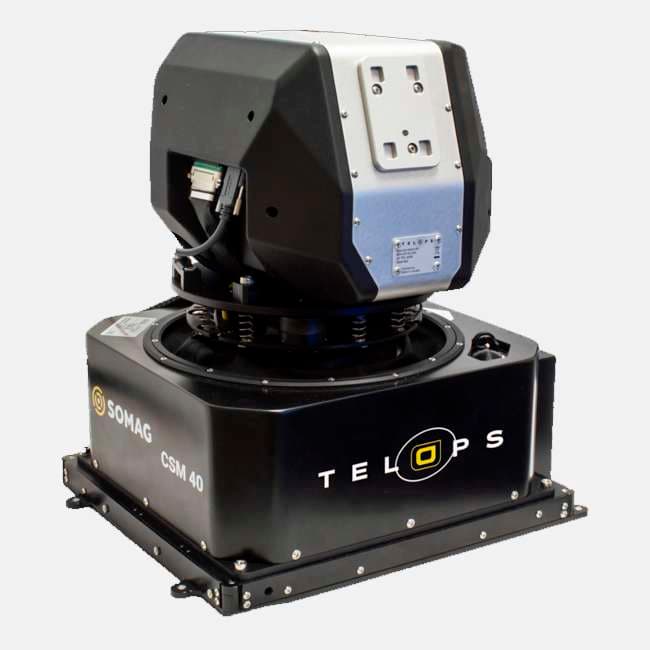
Where to buy Telops Hyper-Cam Airborne in Canada: we track one retailer, Photonics, and show the price we last observed there; the price you see at checkout may differ.
We may earn a commission on purchases. It never affects our rankings.
$200,000 – $650,000
What Research and Studies Say
A growing body of scientific and industry research supports the value of hyperspectral and multispectral imaging for non-destructive testing, material classification, and process optimization. Studies from academic and government labs demonstrate measurable improvements in detection accuracy, throughput, and defect prevention when spectral imaging is combined with modern analytics. For newcomers, the key takeaway is that spectral imaging adds a data dimension that color or grayscale cameras cannot provide, enabling classification by chemical composition, moisture content, or coating thickness without physical sampling.
Improved detection accuracy: Multiple studies show hyperspectral methods increase material classification and defect detection accuracy compared with RGB imaging, reducing false positives and missed defects.
Non-destructive inline control: Research on industrial lines demonstrates that spectral imaging can be integrated for real-time sorting and quality control without interrupting production.
Predictive analytics synergy: Combining spectral data with machine learning models improves early fault detection and predictive maintenance capabilities, lowering downtime and scrap rates.
Broad application evidence: Peer-reviewed work and industry trials validate uses across food safety, mining, agriculture, and automotive coating inspection.
Airborne and drone surveys: Field studies confirm the value of airborne hyperspectral sensors for large-area mapping, environmental monitoring, and resource assessment, complementing lab and inline systems.
Canadian research contribution: Work from Canadian universities and national labs highlights practical deployments in agriculture, environmental monitoring, and manufacturing, reinforcing local relevance and support options.
Frequently Asked Questions
Which hyperspectral system is best for lab research?
Resonon Pika L Hyperspectral Imaging System is best for lab research because it’s a modular VNIR pushbroom system (typically ~400–1000 nm) sold as turnkey packages with optics, software, calibration, and staging accessories; it’s rated 4.5/5.
What wavelength range does the Specim FX17 cover exactly?
Specim FX17 Hyperspectral Camera covers approximately 900–1700 nm (SWIR) for material and spectral analysis, using a high-sensitivity InGaAs detector for fast line rates; it has an average rating of 4.6/5.
Does the Headwall Hyperspec MV.X cost more than Resonon Pika L?
Price isn’t listed for Headwall Photonics Hyperspec MV.X or Resonon Pika L Hyperspectral Imaging System in the provided data, so you can’t compare cost; the only values given are ratings: MV.X 4.5/5 and Pika L 4.5/5.
Which hyperspectral system is better suited to machine vision?
Headwall Photonics Hyperspec MV.X is better suited to machine vision because it’s an OEM-focused rugged VNIR line-scan imager engineered for factory automation and machine-vision workflows, with a comprehensive SDK and integration support; it’s rated 4.8/5.
Conclusion
In the Canadian context, hyperspectral and multispectral imaging systems are practical tools for manufacturers, labs, and field teams that need material-level insight for quality and process control. The five systems featured here each serve different priorities: Specim FX17 Hyperspectral Camera, Resonon Pika L Hyperspectral Imaging System, Headwall Photonics Hyperspec MV.X, IMEC SNAPSCAN Hyperspectral Camera, and Telops Hyper-Cam Airborne. For a balanced industrial choice that blends spectral range, speed, and proven integration for inline process control, the Specim FX17 Hyperspectral Camera stands out as the best overall option on this list. We hope you found what you were looking for; use the search to refine by application, spectral range, form factor, or budget to expand or narrow your results.