

Top 7 Optical Inspection and Imaging Measurement Systems in Canada for 2026
Optical Inspection and Imaging Measurement Systems represent the pinnacle of quality control in the automotive and industrial sectors. This category encompasses advanced vision systems, digital microscopes, borescopes, and optical profilers designed for high-resolution inspection, defect detection, and precise dimensional imaging. In Canada, where manufacturing standards in the automotive and aerospace industries are exceptionally stringent, these laboratory measurement and monitoring instruments have become indispensable. Canadian facility managers and quality assurance professionals increasingly prefer systems integrated with machine vision AI, multispectral imaging, and noncontact metrology. These technologies are highly appealing because they allow for seamless inline inspection integration, drastically reducing human error, accelerating production lines, and ensuring every component meets exact specifications without the risk of physical damage during testing.
Inception's AI took the time to understand this market in Canada · · How we pickWe may earn a commission on purchases. It never affects our rankings.
Top Picks Summary
Omron FH Series Vision System
The Omron FH series is a modular, high-end vision platform engineered for complex, multi-camera optical inspection and real‑time automated decision making on the line. It earns its market-leader status for use cases that need synchronized cameras, deterministic I/O and advanced image processing (including AI), offering deeper factory automation integration than camera-only options such as Basler. Although the FH typically represents a higher capital investment than compact sensors, its ability to consolidate inspections and reduce downstream errors often produces lower lifecycle costs in complex production lines.
Show More Machine Vision Systems for Optical Inspection
Leica DVM6 Digital Microscope
The Leica DVM6 combines Leica's optical heritage with a modular, ergonomic design and flexible automation options, making it well suited to both routine inspection and research environments requiring adaptable configurations. Compared with the VHX-7000 and Smartzoom 5, the DVM6 trades some turnkey speed for greater configurability and often delivers strong price-to-performance value for labs that need scalable inspection modes. Its balance of optical quality, user ergonomics, and upgrade paths positions it as a versatile choice for diverse optical inspection workflows.
Show More Smart Camera Systems for Optical Inspection
We may earn a commission on purchases. It never affects our rankings.
Estimated$70,000 – $140,000
Milwaukee M12 M-Spector Flex 3.0 is a market-leading professional cordless borescope prized for its rugged build, flexible probe and seamless compatibility with the M12 battery family, making it a top choice for tradespeople needing reliable on-the-go inspection tools. It balances greater articulation and durable construction compared with DEWALT and Teslong, while serving as a more affordable, trade-focused alternative to lab-grade systems like FLIR and Snap-on.
Show More Digital Industrial Microscopes for Optical Inspection
Estimated$300 – $450
Telops' Hyper-Cam Airborne is a cooled, high-spectral-resolution hyperspectral imager engineered for demanding airborne, defense, and scientific missions where MWIR/LWIR sensitivity and exceptional signal-to-noise are required. It occupies the premium end of the market—priced higher than snapshot and uncooled options like IMEC and Resonon—but its cooled detectors and fine spectral discrimination enable measurements and target detections that lower-cost systems cannot reliably achieve.
Show More Borescopes and Videoscopes for Optical Inspection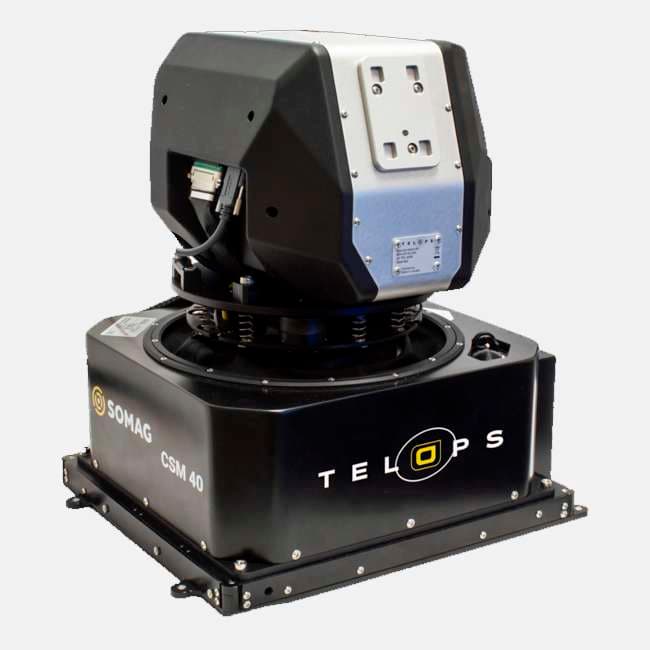
Estimated$200,000 – $650,000
The Teledyne DALSA BOA Spot is a compact, high-image-quality smart camera series offering flexible sensor choices and modular optics for integrators building inline inspection solutions. It is a market leader for imaging performance and per-unit sensor cost when OEMs favor camera-first architectures and external or custom processing, often undercutting full-stack vision systems like Keyence or Omron on CAPEX for similar pixel performance. For applications that demand maximum resolution or custom optics—such as semiconductor or precision assembly inspection—BOA Spot provides measurable technical and financial advantages over more prescriptive turnkey systems.
Show More Hyperspectral and Multispectral Imaging Systems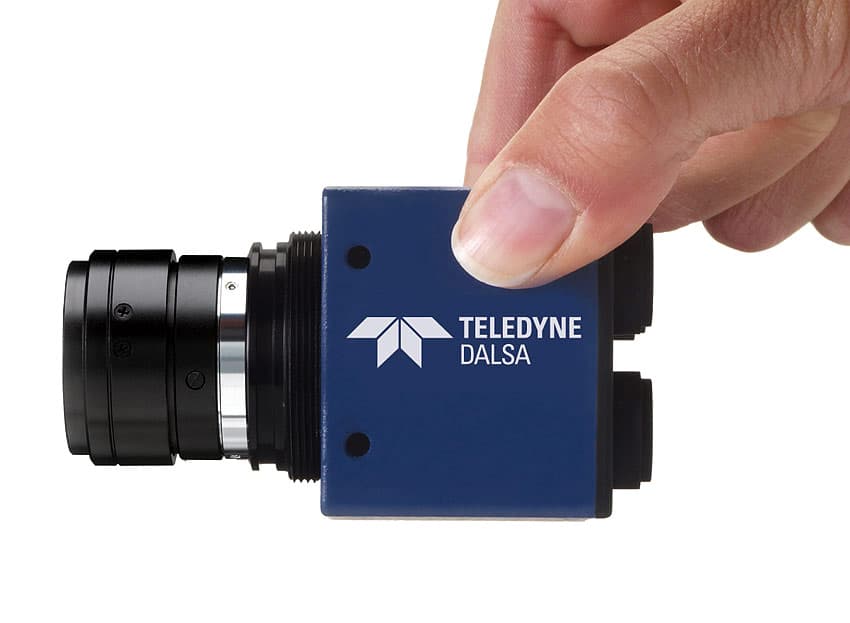
Estimated$2,500 – $7,000
The Moritex LED Ring Light MLSR Series is a compact, high-uniformity ring illuminator designed for high-throughput optical inspection of small to medium fields of view. It earns a best-in-class position for its efficient thermal design, modular diameters and cost-effective price-to-performance for high-density deployments, while offering better small-feature contrast than larger dome solutions and a more affordable alternative to specialized coaxial systems.
Show More Inline Automated Vision Inspection Systems
Zeiss Plan-Apochromat 20x/0.8 M27 Objective
The Zeiss Plan-Apochromat 20x/0.8 M27 Objective is presented as a best-in-class research objective thanks to Zeiss's hallmark apochromatic correction and a relatively high 0.8 NA for 20x magnification, delivering exceptional flat-field performance and color fidelity for demanding microscopy. Compared with the higher-magnification Nikon and Olympus 50x options in this list, the Zeiss 20x offers a wider field of view and lower-cost-per-sample imaging while still outclassing general-purpose machine-vision optics (Edmund and Navitar) on resolution and chromatic correction.
Show More Illumination and Lighting Systems for Optical Inspection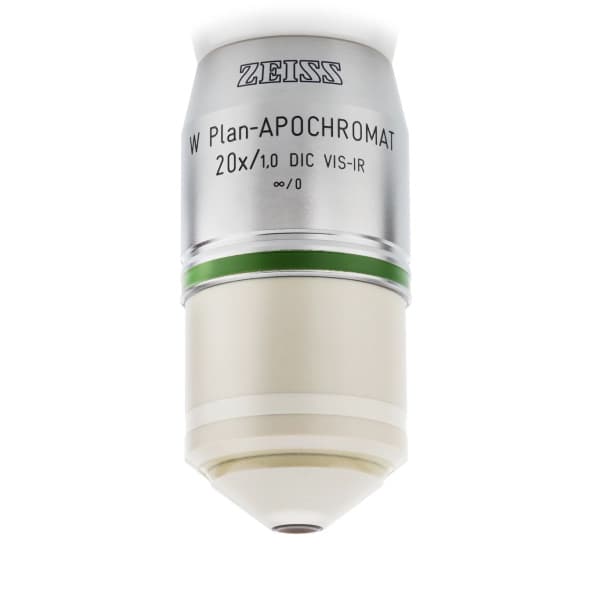
We may earn a commission on purchases. It never affects our rankings.
Estimated$1,500 – $2,800
How to Choose the Right Optical Inspection System
Separating a truly transformative imaging system from a mediocre one comes down to software integration capabilities and optical resolution under dynamic conditions. The best systems offer seamless machine vision AI that adapts to your specific defect parameters, rather than relying on rigid, outdated algorithms that trigger costly false positives.
Look closely at the frames per second (FPS) and sensor megapixel count in relation to your line speed; a high megapixel camera is useless if its low FPS causes motion blur on a fast-moving conveyor.
Ignore marketing jargon like 'infinite zoom' or 'digital enhancement' and instead verify the true optical magnification range and the quality of the telecentric lenses used to prevent perspective distortion.
If you are inspecting highly reflective automotive parts, prioritize systems with programmable multi-angle LED ring lights or coaxial illumination to eliminate glare and reveal hidden surface defects.
Ensure the system supports standard industrial communication protocols like GigE Vision or PROFINET for direct integration into your existing programmable logic controllers and factory automation networks.
Frequently Asked Questions
Which optical inspection system is best for complex multi-camera manufacturing lines?
The Omron FH Series Vision System is the ideal choice for complex, multi-camera inspection tasks because it features a modular platform designed for synchronized cameras and real-time automated decision-making on the production line.
What is the maximum cable length for the Milwaukee M12 M-Spector Flex 3.0?
The Milwaukee M12 M-Spector Flex 3.0 features a 3.0-metre flexible insertion cable with an articulating tip, allowing users to maneuver through tight spaces for detailed inspections.
How much does the Milwaukee M12 M-Spector Flex 3.0 cost for professional tradespeople?
The Milwaukee M12 M-Spector Flex 3.0 is priced at $497.15, providing a rugged, cordless borescope solution that includes on-board recording and image capture capabilities for documentation.
Does the Leica DVM6 Digital Microscope offer high user satisfaction ratings?
The Leica DVM6 Digital Microscope holds an average rating of 4.7, reflecting its effectiveness in research and routine quality control environments through its modular design and high-resolution sensors.
Conclusion
Upgrading your quality control infrastructure with the right optical inspection and imaging measurement systems is a critical step for any competitive Canadian manufacturing or laboratory facility. We hope this guide has helped you identify the ideal equipment to enhance your defect detection and dimensional imaging processes. If you need to refine your options or explore different specifications, please use the search feature to expand your results and find the perfect fit for your operational needs.