

Best Inline Automated Vision Inspection Systems in Canada 2026
Fully integrated inline vision inspection platforms engineered for high throughput manufacturing lines in the automotive and industrial sectors. These systems combine synchronized high-speed imaging, real time defect classification powered by machine vision and edge AI, and PLC connectivity for seamless production monitoring and traceability. In Canada, buyers prioritize robust integration with existing automation, local support and service, compliance with industrial safety and quality standards, and solutions that scale from single-line checks to plantwide quality programs. Demand in 2026 favors systems with modular optics and lighting, deterministic I/O and OPC UA connectivity, and analytics that feed into Industry 4.0 dashboards. Manufacturers choose inline automated vision inspection for faster cycle times, consistent defect detection, reduced scrap, and improved auditability across supply chains serving automotive, aerospace, electronics, and heavy industry markets.
Inception's AI took the time to understand this market in Canada · · How we pickWe may earn a commission on purchases. It never affects our rankings.
Top Picks Summary
Cognex In-Sight 3800 Vision System
The Cognex In-Sight 3800 is a compact, industrial-grade inline vision system known for its embedded deep-learning tools, broad library of vision algorithms, and easy PLC integration. It holds a best-in-class position by combining powerful onboard analytics with straightforward deployment, delivering lower total cost of ownership for many high-volume inspection tasks compared with pricier turnkey controllers like the Keyence XG-X or complex multi-camera architectures from Omron. Against more specialized, camera-centric offerings such as Teledyne DALSA BOA Spot or SICK InspectorP65x, Cognex stands out for vendor support, pre-certified industry packs, and faster time-to-production on typical manufacturing lines.

Keyence XG-X Series Vision System
The Keyence XG-X Series delivers ultra-fast, high-throughput inline inspection with a user-friendly GUI and deterministic cycle-time performance tailored to high-speed manufacturing. Its market-leading processing speed and turnkey hardware often command a premium price, but that cost is justified where throughput and minimal setup time are critical compared with generalist systems such as the Cognex In-Sight 3800 or the more cost-sensitive SICK InspectorP65x. For lines that prioritize speed and simplified deployment over lowest CAPEX, the XG-X offers superior throughput and reduced cycle-time risk relative to camera-first solutions like Teledyne DALSA BOA Spot.

SICK InspectorP65x
The SICK InspectorP65x is a versatile inline inspection platform designed for robust industrial environments, emphasizing sensor fusion, ruggedness, and competitive pricing for large-scale deployments. It secures a market-leading role among cost-conscious OEMs by simplifying multi-sensor setups and lowering per-inspection lifecycle cost relative to higher-end turnkey offerings from Keyence or Omron, while offering greater out-of-the-box durability than many camera-first BOA Spot options. For conveyor, logistics, and heavy-industry inspections where uptime and total cost matter most, SICK provides a practical alternative to feature-rich but more expensive competitors.
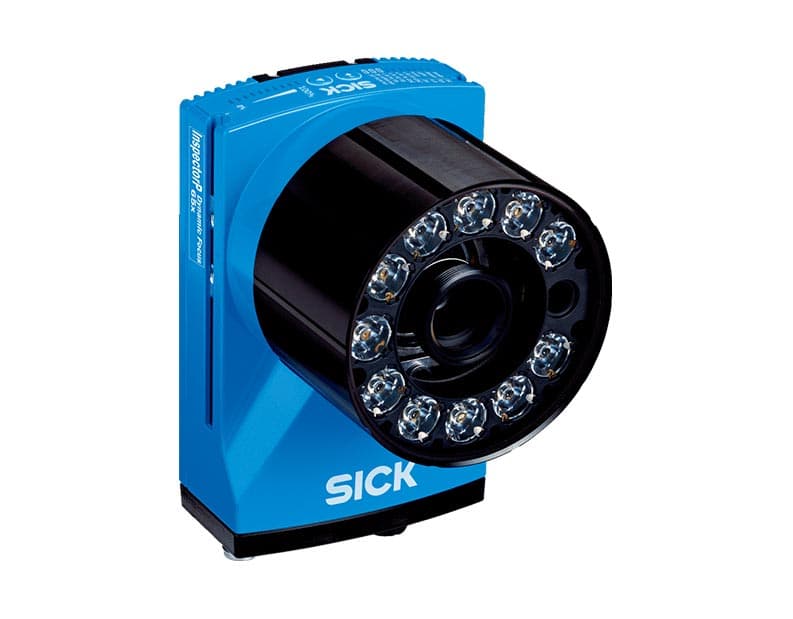
Estimated$6,000 – $15,000
Omron FH Series Vision System
The Omron FH Series is engineered for complex, multi-camera inline inspections, offering synchronized high-speed acquisition, advanced 3D capabilities, and tight PLC/robot integration for automated assembly and electronics inspection. It differentiates itself by handling complicated multi-view or 3D tasks where its synchronization and automation-native features reduce false calls and rework compared with single-camera systems like Cognex In-Sight or compact smart cameras such as BOA Spot. Although typically higher in initial investment than SICK's InspectorP65x, FH's scalability and deep automation integration can lower overall defect-related costs in high-value manufacturing environments.

Teledyne DALSA BOA Spot
The Teledyne DALSA BOA Spot is a compact, high-image-quality smart camera series offering flexible sensor choices and modular optics for integrators building inline inspection solutions. It is a market leader for imaging performance and per-unit sensor cost when OEMs favor camera-first architectures and external or custom processing, often undercutting full-stack vision systems like Keyence or Omron on CAPEX for similar pixel performance. For applications that demand maximum resolution or custom optics—such as semiconductor or precision assembly inspection—BOA Spot provides measurable technical and financial advantages over more prescriptive turnkey systems.
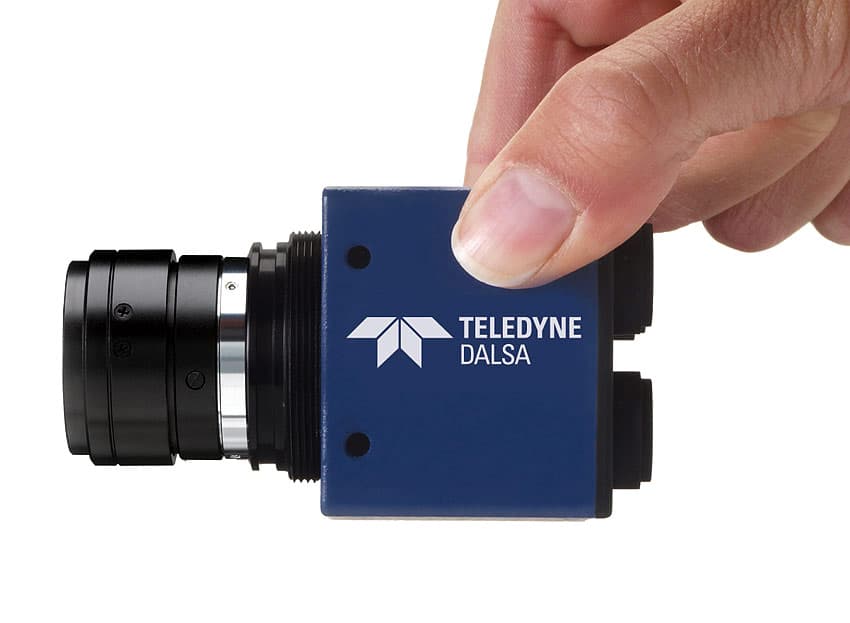
Estimated$2,500 – $7,000
Research and Evidence: Why Inline Vision Inspection Works
Academic research, industry white papers, and vendor validation studies consistently show that inline vision inspection improves defect detection consistency and reduces manual inspection variability. Key findings from published literature and industrial trials emphasize how controlled illumination, high-resolution imaging, and machine learning classifiers increase true positive rates and lower false rejects compared with manual checks. Industry guidelines from standards organizations and applied case studies demonstrate that integrating vision systems with PLCs and MES enables traceability and faster root cause analysis. For newcomers, the most important takeaway is that the technology reduces human error, scales with production speeds, and becomes more effective as more labeled inspection data is collected.
Accuracy and repeatability: Peer-reviewed studies and vendor validation show machine vision often outperforms manual inspection for repeatable defect detection under controlled lighting and fixturing.
Throughput: High-speed cameras and real time processing maintain cycle times for automotive and industrial lines while inspecting every part instead of sampling.
AI and learning: Supervised machine learning and deep learning models improve detection of complex defects and adapt to new defect types with labeled data.
Traceability and compliance: Integration with PLC, MES, and OPC UA supports traceability and quality reporting required by automotive and industrial standards.
Operational benefits: Case studies report reduced scrap, fewer warranty claims, and faster defect isolation when vision systems are deployed as part of a larger quality program.
Frequently Asked Questions
Which inline vision system should I pick for conveyor inspection?
For conveyor inline inspection, the Cognex In-Sight 3800 Vision System is a compact, rugged smart camera optimized for inline inspection on conveyors, with an easy In-Sight spreadsheet-based configuration and multiple lens/lighting options; it has an average rating of 4.6.
Does the Keyence XG-X series support 3D profile inspection?
Yes—the Keyence XG-X Series Vision System includes advanced tools with 3D profile support, plus edge AI and seamless PLC integration; it also supports multiple high-resolution cameras with synchronized inspection for high-speed lines, and has an average rating of 4.7.
How does SICK InspectorP65x pricing compare to Keyence XG-X?
The provided data does not list any prices for the SICK InspectorP65x or the Keyence XG-X Series, so I can’t compare cost; it does show average ratings of 4.4 for InspectorP65x and 4.7 for XG-X.
Is the SICK InspectorP65x built for barcode or OCR checks?
Yes—the SICK InspectorP65x includes built-in tools for barcode reading and OCR (along with surface defect detection) and provides real-time results; it’s designed as a modular inspection system for inline quality checks, with an average rating of 4.4.
Conclusion
In summary, inline automated vision inspection systems are a practical investment for Canadian manufacturers seeking higher throughput, consistent quality, and full traceability. The five leading platforms profiled here are the Cognex In-Sight 3800 Vision System, Keyence XG-X Series Vision System, SICK InspectorP65x, Omron FH Series Vision System, and Teledyne DALSA BOA Spot. For most high throughput automotive and industrial lines in Canada, the Keyence XG-X Series is our top pick because of its balance of speed, scalable I/O, and ease of deployment. We hope you found the comparison useful. If you want to refine results or expand the selection by industry, throughput, or budget, use the search to narrow or broaden your options.