

Top 8 Laboratory Ventilation, Exhaust and Airflow Control Systems in Canada — 2026
Published on Saturday, January 24, 2026
Laboratory ventilation, exhaust and airflow control covers the HVAC components, variable air volume systems, specialty fans, filtration and controllers engineered to maintain proper laboratory pressurization and reliable contaminant capture. Systems in this category range from VAV fume hood exhaust packages and HEPA/ULPA filtered downflow units to integrated controllers and performance-monitoring platforms that log differential pressure, airflow and filter life. In Canada the category appeals to research institutions, hospitals, industrial labs and academic facilities because decision makers prioritize regulatory compliance, predictable containment performance, energy-efficient operation and simple serviceability. Buyers also look for products that adapt to retrofit challenges, integrate with building management systems, and deliver measurable operating savings while meeting standards such as ASHRAE guidance, ISO cleanroom classifications and applicable provincial codes.
Top Picks Summary
The ebm-papst RadiPac EC Centrifugal Fan represents the technical leader in variable speed inline blowers with class-leading motor efficiency, integrated electronics, and precision manufacturing that minimize energy use and maintenance over the product lifetime. Although it carries a premium purchase price, its superior efficiency and advanced control integration typically deliver the lowest total cost of ownership compared with competitors on the list, especially in continuous-duty or energy-sensitive installations.
Show More Exhaust Fans and Inline Blowers
The Belimo ZoneEase VAV is a market leader for compact, cost-efficient zone-level control that pairs simple commissioning with integrated actuator hardware—well-suited to Variable Air Volume applications that prioritize low upfront cost and fast installation. Though it does not match the deep protocol flexibility or I/O capacity of Siemens or Johnson Controls, its plug-and-play approach and lower material and labor costs make it particularly attractive for retrofits and medium-sized projects.
Show More Variable Air Volume Dampers and Controllers
Where to buy Belimo ZoneEase VAV in Canada: the trusted retailers we track in this market, with the best price we have observed at each. Prices are checked regularly and can change, and the retailer confirms the final price at checkout.
We may earn a commission on purchases. It never affects our rankings.
$900 – $2,200
The Camfil Megalam EnerGuard HEPA Filter is positioned as a best-in-class HEPA solution for energy-conscious cleanroom and critical-environment applications, offering low pressure drop and long service life that reduce lifetime energy and replacement costs. Compared with modular designs like the AAF AstroPak or cassette formats from MANN+HUMMEL, the EnerGuard emphasizes operating-cost savings and proven media performance, while still integrating cleanly into standard housings such as those from Donaldson Torit or specialized modules like FilterQueenDERA.
Show More HEPA and ULPA Filter Modules and Housings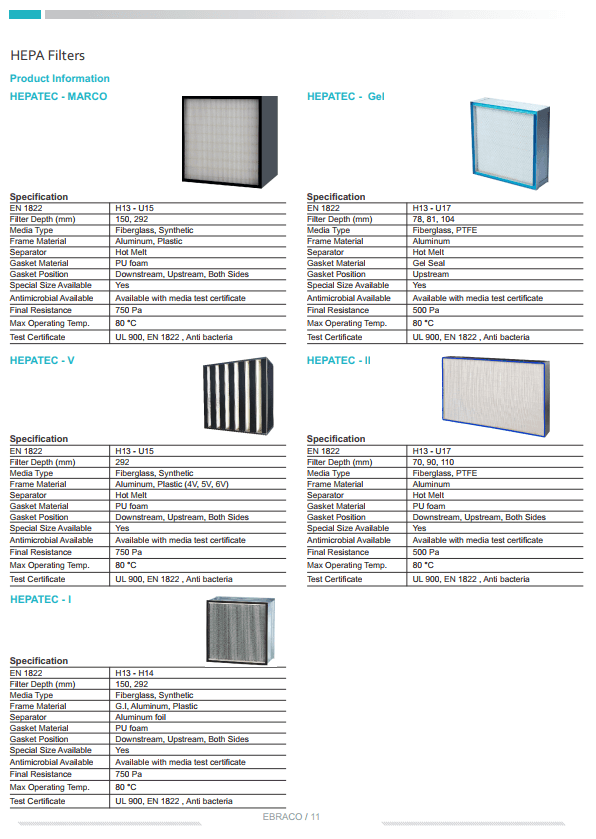
The Kele DPT differential pressure transmitter series offers economical, easy-to-install pressure sensing with standard analog outputs (0-10V/4-20mA) that suit widespread HVAC, filtration and BAS monitoring needs. Kele is a market leader for value-conscious integrators: while not as feature-rich as higher-end Dwyer or Honeywell digital units, its lower unit price and broad compatibility make it ideal for large deployments and retrofit alarm-panel projects.
Show More Airflow Sensors, Monitors and Alarm Panels
The Diversitech Flex-O-Duct fume arm is a cost-conscious, flexible capture solution that emphasizes portability and simple attachment, making it a practical choice for occasional or temporary extraction needs and service technicians. Compared with heavier, permanently mounted arms like the Nederman FX2 or modular Nordfab systems, the Flex-O-Duct offers the lowest entry price and easiest deployment, though with trade-offs in long-term durability and maximum capture performance for intense industrial use.
Show More Local Exhaust Arms and Capture Systems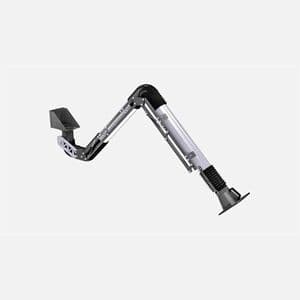
Where to buy Diversitech Flex-O-Duct Fume Arm in Canada: the trusted retailers we track in this market, with the best price we have observed at each. Prices are checked regularly and can change, and the retailer confirms the final price at checkout.
We may earn a commission on purchases. It never affects our rankings.
$315.11CAD
Fantech's SER Series balances cost and performance for medium-scale energy recovery air handling and plenum modules, providing modular options that simplify installation and reduce on-site labor. In comparison to heavyweight vendors it typically undercuts on purchase price while still delivering reliable recovery efficiency, so it represents a strong value proposition for mid-size projects that need adaptable plenum integration without premium engineering features.
Show More Energy Recovery Air Handling and Plenum Modules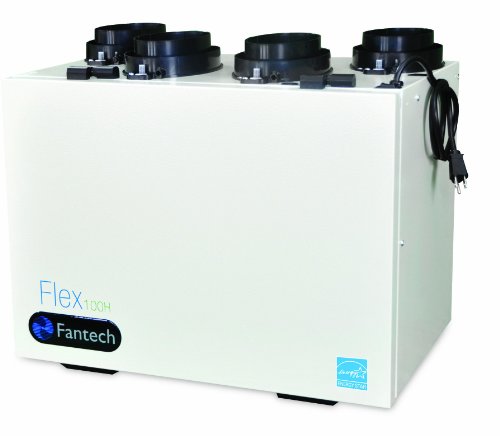
Continental Fan CFM Inline Silencer
The Continental Fan CFM Inline Silencer is designed for high-capacity and industrial ductwork where robust construction and scalable attenuation matter most, making it the preferred choice for large-CFM systems that need durable long-term noise control. Though typically pricier than compact options like the Fantech LD Series, its modular sizing and higher maximum flow ratings provide superior lifecycle value for large installations and outperform smaller silencers in heavy-duty acoustic demands.
Show More Ductwork Silencers and Backdraft Dampers
Inficon Whisper Ultrasonic Leak Detector
The INFICON Whisper Ultrasonic Leak Detector is a practical market-leading tool for rapid localization of pressurized leaks in lab HVAC and gas lines, using high-frequency sound to find leaks without the need for tracer gases. It is more affordable and faster for routine leak hunting than the TSI tracer kit, though it lacks the quantitative dispersion and airflow measurement capabilities needed for formal tracer gas studies.
Show More Airflow Balancing, Verification and Commissioning Tools
Where to buy Inficon Whisper Ultrasonic Leak Detector in Canada: the trusted retailers we track in this market, with the best price we have observed at each. Prices are checked regularly and can change, and the retailer confirms the final price at checkout.
We may earn a commission on purchases. It never affects our rankings.
$700 – $1,200
What research and standards say about ventilation, filtration and control
Scientific research, industry standards and technical guidance consistently show that correctly designed and controlled ventilation reduces airborne contaminants, protects occupants, and helps maintain process integrity. Filtration and containment combined with real-time performance monitoring make systems both safer and more cost effective over their operating life. For newcomers, the fundamental benefits are improved air quality, maintained pressure cascades that prevent cross contamination, and lower energy use when systems use demand-based controls.
Filtration efficiency: HEPA filters are rated to remove at least 99.97 percent of particles 0.3 microns in diameter; ULPA filters achieve higher capture efficiencies for smaller particles, making them suitable for high containment or cleanroom applications.
Containment and pressure control: Laboratory best practice uses pressure cascades and differential pressure monitoring to keep hazardous gases or particulates contained within designated zones, a principle supported by biosafety guidance and facility engineering standards.
Energy and controls: Variable air volume (VAV) systems and demand-controlled ventilation frequently yield significant energy savings versus constant volume designs. Industry case studies often report energy reductions in many lab retrofit scenarios.
Standards and testing: Performance verification and periodic testing are recommended by ASHRAE and related organizations to confirm airflow patterns, fume hood containment and filter integrity. ISO 14644 and ASHRAE test methods like Standard 110 are commonly referenced for clean work areas and cabinet performance.
Monitoring and safety: Continuous monitoring of airflow, pressure and particulates improves early detection of failures and helps maintain compliance. Data logging and alarm integration with building management systems reduce operational risk.
Health and infection control: Peer reviewed studies and public health guidance highlight the role of adequate ventilation and high efficiency filtration in lowering airborne transmission risk in shared indoor spaces.
Frequently Asked Questions
Which fan should I choose for variable speed airflow control?
Choose the ebm-papst RadiPac EC Centrifugal Fan if you need variable speed inline blowers with integrated electronics, very low energy consumption, and external-regulator controllability; it has an average rating of 4.7.
What spec does the Camfil Megalam EnerGuard HEPA Filter use?
The Camfil Megalam EnerGuard HEPA Filter uses HEPA media rated to H13/H14 with low pressure drop, and it’s built with a durable EnerGuard frame for long life in laboratory and cleanroom applications.
How does the Price Industries DERA VAV Terminal price compare?
The listing price shown is CAD $582.36 CADfor the ebm-papst RadiPac EC Centrifugal Fan, while the Price Industries DERA VAV Terminal price isn’t provided in the data; both are rated 4.7 and 4.7 respectively.
Does the Price Industries DERA VAV Terminal include measurement and testing?
Yes—the Price Industries DERA VAV Terminal is a complete VAV terminal with a precision damper, actuator, and airflow measurement, plus factory testing for turnkey performance; the data shows an average rating of 4.6.
Conclusion
In the Canadian context, the right laboratory ventilation and airflow control solution balances regulatory compliance, energy efficiency and long term maintainability. We hope this overview helps you narrow your choices for 2026. If you did not find exactly what you need, refine or expand your search by application, filtration class, airflow capacity, or province using the search bar to reveal the best matches.