

Canada's Top 5 Industrial 2D Vision Cameras for 2026
High-performance area and line scan 2D cameras are central to modern automated material handling and inspection systems across Canada. These cameras deliver high frame rates, selectable global or rolling shutter modes, and industrial interfaces such as GigE, USB3 and Camera Link to suit diverse machine vision applications. In Canadian industries from warehousing and parcel handling to food and beverage, automotive and electronics manufacturing, buyers prefer robust cameras with proven reliability, easy integration, and strong local support. Key purchase drivers include accurate barcode reading and OCR, fast robotic pick and place, high-speed inspection in harsh or wet environments, and compatibility with Industry 4.0 architectures and edge computing. Suppliers that offer flexible optics, rugged enclosures, and an ecosystem of software tools and support tend to be most appealing to Canadian systems integrators and end users.
Inception's AI took the time to understand this market in Canada · · How we pickWe may earn a commission on purchases. It never affects our rankings.
Top Picks Summary
Cognex In-Sight 2800 Series
The In-Sight 2800 series is best-in-class for industrial 2D vision thanks to its full-featured, on-camera processing and user-friendly In-Sight Explorer workflow that minimizes integration time and lowers total cost of ownership. It stands out versus board-level cameras like Basler or DALSA by delivering a turnkey, factory-ready solution with proven field reliability and strong application libraries, while often being more cost-effective for inline inspections than higher-priced, premium-branded systems. Its technical strengths—embedded toolsets, deterministic I/O and robust deployment ecosystem—make it ideal when minimal PC infrastructure and rapid commissioning are priorities.
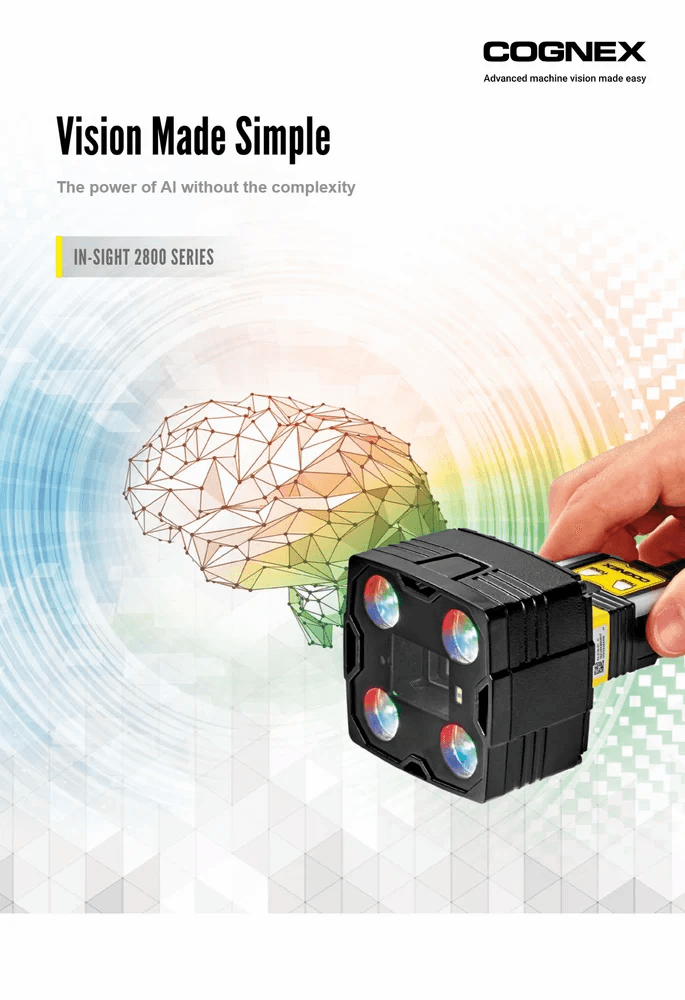
Estimated$2,000 – $4,500
Keyence CV-X Series Vision System
The CV-3000 series is a market leader for high-speed, high-accuracy 2D vision tasks, offering advanced processing, very low cycle times and tightly integrated optics and lighting for demanding production-line inspection. Compared with other offerings on this list, Keyence commands a premium price but often delivers the fastest throughput and the most deterministic performance, reducing downstream costs associated with scrap and rework. Its technical advantages include highly optimized algorithms, rapid setup wizards and industry-leading support that accelerate time-to-quality in high-volume manufacturing.

Estimated$3,500 – $8,000
Basler ace 2
The ace 2 series is recognized for delivering excellent image quality and sensor choice at a competitive price, making it a favorite for OEMs and integrators building custom 2D vision systems. Unlike integrated smart cameras (Cognex, Keyence, SICK), Basler cameras are camera-only devices that give buyers flexibility to choose host processors and software, which often lowers upfront camera cost and offers better price-per-pixel for multi-camera systems. Technically, ace 2 cameras provide broad interface support (GigE, USB3), GenICam compliance and long-term availability that reduce lifecycle and integration costs.

We may earn a commission on purchases. It never affects our rankings.
Estimated$300 – $1,500
SICK Inspector PIM60
The Inspector PIM60 positions itself as a rugged, industrial-grade 2D inspection sensor that emphasizes robustness, easy factory integration and deterministic IO for harsh production environments. Compared with general-purpose cameras like Basler or DALSA, SICK focuses on application-ready reliability and simplified network connectivity, which lowers engineering effort and long-term maintenance expenses in heavy industrial settings. Its strengths are built-in protection, predictable TCO and simplified deployment for tasks where environmental resilience and native fieldbus support matter most.
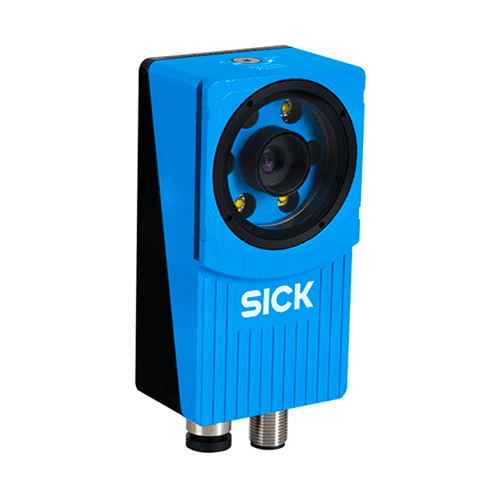
Estimated$2,500 – $6,500
Teledyne DALSA Genie Nano
The Genie Nano line is a market-leading machine-vision camera family that offers very high frame rates and premium sensor choices for demanding 2D inspection and measurement tasks. Unlike turnkey smart cameras, Genie Nano cameras trade integrated processing for sensor performance and flexibility, making them attractive where maximum image fidelity and customized, PC-based vision pipelines are required; this often yields better performance-per-dollar in applications that justify a host PC. Technical advantages include a mature SDK, broad interface options and consistent sensor availability that support scalable, high-throughput vision installations.

Estimated$700 – $3,000
Why 2D Vision Cameras Deliver Real Value: Research and Practical Evidence
A combination of industrial case studies and peer-reviewed research supports the value of 2D vision systems for automated inspection and handling. Studies and field reports show that properly specified cameras reduce defect escapes, speed up inspection cycles, and enable reliable machine guidance when paired with appropriate optics and lighting. Research into shutter modes, sensor architectures, and interface bandwidths has clarified best practices for different applications: global shutter sensors minimize motion distortion on fast-moving targets, while rolling shutter sensors can be a cost-effective choice for slower or line-synchronized systems. Evidence also supports the trend toward edge processing and deterministic network interfaces for lower latency and improved throughput in real-time automation.
Global shutter vs rolling shutter: industry research and test reports show global shutter is preferred for high-speed moving targets to avoid motion artifacts.
Area scan vs line scan: line scan cameras excel at continuous web and surface inspection; area scan cameras provide flexible field-of-view for discrete parts and barcode/OCR tasks.
Interface and bandwidth: studies comparing GigE, USB3 and Camera Link highlight trade-offs in cable length, throughput, and determinism that affect system design.
Edge processing benefits: field case studies indicate on-camera or edge computing reduces latency and network load, improving real-time robotic pick and place performance.
Environmental robustness: published industrial reports recommend IP-rated housings and temperature-tested cameras for harsh Canadian manufacturing and outdoor logistics applications.
Frequently Asked Questions
Which camera should I buy for quick integration?
Choose the Cognex In-Sight 2800 Series for quick integration: it’s a compact smart camera with onboard vision tools and an In-Sight Explorer workflow to minimize integration time, with an average rating of 4.6.
Does the Keyence CV-3000 Series support low latency inspection?
Yes—the Keyence CV-3000 Series is designed for high-throughput with very fast processing and low latency, combining high-resolution sensors with advanced image algorithms for precise inspection, and it has an average rating of 4.7.
What’s the price and value of Basler ace 2?
The provided data doesn’t include Basler ace 2 pricing, but it does say it offers excellent image quality and sensor choice at a competitive price, with USB3/GigE interfaces and GenICam compatibility, and an average rating of 4.4.
Is Basler ace 2 a smart camera with onboard tools?
No—Basler ace 2 is camera-only, unlike integrated smart cameras like Cognex and Keyence, and it uses USB3/GigE with GenICam compatibility; it’s rated 4.4 on average.
Conclusion
In the Canadian market for 2026, the Cognex In-Sight 2800 Series, Keyence CV-3000 Series, Basler ace 2, SICK Inspector PIM60, and Teledyne DALSA Genie Nano represent a balanced set of options covering ease of integration, high-speed performance, value, ruggedness, and specialized inspection. The Cognex In-Sight 2800 Series stands out as the best overall choice for many automated material handling and barcode/OCR projects because of its strong software ecosystem and proven field performance, while the Keyence CV-3000 Series and Teledyne DALSA Genie Nano are excellent for very high-speed applications. The Basler ace 2 is a versatile, cost-effective option, and the SICK Inspector PIM60 is ideal where ruggedness and sensor fusion matter. We hope you found what you were looking for — you can refine or expand your search using the search function to filter by interface, shutter type, frame rate, or environmental rating.