

Canada's Top 10 Machine Vision and Sensor Systems for 2026
Machine vision and sensor systems in Canada cover 2D and 3D cameras, depth sensors, barcode and RFID readers, and sensor fusion solutions used for guidance, inspection, identification, and quality assurance in automated material handling. These systems power robotics, conveyor inspection, pick-and-place, and traceability in manufacturing, warehousing, food and beverage, pharmaceuticals, and agriculture. For 2026, buyers look for solutions that combine high-speed 3D scanning, reliable depth sensing, and robust barcode/RFID performance with edge AI inference and integrated calibration tools to reduce setup time and improve accuracy. Canadian customers often prefer vendors with local support, bilingual documentation, and hardware tuned for cold, dusty, or variable lighting conditions. Key decision factors include ease of integration with PLCs and WMS platforms, proven detection accuracy, low-latency edge processing, scalable pricing, and clear return on investment through higher throughput, fewer false rejects, and reduced manual inspection.
Inception's AI took the time to understand this market in Canada · · How we pickWe may earn a commission on purchases. It never affects our rankings.
Top Picks Summary
The ace 2 series is recognized for delivering excellent image quality and sensor choice at a competitive price, making it a favorite for OEMs and integrators building custom 2D vision systems. Unlike integrated smart cameras (Cognex, Keyence, SICK), Basler cameras are camera-only devices that give buyers flexibility to choose host processors and software, which often lowers upfront camera cost and offers better price-per-pixel for multi-camera systems. Technically, ace 2 cameras provide broad interface support (GigE, USB3), GenICam compliance and long-term availability that reduce lifecycle and integration costs.
Show More Industrial 2D Vision Cameras
We may earn a commission on purchases. It never affects our rankings.
Estimated$300 – $1,500
LeddarTech's Leddar Pixell offers a modular, solid-state ToF approach optimized for scalable deployments and cost-sensitive applications like logistics and mobile robotics, delivering a favorable price-performance ratio for broad-area depth sensing. Unlike the heavier industrial connectors and certifications of ifm and SICK, Pixell emphasizes software-configurable performance and multi-sensor fusion capabilities, making it financially attractive for fleet-scale projects while offering better environmental range/echo handling than many low-cost vision cameras.
Show More Industrial 3D Time of Flight Depth Sensors
LMI Technologies Gocator 2500 Series
The LMI Gocator 2500 Series is a smart structured-light/profile sensor that combines embedded processing, flexible scripting and an open SDK to deliver rapid application development for automated inspection and profiling. It sits competitively between the precision of Keyence and the affordability of SICK, offering strong programmability and distributed deployment benefits that make it a cost-efficient choice for multi-station systems where on-device analytics reduce downstream compute costs.
Show More Industrial Laser Triangulation and Structured Light 3D Scanners
Estimated$4,000 – $9,000
Keyence IV3 Series Vision Sensor
The Keyence IV3 Series is a market-leading compact vision sensor known for ultrafast processing, an intuitive setup workflow, and an all-in-one package with integrated optics and lighting that minimizes engineering effort. Versus Cognex, Basler and others it prioritizes cycle-time and simplicity—often commanding a premium per unit but delivering rapid commissioning and minimal tuning on high-speed lines.
Show More Industrial Smart Cameras and Vision Sensors with Edge AI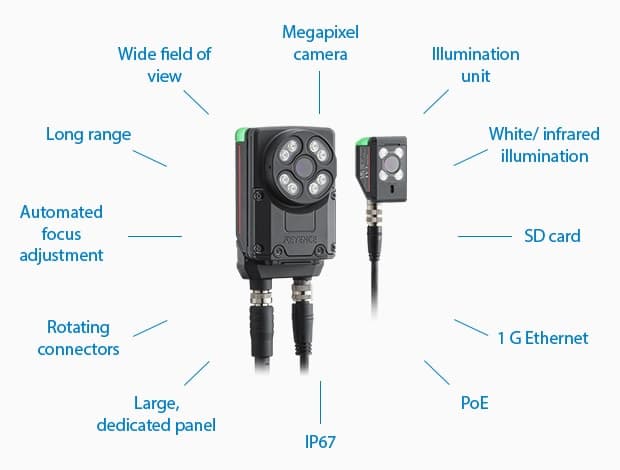
The Zebra DS3678-SR is a market-leading rugged cordless 1D/2D scanner that balances enterprise-grade durability with broad applicability across warehousing and distribution. Compared to the premium image-focused Cognex and the industrially hardened Granit models, the DS3678-SR offers a cost-effective mix of cordless freedom, long battery life, and proven durability that makes it a popular choice for large deployments where total cost of ownership and user mobility are priorities. Its financial advantage is lower per-unit cost and simpler integration for organizations already standardizing on Zebra peripherals and mobility platforms.
Show More Industrial Barcode Readers and RFID Readers
Cognex In-Sight 3800 Vision System
The In-Sight 3800 is a market-leading integrated vision system designed for factory-floor inspection, combining industrial-grade optics, hardened software, and turnkey deployment that minimizes integration time and long-term support overhead. Compared to building a solution around a Jetson AGX Orin or Movidius VPU, the In-Sight reduces engineering and maintenance costs by delivering calibrated hardware and vision software in one package, though it sacrifices some of the low-level customizability and raw AI throughput those compute-centric options provide. For manufacturers prioritizing reliability, repeatable results, and fast commissioning, its total cost of ownership is often lower than piecing together cameras, VPUs, and edge computers.
Show More Vision Processing Units, Controllers and Edge Appliances
The CA-DRW10F LED Ring Light is a high-uniformity ring illuminator designed for machine vision inspection, offering even axial lighting that reduces shadowing and simplifies lens selection for typical lighting, optics and lens assemblies. It stands out for compact integration and reliability, providing a lower-cost, easier-to-deploy alternative to specialized telecentric illuminators while delivering better axial uniformity than generic strip lights for round or small-field targets. Compared with the other products in this list, Keyence's ring light balances strong performance and fast system integration, making it attractive where predictable, repeatable illumination is needed without the premium of metrology-grade optics.
Show More Lighting, Optics and Lens Assemblies
Estimated$600 – $900
PhotoModeler Coded Targets
PhotoModeler Coded Targets are printed, machine-readable markers engineered for large-scale photogrammetry and automated 3D reconstruction; their unique coded patterns allow software to automatically identify and match points across many images. While they are often a higher per-project expense than simple boards or dot grids, they save significant processing and setup time on complex surveys and reduce human intervention compared with generic patterns, making them the market leader for photogrammetric workflows. Against the other entries, PhotoModeler targets excel where large-area fiducial identification and automated target indexing are primary objectives.
Show More Calibration Targets, Fixtures and Automated Calibration Tools
Estimated$80 – $350
Meinberg LANTIME M300
The Meinberg LANTIME M300 is a market-leading network time server that delivers enterprise-grade NTP and PTP synchronization with proven stability and traceability, making it the go-to choice for infrastructure-wide time distribution in sensor-fusion and measurement environments. It holds its position by offering a robust, appliance-based solution that is often more cost-effective for site-wide, multi-device synchronization than building bespoke timing with PXI or embedded I/O, while complementing high-resolution sensors (like Ouster) and edge fusion platforms (like SICK) that require reliable, centralized time sources.
Show More Sensor Fusion Modules, Synchronization Hardware and Time Sync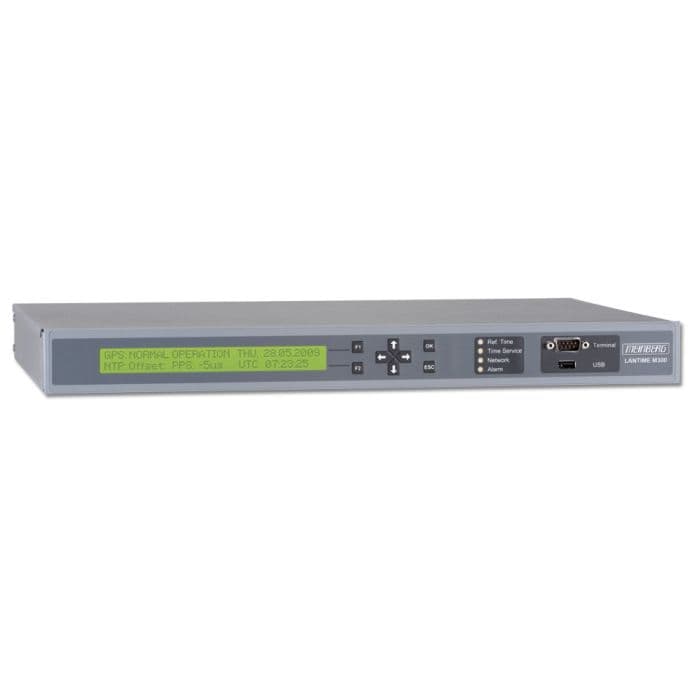
Estimated$3,000 – $6,000
Matrox Imaging Library
Matrox Imaging Library (MIL) is a developer-focused, highly optimized SDK that provides powerful low-level imaging primitives and proven performance at a competitive licensing model, making it especially attractive to OEMs and teams that need custom, high-throughput solutions. Compared with turnkey systems like Keyence CV‑X or user-friendly packages like Zebra Aurora, MIL requires more engineering effort but delivers superior control, cost predictability, and portability across hardware, which can reduce long-term product costs for bespoke inspection systems. Its technical advantage lies in efficient CPU/GPU utilization and extensive language bindings, offering better ROI when custom algorithms and tight system integration are required.
Show More Vision Software, Inspection and Quality Assurance Tools
Estimated$2,000 – $10,000
What research and studies say about machine vision and sensor systems
Scientific research and industry evaluations support the benefits of modern vision and sensor systems. Studies in automation, robotics, and sensing journals show that sensor fusion and 3D imaging increase detection rates for complex parts, while edge AI inference lowers latency and reduces network load compared with cloud-only approaches. Work from academic and government labs demonstrates that integrated calibration tools reduce setup time and inter-device variability, improving repeatability across production runs. Evidence also highlights that adopting automated inspection leads to measurable quality improvements, lower scrap rates, and faster cycle times when systems are matched to the application and properly tuned.
Edge AI inference reduces decision latency and network bandwidth use, enabling real-time guidance and faster sorting decisions.
High-speed 3D scanning and depth sensors improve dimensional measurement and defect detection compared with 2D-only systems.
Sensor fusion combines complementary data streams (vision, depth, RFID, force sensors) to reduce false positives and increase robustness in variable conditions.
Integrated calibration and automated setup tools cut deployment time and operator error, lowering total cost of ownership.
Published industry case studies and peer-reviewed research show automation leads to measurable gains in throughput, consistency, and traceability when implemented with clear KPIs.
Conclusion
This list highlights the top machine vision and sensor system options available in Canada for 2026, focusing on products that deliver practical benefits for automated material handling. We hope you found the insights and options you were looking for. Use the search or filters to refine by application, industry, or technical features, or expand your search to compare vendors and local integrators.