

Top 5 Sensor Fusion, Synchronization and Time Sync Solutions in Canada — 2026
Hardware and modules that combine camera, lidar, encoder and RFID data with precision time synchronization (PTP, hardware triggers) are essential for reliable fused perception in robotics and conveyor control. This category covers purpose-built time servers, PTP terminals, DAQ synchronization cards and sensor fusion platforms that prioritize low-latency deterministic sync, cross-sensor calibration and scalable networked deployments. In Canada, buyers favor solutions that deliver rugged reliability for cold and remote sites, easy integration with common industrial networks, and vendor support across freight, mining, agriculture, warehousing and research applications. Preference also leans toward products that offer clear upgrade paths to Time Sensitive Networking and hardware timestamping, so integrators can achieve sub-microsecond alignment across cameras, lidar, encoders and RFID readers while keeping system latency predictable and traceable.
Inception's AI took the time to understand this market in Canada · · How we pickWe may earn a commission on purchases. It never affects our rankings.
Top Picks Summary
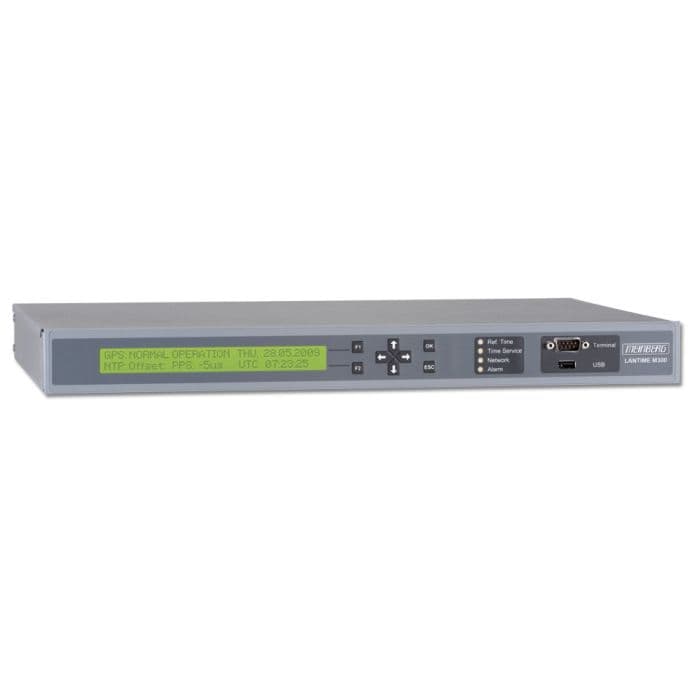
Meinberg LANTIME M300
The Meinberg LANTIME M300 is a market-leading network time server that delivers enterprise-grade NTP and PTP synchronization with proven stability and traceability, making it the go-to choice for infrastructure-wide time distribution in sensor-fusion and measurement environments. It holds its position by offering a robust, appliance-based solution that is often more cost-effective for site-wide, multi-device synchronization than building bespoke timing with PXI or embedded I/O, while complementing high-resolution sensors (like Ouster) and edge fusion platforms (like SICK) that require reliable, centralized time sources.
Estimated$3,000 – $6,000
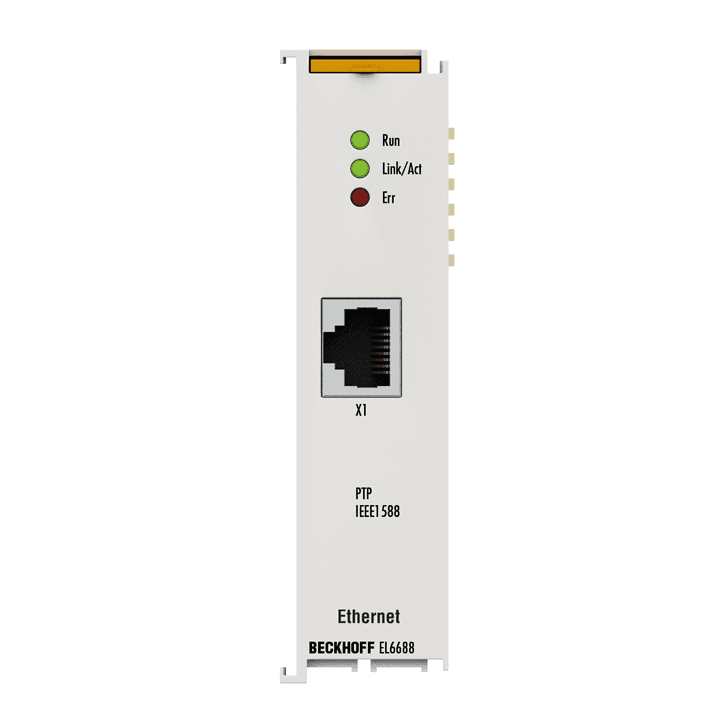
Beckhoff EL6688 PTP Terminal
Beckhoff EL6688 is an EtherCAT PTP terminal providing hardware-accelerated IEEE 1588 timestamping and seamless integration into Beckhoff automation I/O, giving deterministic timing for distributed control and sensor networks. It earns its best-in-class spot for industrial automation use by combining low-latency, cost-efficient synchronization at the I/O layer—making it a more practical choice than chassis-based lab timing cards for factory deployments—while interoperating with centralized servers like Meinberg or test-grade modules like NI when tighter measurement precision or system-level orchestration is required.
Estimated$400 – $800
National Instruments PXI-6683H
The NI PXI-6683H is a high-precision PXI timing and synchronization module designed for measurement and test systems, providing deterministic hardware timestamping, PPS/clock distribution, and tight integration with PXI data acquisition, which yields superior timing fidelity for instrument-grade sensor fusion experiments. It stands out as the market leader for lab and test-bench synchronization because it offers higher metrology-grade accuracy and modular scalability compared with embedded EtherCAT terminals, though at a higher system cost and with less suitability for field-deployed industrial I/O without additional chassis and instruments.
Estimated$6,000 – $10,000
SICK AppSpace SensorApp Fusion
SICK AppSpace SensorApp Fusion is an edge-native sensor-fusion framework that runs directly on SICK sensors and gateways to combine LiDAR, radar, and other inputs into synchronized perception outputs, reducing bandwidth, latency, and integration effort for real-time applications. It is best-in-class for on-device fusion because it minimizes system complexity and operating cost compared with centralizing fusion on expensive PXI test rigs or bespoke servers, and it pairs effectively with high-resolution sensors such as the Ouster OS1 while relying on synchronization hardware like Meinberg or Beckhoff for network-wide time consistency.

Estimated$800 – $3,000
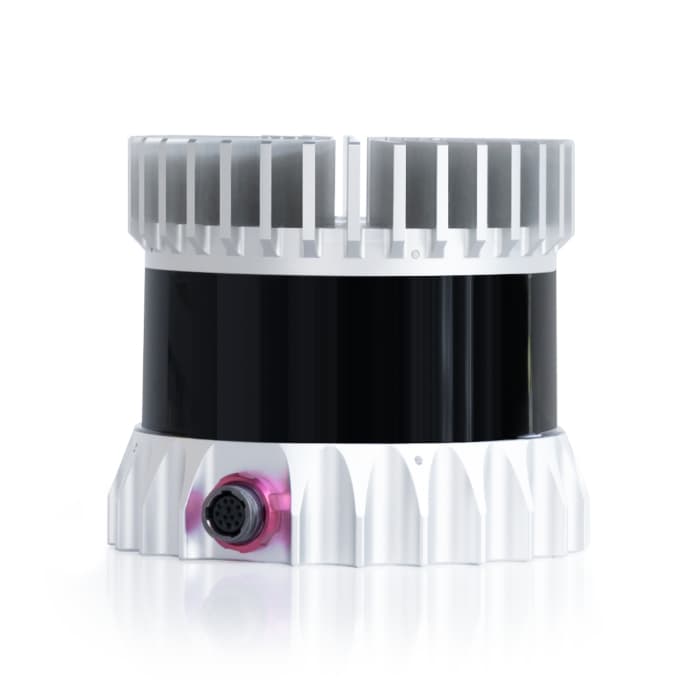
Ouster OS1 LiDAR Sensor
The Ouster OS1 is a widely adopted high-resolution digital LiDAR sensor that provides dense, timestamped point clouds with on-board synchronization I/O, delivering a strong balance of performance and price for perception stacks in robotics and mapping. It earns market-leader recognition in sensor hardware for sensor-fusion systems because its raw, high-fidelity data and reliable sync signals pair well with edge fusion platforms (SICK AppSpace) and enterprise or industrial time sources (Meinberg, Beckhoff), offering a more cost-effective acquisition of high-resolution spatial data than many legacy mechanical LiDARs.
Estimated$12,000 – $25,000
Why precise time sync and sensor fusion matter
Precision time synchronization and sensor fusion improve perception quality, reduce false detections, and enable deterministic control loops. Scientific and industrial research shows that aligning sensor data in time reduces spatial-temporal error, improves object tracking and classification, and enables safer automated behavior in close-loop systems. Hardware timestamping and deterministic triggers are more effective than software-only methods because they avoid variable OS and network latencies. For newcomers, the core idea is simple: when all sensors share a common timebase and known calibration, sensor outputs can be combined reliably to form one coherent view of the environment.
Hardware timestamping with PTP and dedicated sync ports reduces effective time error to sub-microsecond levels in optimized systems, improving multi-sensor fusion accuracy.
Deterministic triggers and real-time aligned data lower perception latency and make feedback control more stable for robotics and conveyor systems.
Cross-sensor spatial and temporal calibration reduces mismatches that cause phantom objects or misaligned tracks; calibration practices are widely documented in robotics literature.
Adopting PTP and Time Sensitive Networking (TSN) architectures makes it easier to scale from one machine to a networked fleet without reworking synchronization logic.
Field studies in industrial settings report fewer stoppages and faster troubleshooting when a single, auditable time source is used across cameras, lidar, encoders and RFID.
Frequently Asked Questions
Which time sync product should I choose for robotics?
Choose the Meinberg LANTIME M300 if you need enterprise NTP and IEEE 1588 PTP distribution with an integrated GNSS receiver and robust holdover, rated 4.7, for infrastructure-wide time sync in sensor-fusion and measurement environments.
Does the Beckhoff EL6688 support hardware PTP timestamping?
Yes—the Beckhoff EL6688 PTP Terminal supports IEEE 1588v2 PTP hardware timestamping with EtherCAT I/O integration, rated 4.6, and offers transparent-clock/endpoint modes for sub-microsecond sync in industrial networks.
What price do I pay for NI PXI-6683H timing?
The NI PXI-6683H price isn’t provided in the available product data; it’s rated 4.6 and includes IEEE 1588 PTP support plus PPS and 10 MHz I/O for deterministic clock and synchronization in PXI test systems.
Which product works for PXI chassis synchronization?
The National Instruments PXI-6683H is designed for PXI measurement systems, providing IEEE 1588 PTP support, deterministic hardware timestamping, and native integration with the NI LabVIEW and PXI ecosystem; its warranty duration isn’t listed in the provided data.
Conclusion
In Canada the best sensor fusion modules and synchronization hardware combine rugged, scalable time sync with strong cross-sensor calibration and low-latency triggers. The top picks here cover the full stack: Meinberg LANTIME M300 for dedicated network time services, Beckhoff EL6688 PTP Terminal for integrated fieldbus and PTP endpoints, National Instruments PXI-6683H for lab and high-performance DAQ synchronization, SICK AppSpace SensorApp Fusion for embedded sensor-level fusion, and the Ouster OS1 LiDAR Sensor for high-resolution depth sensing. For most industrial automation and conveyor control projects in 2026 the Beckhoff EL6688 PTP Terminal is the best overall choice because it blends industrial I O compatibility with robust PTP support and real-time determinism. We hope you found what you were looking for. You can refine or expand your search using the site search to focus on features such as TSN readiness, hardware timestamp accuracy, or ruggedization for Canadian climates.