

Top 5 Heavy Duty Belt Conveyors in Canada for 2026 — Automotive & Industrial
Published on Saturday, January 24, 2026
Built for high loads and continuous operation, heavy duty belt conveyors for automotive and industrial manufacturing use reinforced frames, high torque drives, and abrasion resistant belts to move components and goods reliably through stamping lines, assembly cells, and robotic workstations. In Canada these conveyors are prized for durability, predictable uptime, and ease of integration with automation. Buyers prefer models with strong Canadian service and parts support, modular designs that match evolving production lines, energy-efficient drives and simple controls for quick commissioning. For automotive shops and industrial plants facing long duty cycles and heavy payloads, these conveyors reduce manual handling, increase throughput, and simplify integration with vision systems and robots.
Top Picks Summary
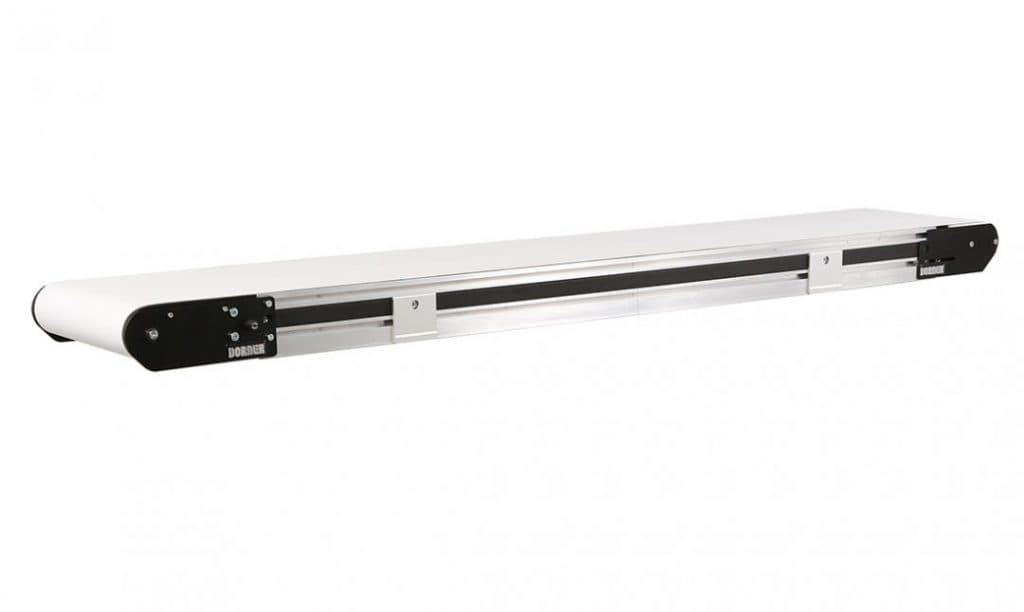
Dorner 3200 Series Heavy Duty Conveyor
The Dorner 3200 Series earns its best-in-class spot by combining a compact, modular design with heavy-duty belting and low-maintenance components tailored for automotive and industrial manufacturing. It delivers a competitive upfront cost and reduced total cost of ownership through easy replacement parts and simple service compared with higher‑priced platforms, while offering better space efficiency than bulkier heavy conveyors like Hytrol or Interroll. For users prioritizing quick deployment and routine uptime in parts handling and assembly, the 3200 balances performance and budget more tightly than more automation-centric systems such as FlexLink.
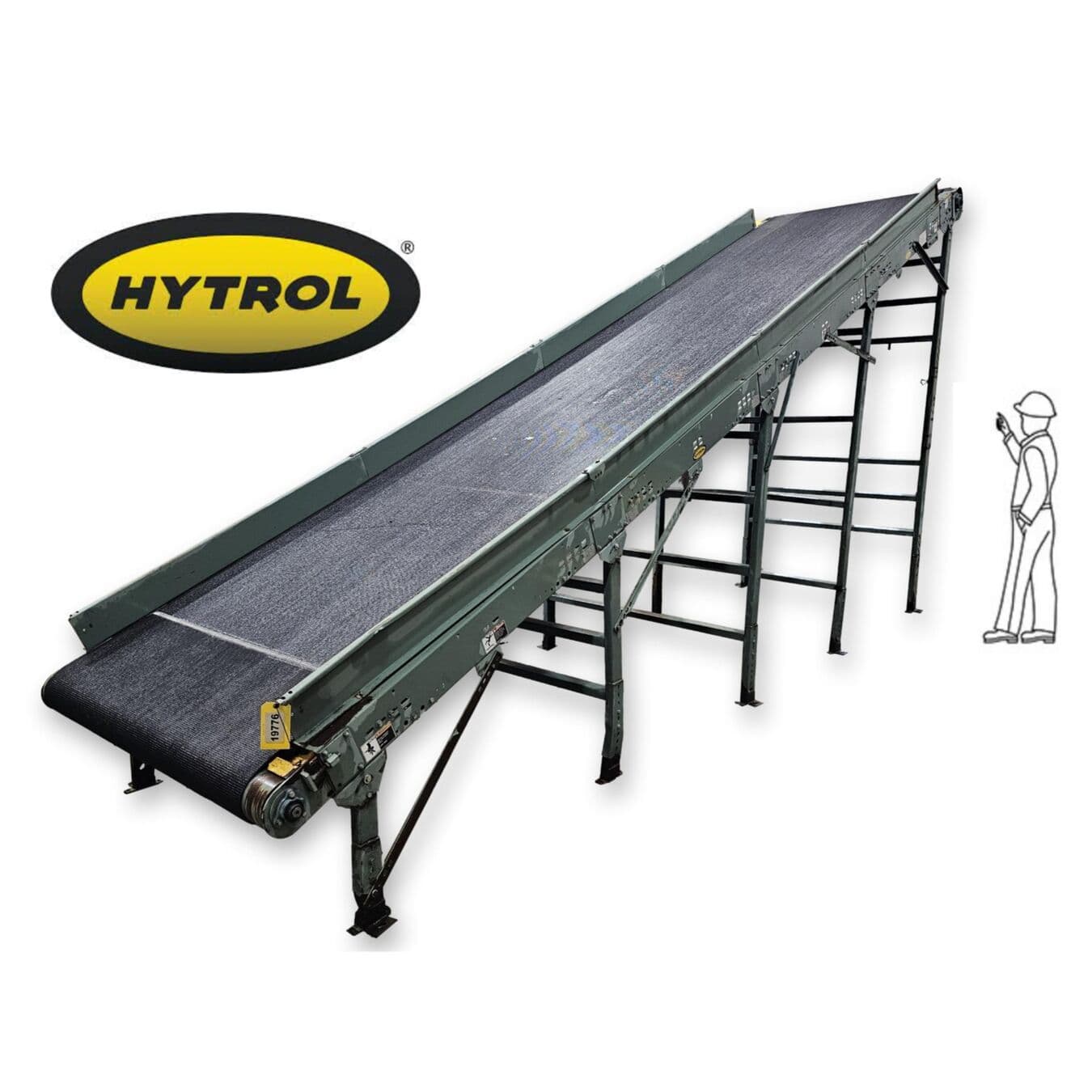
Hytrol TR Heavy Duty Belt Conveyor
The Hytrol TR Heavy Duty Belt Conveyor is a market leader for moving extremely heavy loads with a rugged steel frame, multiple drive and tracking options, and proven long‑life belts suited to automotive pallet and component transport. It offers higher static load capacity and simplified scalability compared with compact models like Dorner, making it a cost-efficient choice for large throughput lines where raw load capacity matters more than fine automation integration. Compared with premium-energy platforms such as Interroll, Hytrol typically provides a lower initial capital outlay for heavy‑duty linear conveying tasks while remaining durable in harsh factory environments.
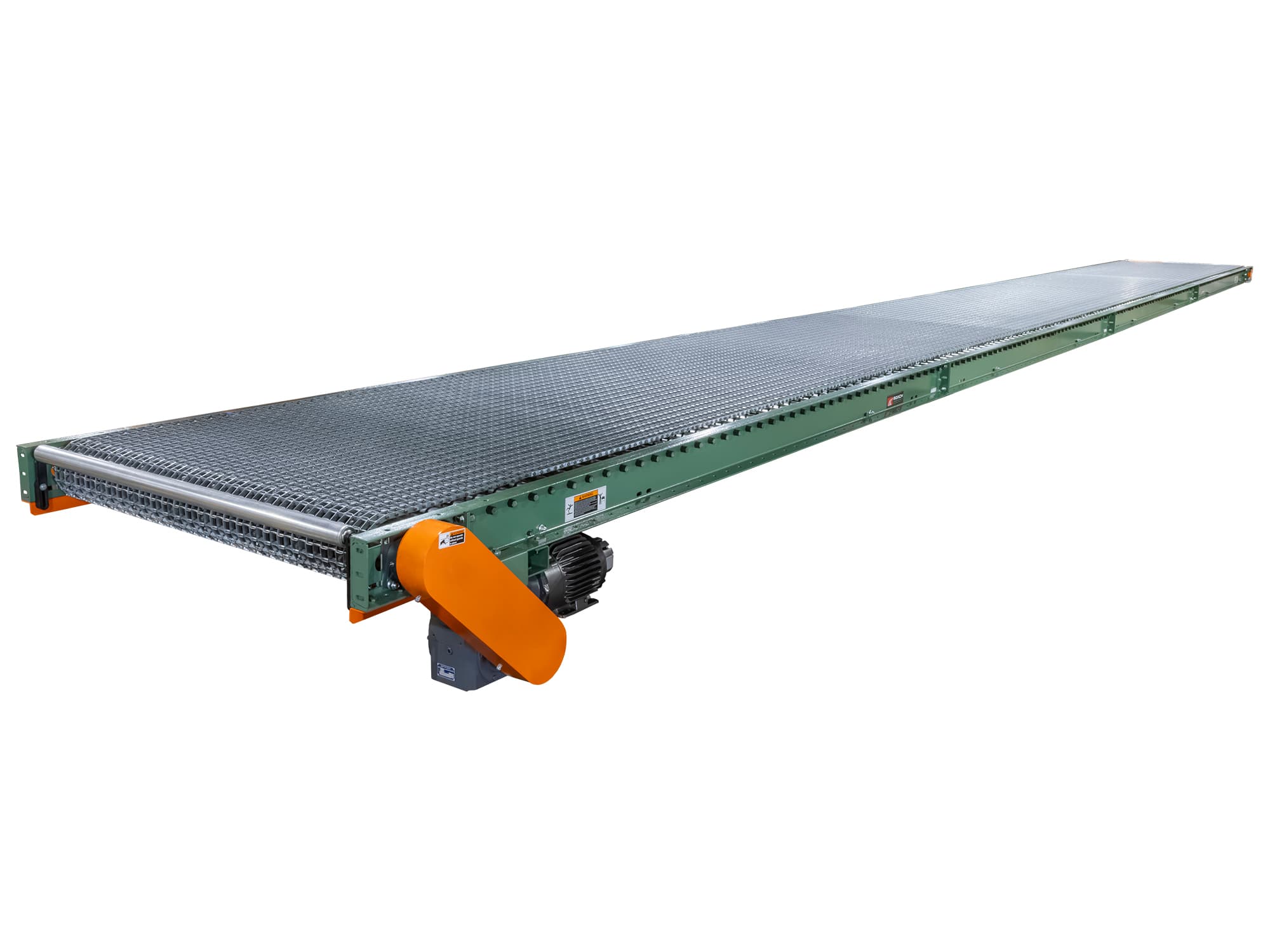
FlexLink X85 Heavy Duty Conveyor System
FlexLink X85 positions itself as the industrial automation leader by pairing a robust heavy‑duty conveyor architecture with high modularity for rapid reconfiguration and tight integration with robotics and PLC systems common in automotive manufacturing. Although its upfront cost can be higher than more basic heavy conveyors, the X85 reduces lifecycle costs through minimized downtime and faster changeovers, making it financially attractive for lines that demand frequent product mix changes or advanced process automation. Compared to Hytrol and Dorner, FlexLink emphasizes system-level throughput and control rather than pure raw-load capacity.

Interroll Heavy Duty Belt Conveyor Platform
Interroll’s Heavy Duty Belt Conveyor Platform claims market leader status for continuous high‑performance lines by combining energy‑efficient drum motors, precision engineering, and a global service network that suits multinational automotive OEMs. Its technical edge in motor efficiency and standardized modular components can lower operating and maintenance costs over time versus traditional frame conveyors, justifying a premium initial investment when energy use and uptime are critical. Compared with simpler slider or trough solutions like Lewco or Dorner, Interroll delivers superior long‑term operational predictability and lower lifecycle energy expense.
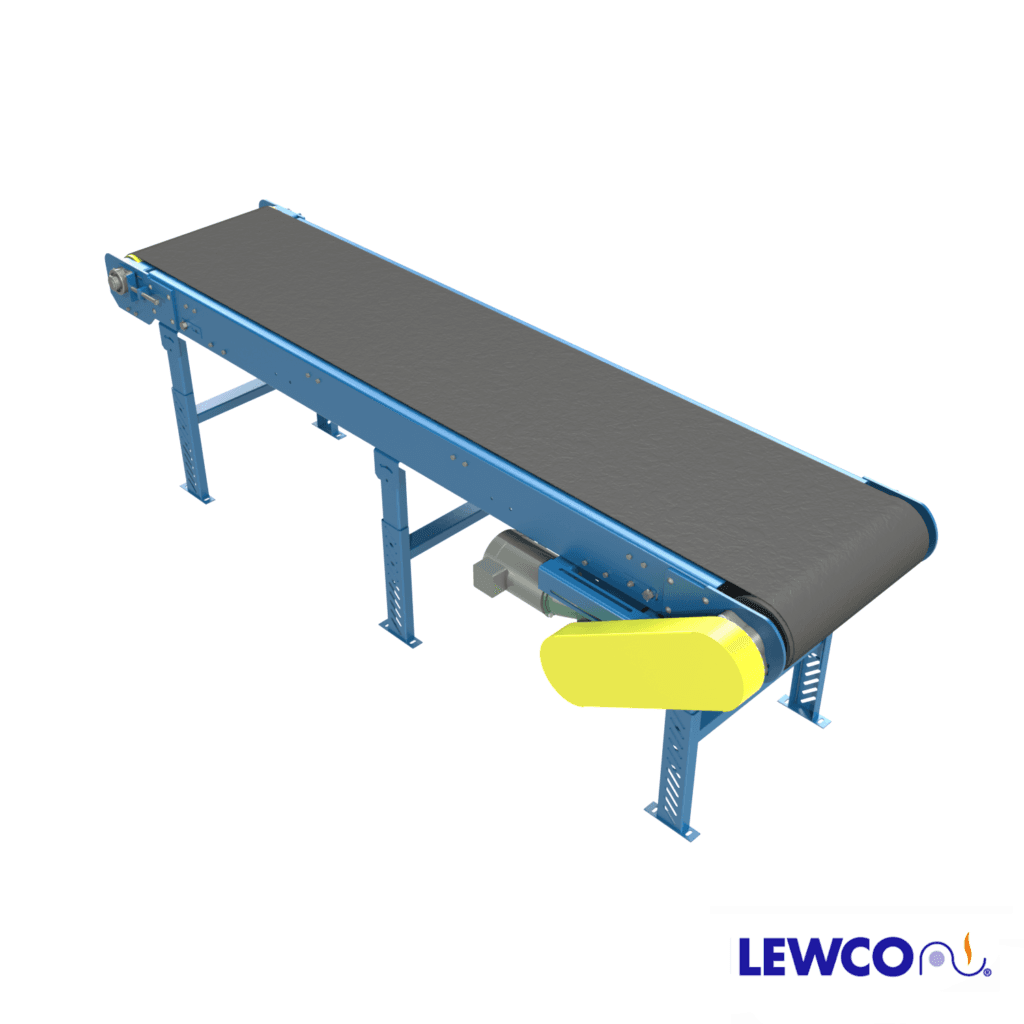
Lewco HDSB Heavy Duty Slider Bed Conveyor
The Lewco HDSB Heavy Duty Slider Bed Conveyor is a practical, cost-conscious solution engineered for transporting heavy, hot, or abrasive components typical in metalworking and automotive plants, relying on a robust slider bed design that minimizes complexity and maintenance. It is typically less expensive to buy and easier to service than precision or motorized roller platforms, and outperforms belt‑on‑roller systems in tolerance to harsh particulates, though it offers less precision for automated indexing compared with FlexLink or Interroll. For operations where durability and low lifecycle service skill requirements matter most, the HDSB delivers strong value against more feature-rich but costlier alternatives.
What Research Says About Heavy Duty Belt Conveyors
Academic and industry research supports the core benefits of heavy duty belt conveyors: lower lifecycle cost through reduced downtime, safety and ergonomic gains from less manual material handling, and energy savings when systems use variable frequency drives and efficient motors. Studies show that abrasion resistant belts and reinforced frames extend service intervals, and that predictive maintenance informed by vibration and current monitoring reduces unplanned stoppages. Safety guidance and standards from recognized bodies also inform best practices for guarding, emergency stops, and safe integration with robotic systems.
Lifecycle cost advantage: Total cost of ownership studies demonstrate that higher initial investment in robust components and modular design typically pays off through fewer replacements and less downtime.
Ergonomics and safety: Research from occupational health agencies confirms conveyors reduce repetitive lifting injuries when implemented with proper height and guarding compared with manual handling.
Energy efficiency: Tests show that adding variable frequency drives (VFDs) and right-sized motors can cut energy consumption significantly during partial-load operation.
Wear and materials testing: Laboratory tests of abrasion resistant belts and reinforced frames report longer service life under continuous heavy loads versus standard belts.
Predictive maintenance: Industry case studies indicate that condition monitoring (vibration, belt tension, motor current) enables scheduled maintenance and reduces emergency repairs by identifying issues early.
Frequently Asked Questions
Which belt conveyor should I choose for automotive throughput?
For automotive and industrial manufacturing, the Dorner 3200 Series Heavy Duty Conveyor is a strong pick, with a compact, modular design plus low-profile aluminum and steel construction and an average rating of 4.6.
What modular features does the FlexLink X85 belt system include?
The FlexLink X85 Heavy Duty Conveyor System uses a modular profile and connector system for rapid reconfiguration, supports high-capacity chain and belt options, and is rated 4.3 on average.
How does the Dorner 3200 series price compare in value?
The provided data doesn’t include the Dorner 3200 Series Heavy Duty Conveyor’s price, so I can’t compare value by cost; it’s rated 4.6 and uses modular drive and frame design for easier integration and maintenance.
Is the Hytrol TR conveyor better for heavy continuous loads?
Yes— the Hytrol TR Heavy Duty Belt Conveyor is built for continuous, high-load operations with a welded steel frame and heavy-duty belting, and it’s rated 4.5 on average.
Conclusion
In Canada the top picks for heavy duty belt conveyors balance load capacity, integration capability, and local support. The Dorner 3200 Series Heavy Duty Conveyor shines for modular flexibility and clean operation, the Hytrol TR Heavy Duty Belt Conveyor stands out as the best overall choice for broad industrial and automotive use because of its proven reliability and strong service network, the FlexLink X85 Heavy Duty Conveyor System is ideal where precise modular automation and cleanliness are priorities, the Interroll Heavy Duty Belt Conveyor Platform excels when high throughput and roller-drum integration are needed, and the Lewco HDSB Heavy Duty Slider Bed Conveyor is a rugged option for extreme loads and harsh environments. I hope you found the comparisons helpful. You can refine or expand your search by model, capacity, drive type, or by using the site search to locate local Canadian suppliers and integration partners.