

Top 5 Belt Speed, Alignment and Position Sensors in Canada — 2026 Guide
Belt speed, alignment and position sensors monitor conveyor motion to enable reliable, efficient and safe material handling. These sensors detect belt speed and direction, identify misalignment or drift, and track precise position for synchronization between conveyor zones. In Canada, demand for these sensors comes from packaging, food and beverage, logistics, mining and manufacturing sectors that prioritize uptime, sanitary design, ruggedness for cold or dusty environments and compatibility with industrial automation systems. Buyers in Canada tend to choose solutions that offer proven accuracy, local support and service, easy integration with PLCs and IIoT platforms, and features that support predictive maintenance and energy-efficient operation.
Inception's AI took the time to understand this market in Canada · · How we pickWe may earn a commission on purchases. It never affects our rankings.
Top Picks Summary
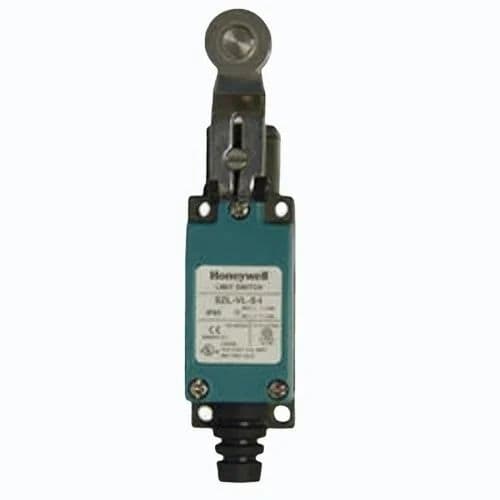
Honeywell SZL-VL-S-I Limit Switch
The SZL-VL-S-I limit switch is a rugged, low-cost mechanical solution well suited for belt alignment and end-of-travel detection in conveyor systems; its simple roller-actuated design provides reliable, deterministic contact feedback that is easy to wire into safety and PLC systems. Compared with non-contact options in this list, the Honeywell limit switch offers clear financial advantages for basic alignment stops and emergency cutoffs, though it trades off life and high-speed responsiveness versus photoelectric, inductive, distance sensors and encoders.
Estimated$80 – $160
Banner Q45 Series Photoelectric Sensor
The Q45 Series photoelectric sensor family delivers fast, non-contact presence and position detection with configurable sensing modes that make it adaptable for belt speed, alignment and edge detection tasks on conveyors. Compared with mechanical and inductive devices, the Q45s offer higher switching speeds and longer sensing ranges for diverse targets (including non-metallic belts), giving a strong mid-range technical and cost balance for automated belt monitoring where contactless detection is preferred.

Estimated$220 – $400
IFM Efector O5D100 Distance Sensor
The O5D100 distance sensor provides high-resolution, continuous distance measurement (analog or digital) tailored to precise belt position and profile monitoring without physical contact, enabling real-time speed and position calculations when integrated with control systems. In comparison to the other products, IFM's O5D100 sits between simple presence sensors and rotary encoders by giving true distance feedback rather than single-point switching, offering better diagnostic and tracking capability at a higher up-front cost than basic photoelectric or inductive sensors but lower integration complexity than some encoder solutions.

Estimated$350 – $700
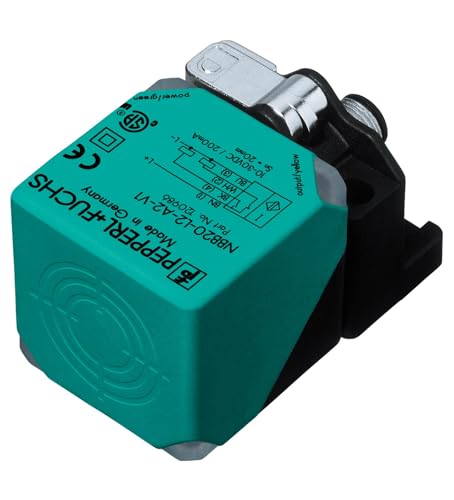
Pepperl+Fuchs NBN40-L2-E2-V1 Inductive Sensor
The NBN40-L2-E2-V1 inductive sensor is optimized for robust, high-speed detection of metallic targets such as rollers, shafts and fasteners used in belt systems, delivering high switching frequency and immunity to dust and moisture. Compared with optical and mechanical options, Pepperl+Fuchs’ inductive approach excels where metal-only detection and harsh environments are common, offering lower false-trigger risk and long service life, though it cannot detect non-metallic belt edges without added targets.
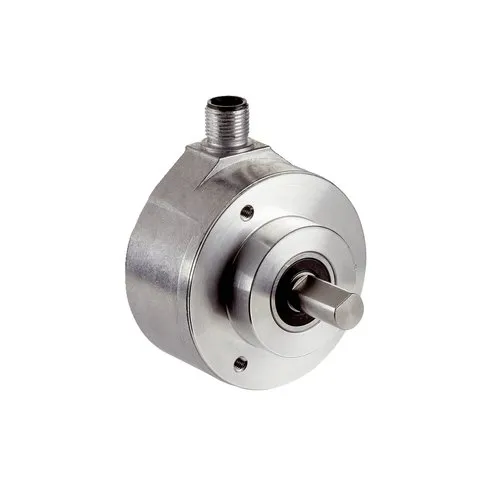
Sick DFS60 Incremental Encoder
The DFS60 incremental encoder is a market-leading rotary position and speed encoder engineered for high-resolution, deterministic feedback needed for precise belt speed control and position tracking in closed-loop applications. Relative to limit switches and proximity/photoelectric devices, the SICK encoder provides the finest temporal and positional resolution for motion control, which makes it the technically superior (and typically higher-cost) choice when absolute accuracy and repeatable speed measurement are required for advanced conveyor control and synchronization.
Estimated$300 – $800
What research and evidence say about these sensors
Scientific and industry research supports the benefits of accurate belt speed, alignment and position monitoring for reducing downtime, improving product quality and enabling predictive maintenance. Studies in industrial automation and manufacturing engineering show that timely detection of slip and misalignment prevents secondary damage to belts and rollers, while precise position feedback enables tighter process control and higher throughput. Modern sensor integration with IIoT and edge analytics allows condition-based maintenance and data-driven optimization across conveyor networks.
Slip and misalignment detection: Research and field reports link early detection to fewer unscheduled stops and lower repair costs because secondary component wear is avoided.
Throughput and quality: Accurate position and speed feedback supports synchronized zone control, which reduces product jams and rejects in packaging and sorting lines.
Predictive maintenance: Studies on IIoT deployments show that continuous monitoring with analytics shifts maintenance from reactive to predictive, increasing overall equipment effectiveness.
Environmental robustness: Comparative testing highlights that sensors rated for temperature extremes, moisture and dust perform consistently in Canadian conditions from cold storage to outdoor yards.
Integration benefits: Peer-reviewed and industry white papers describe the time savings and error reduction from sensors that offer standard industrial outputs and easy PLC or Ethernet connectivity.
Frequently Asked Questions
Which sensor should I buy for conveyor belt alignment detection?
For belt alignment and end-of-travel detection with dependable contact feedback, choose the Honeywell SZL-VL-S-I Limit Switch (4.6 rating) with a rugged roller-actuated mechanical design and IP67 rating.
Does the IFM O5D100 measure distance without touching the belt?
Yes—IFM Efector O5D100 Distance Sensor uses time-of-flight/optical distance measurement for non-contact, high-resolution continuous distance reading with analog and digital/IO-Link interfaces.
Is the Banner Q45 Series worth $295.59 for conveyor sensing?
If you need fast, non-contact presence/position detection, the Banner Q45 Series Photoelectric Sensor costs $295.59 CAD and has a 4.5 average rating, configurable sensing modes, and high-speed detection.
What is the warranty duration for the Honeywell SZL-VL-S-I?
The provided listing for the Honeywell SZL-VL-S-I Limit Switch includes a 4.6 average rating and $74.31 CAD price, but it does not state any warranty duration.
Conclusion
In Canada, belt speed, alignment and position sensors are essential for reliable conveyor control across industries. The Honeywell SZL-VL-S-I Limit Switch, Banner Q45 Series Photoelectric Sensor, IFM Efector O5D100 Distance Sensor, Pepperl+Fuchs NBN40-L2-E2-V1 Inductive Sensor and SICK DFS60 Incremental Encoder represent five strong options for 2026, each with distinct strengths: Honeywell for simple mechanical actuation, Banner for versatile photoelectric detection, IFM for precise distance measurement, Pepperl+Fuchs for rugged inductive detection and SICK for high-precision incremental encoding. For most applications requiring top accuracy, repeatability and broad integration options, the SICK DFS60 Incremental Encoder is the best overall choice on this list. We hope you found what you were looking for; if you want to refine or expand your search, use the search to filter by industry, output type, environmental rating or Canadian distributor support.