

Top 5 Load Cells & Weighing Sensors in Canada - 2026 Guide
Precision load cells and weighing sensors measure mass, force and dynamic load on conveyors and material handling systems. In Canada these devices are essential for inventory control, batching, overload protection and quality assurance across food processing, mining, logistics and manufacturing. Buyers prefer load cells that deliver consistent accuracy and repeatability, rugged construction for wet or abrasive environments, and digital outputs that integrate with PLCs and cloud monitoring. Canadian purchasers also value certified performance, local distributor support, stainless steel options for hygienic applications, and models designed for easy installation and calibration to meet provincial and federal inspection standards.
Inception's AI took the time to understand this market in Canada · · How we pickWe may earn a commission on purchases. It never affects our rankings.
Top Picks Summary
Rice Lake RL75016 S-Beam Load Cell
The RL75016 S-Beam is a versatile, rugged S‑beam load cell prized for tension and bi‑directional applications in general-purpose weighing sensor installations. It combines broad capacity ranges and straightforward mechanical integration with competitive pricing and wide distribution, making it a cost‑efficient alternative to niche high‑precision transducers like the HBM U9C while offering more installation flexibility than single‑point cells such as the Mettler Toledo SLC611.

Estimated$200 – $450
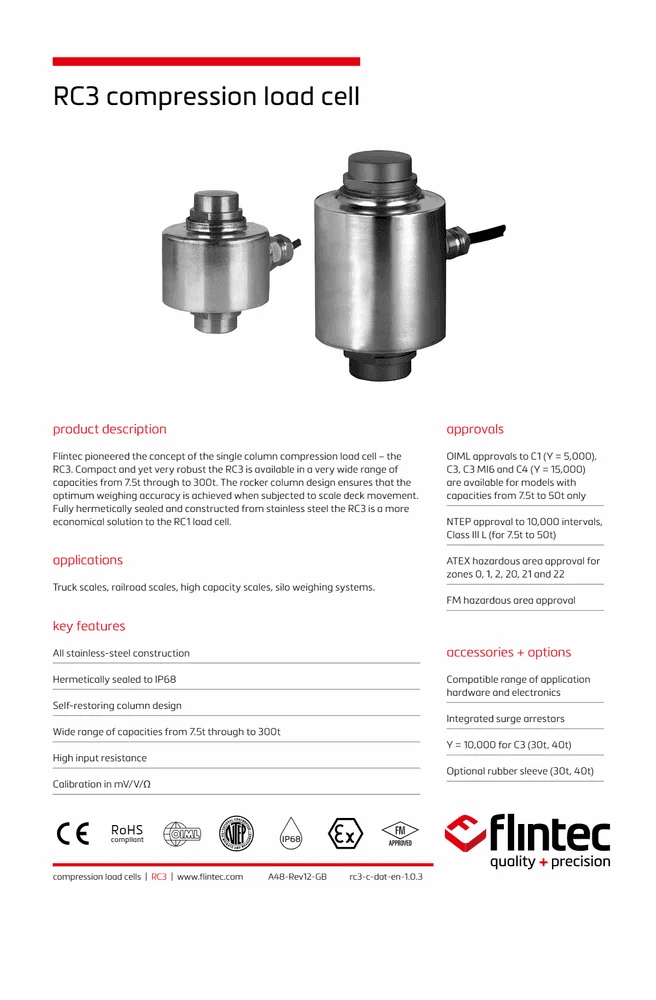
Flintec RC3 Compression Load Cell
The RC3 compression load cell is a compact, stainless steel design that delivers stable, accurate compression measurements for platform, tank and hopper weighing. It strikes a balance between precision and value—more compact and hygienic than a generic S‑beam and typically more affordable than metrology‑grade options like the HBM U9C—making it a strong choice where space, washdown resistance and reliable performance are priorities for weighing sensor systems.
Estimated$250 – $500
Mettler Toledo SLC611 Single Point Load Cell
The SLC611 single point load cell is optimized for small bench and retail scales, offering high repeatability, excellent linearity and certifications useful in commercial weighing contexts. As a specialist single‑point solution it outperforms general load cells in corner‑load sensitivity and ease of use, and although it carries a premium compared with budget stainless models like the Artech SS60050, it reduces calibration and adjustment costs for precision retail and laboratory weighing sensors.

Estimated$400 – $900
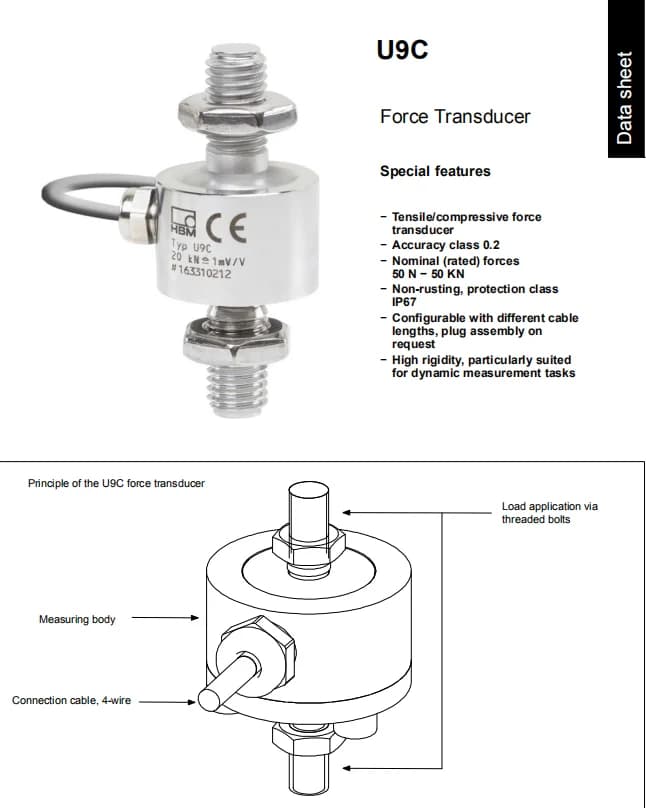
HBM U9C Force Transducer
The U9C force transducer is a high‑end load cell designed for test and measurement applications, providing exceptional accuracy, low uncertainty and options for high bandwidth or digital interfacing. It serves as the technical leader in this lineup—more expensive than the other entries—but its traceability and measurement performance justify the investment for R&D, calibration labs and critical industrial weighing sensor tasks where data quality is paramount.
Estimated$2,500 – $6,500
Artech SS60050 Stainless Steel Load Cell
The SS60050 stainless steel load cell is a durable, cost‑conscious option engineered for corrosive or outdoor weighing environments where stainless construction is required. It offers practical corrosion resistance and attractive pricing for volume installations, providing a more budget‑friendly stainless alternative to Flintec’s RC3 and a lower‑cost way to get stainless performance compared with premium brands, albeit with less extensive metrology certification than HBM or Mettler Toledo models.

Estimated$220 – $550
Research, Standards, and Practical Proof
The reliability and benefits of load cells and weighing sensors are supported by international standards and industry research that address accuracy, calibration, environmental effects and long term stability. Standards such as OIML R60 and ISO 376 set testing and accuracy classes for load cells. Measurement institutes like NIST provide reference methods for traceability and calibration best practices. Engineering studies and application notes from manufacturers and independent labs demonstrate how strain gauge technology, temperature compensation, and overload protection reduce error in real deployments, especially under dynamic conveyor loads.
OIML R60 and ISO 376 define accuracy classes and test methods that ensure comparable, certified performance across products.
NIST and national metrology institutes provide traceability and calibration protocols that minimize systematic error over time.
Peer reviewed and industry studies show that temperature compensation and proper mounting significantly improve long term stability and repeatability.
Field trials in logistics and food processing reveal that integrated digital outputs and wireless telemetry reduce downtime and enable real time inventory reconciliation.
Research on dynamic weighing indicates that sample rate, damping, and signal filtering are critical to accurate measurements on moving conveyors.
Frequently Asked Questions
Which load cell is best for bench scales in Canada?
For small bench and retail scales in Canada, choose the Mettler Toledo SLC611 Single Point Load Cell, a single-point design rated 4.7 that’s built with stainless steel construction and hermetic sealing for long-term stability.
What exact capacity and sealing does the Flintec RC3 offer?
The Flintec RC3 Compression Load Cell is an IP67-protected, low-profile compression design for platform and tank weighing, with robust welded/sealed construction for stable, accurate compression measurements.
Is the Mettler Toledo SLC611 cheaper than Flintec RC3?
Yes—Mettler Toledo SLC611 Single Point Load Cell lists at $1,868.96, while the Flintec RC3 Compression Load Cell lists at $3,102.20.
Does the Rice Lake RL75016 support both compression and tension?
Yes, the Rice Lake RL75016 S-Beam Load Cell supports both tension and compression applications, using an IP66-rated sealing design; it’s rated 4.6.
Conclusion
In Canada, precision load cells and weighing sensors make conveyor systems smarter and more reliable. This page highlights five proven options: Rice Lake RL75016 S-Beam Load Cell, Flintec RC3 Compression Load Cell, Mettler Toledo SLC611 Single Point Load Cell, HBM U9C Force Transducer, and Artech SS60050 Stainless Steel Load Cell. For most conveyor and material handling applications focused on high precision and broad compatibility, the Mettler Toledo SLC611 Single Point Load Cell stands out as the best choice because of its accuracy, reputation and integration options. We hope you found what you were looking for; use the site search or refine filters to expand or narrow results by capacity, material, IP rating, or connectivity to match your exact application.