

Top 5 Motion Coordination Modules for Canadian Bridge Cranes — 2026
Motion coordination modules for bridge cranes are dedicated controllers that synchronize multi-axis crane movements, provide anti-sway control, and manage coordinated gantry operations. These modules deliver precise trajectory control, feedforward compensation, and direct interfaces with servo drives and encoders to produce smooth, repeatable lifts and accurate positioning. In Canada, demand is driven by heavy industries such as ports and terminals, manufacturing, mining, and large-scale warehousing where lift precision, safety compliance, and uptime matter. Buyers prefer modular, networked solutions that support open industrial protocols, remote diagnostics, and local service, because these features reduce cycle times, lower operating risk, and simplify retrofits to existing crane systems.
Inception's AI took the time to understand this market in Canada · · How we pickWe may earn a commission on purchases. It never affects our rankings.
Top Picks Summary
Siemens SIMATIC S7-1500 Technology CPU
The SIMATIC S7-1500 Technology CPU is a high-performance PLC with integrated motion technology tailored for coordinated axis control on bridge cranes, delivering deterministic cycle times and built-in safety functions for demanding lift sequences. Compared with the other modules listed, Siemens distinguishes itself through tight native integration with Siemens drives and engineering tools and a global service network that reduces lifecycle cost and commissioning time for large-scale crane installations.

Estimated$3,000 – $6,000
ABB AC500 Motion Control Module
The ABB AC500 motion control module offers rugged, modular PLC-based motion control optimized for heavy-duty bridge crane applications, emphasizing reliability and straightforward integration with ABB drive systems used in lifting environments. Relative to the other products, ABB is often chosen for its field-proven robustness in harsh industries and competitive retrofit economics, making it attractive where long-term uptime and compatibility with existing ABB hardware lower total cost of ownership.

Estimated$2,000 – $4,500
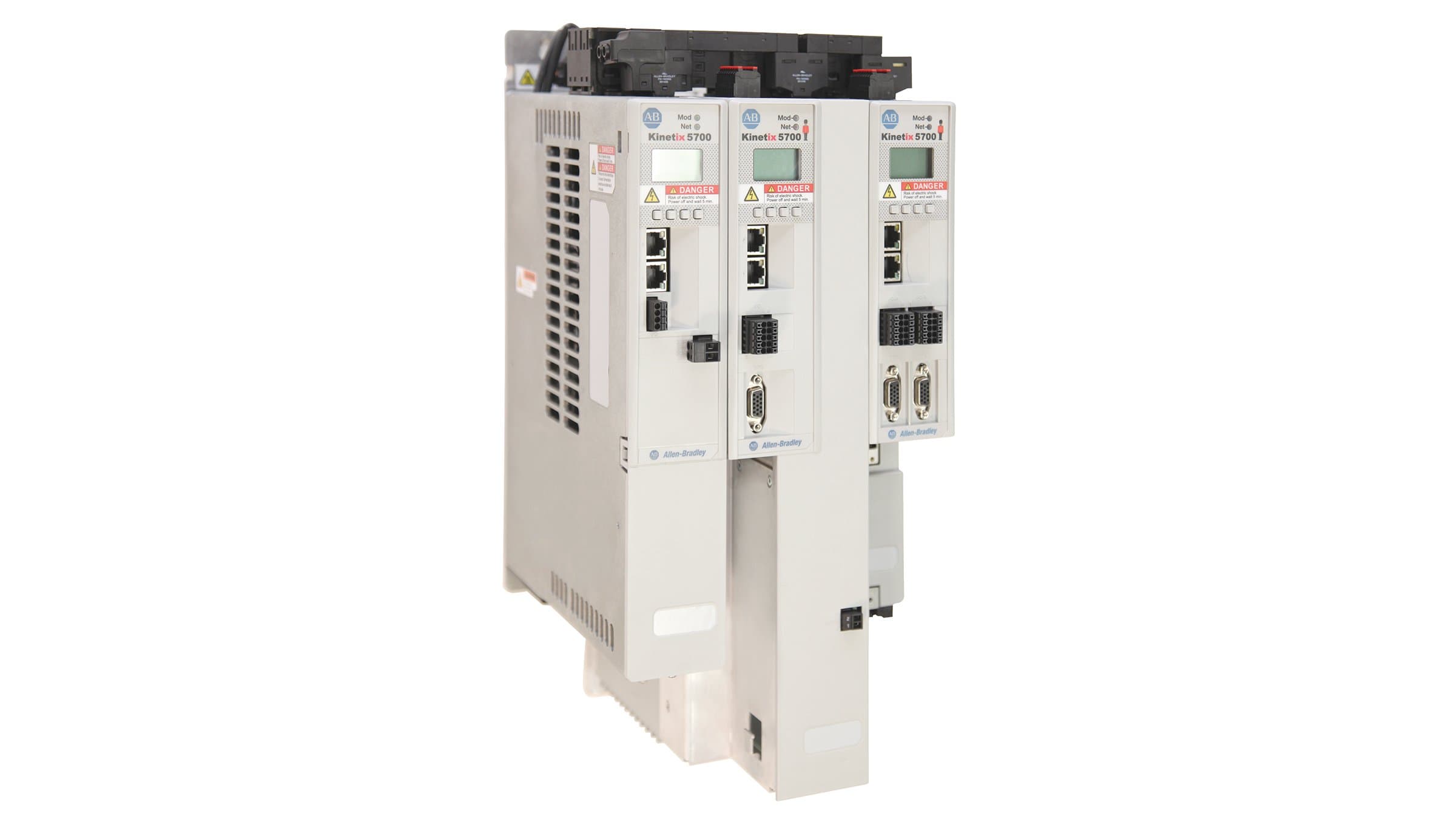
Rockwell Automation Kinetix 5700 Servo Drive
The Kinetix 5700 is a compact, high-bandwidth servo drive engineered for synchronized multi-axis motion on bridge cranes, offering tight interpolation and simplified commissioning over EtherNet/IP with CIP Motion. Compared to the PLC-centric and PC-based options in this list, Rockwell's strength is its focused servo performance and streamlined engineering for North American OEMs, which can reduce integration hours and improve cycle throughput in coordinated lift-and-travel tasks.
Estimated$2,500 – $8,000
Schneider Electric Modicon M262 Motion Controller
The Modicon M262 motion controller provides a cost-conscious, compact motion solution for bridge cranes that balances IEC 61131 programming familiarity with native motion libraries and EcoStruxure integration for energy and diagnostics. In comparison to higher-end controllers, Schneider offers a financially attractive mid-range option that lowers upfront hardware and engineering barriers for medium-capacity cranes while still providing useful motion coordination features.

Estimated$1,800 – $3,800
Beckhoff TwinCAT NC PTP Motion Control
Beckhoff TwinCAT NC PTP is a PC-based EtherCAT motion solution delivering very high axis counts, sub-microsecond synchronization and advanced kinematic functions ideal for complex bridge crane coordination and bespoke gantry movements. Against the other alternatives, TwinCAT offers the greatest flexibility and lowest incremental hardware cost for sophisticated multi-axis algorithms, though it typically requires more systems engineering expertise to exploit its full performance in crane applications.
Estimated$1,500 – $5,000
Why scientific research supports motion coordination for cranes
Control theory and industrial automation research show that coordinated multi-axis control, feedforward compensation, and active anti-sway techniques significantly improve crane performance and safety. Laboratory and field studies in robotics and crane control document reductions in residual sway, improvements in settling time, and better path-following accuracy when specialized motion coordination modules are used. These benefits translate into measurable operational gains on real-world cranes when combined with accurate encoders, robust servo drives, and well-tuned control parameters.
Anti-sway and input-shaping methods reduce pendular motion. Peer-reviewed studies and industrial trials show substantial reductions in residual sway and faster settling times compared with uncoordinated control.
Feedforward compensation and trajectory planning lower position error during acceleration and deceleration, improving placement accuracy and decreasing cycle time.
Multi-axis synchronization and gantry coordination reduce mechanical stress and uneven loading, which extends component life and reduces maintenance requirements.
Sensor fusion using encoders, inertial sensors, and encoder feedback improves disturbance rejection and enables reliable closed-loop control under variable loads.
Networked modules supporting protocols like EtherCAT, Profinet, and industrial Ethernet enable remote monitoring and predictive maintenance, which aligns with Industry 4.0 practices and helps prevent costly downtime.
Frequently Asked Questions
Which module should I choose for synchronized bridge crane axes?
Pick the Siemens SIMATIC S7-1500 Technology CPU if you want built-in technology objects for synchronized multi-axis motion and cam profiles designed for crane coordination, plus deterministic real-time performance with PROFINET for reliable bridge crane communications; rating 4.6.
Does the ABB AC500 module include electronic gearing and interpolation?
Yes— the ABB AC500 Motion Control Module includes optimized coordinated motion functions such as electronic gearing and interpolation for smooth hoist/trolley moves, with modular motion I/O that scales axis counts to match your crane configuration; rating 4.5.
How does the Siemens SIMATIC S7-1500 compare on price value?
Price isn’t provided for the Siemens SIMATIC S7-1500 Technology CPU or the other modules in this list, so you can’t compare value by cost; the Siemens unit has a 4.6 average rating and deterministic real-time performance with PROFINET.
What warranty duration applies to the Rockwell Kinetix 5700?
Warranty duration isn’t listed for the Rockwell Automation Kinetix 5700 Servo Drive in the provided data; it’s rated 4.6 and is engineered for high-bandwidth synchronized multi-axis motion with EtherNet/IP using CIP Motion.
Conclusion
In the Canadian context, motion coordination modules are a strategic investment for any facility that needs safer, faster, and more precise crane operations. We hope this guide to the top options for 2026 helped you find the right balance of performance, compatibility, and local support. If you want to narrow the list by industry, protocol, retrofit compatibility, or service coverage, use the site search to refine or expand your results.