

Top 5 Linear Position Sensors for Bridge Crane Drive and Control Systems in Canada — 2026
Linear position sensors measure the translational position of trolleys, hoists, and load blocks using magnetostrictive, LVDT, laser, inductive, or potentiometric technologies. For bridge crane drive and control systems they deliver accurate absolute or incremental linear feedback needed for anti-sway control, precise load placement, and safety monitoring in harsh industrial environments. In Canada, buyers prioritize ruggedness, long travel accuracy, simple integration with PLCs and IIoT platforms, local service and certification compliance, and low-maintenance designs that reduce downtime. The market trend toward smarter cranes, predictive maintenance, and tighter safety rules means sensors that offer diagnostics, digital outputs, and reliable absolute feedback are especially appealing to plant managers, integrators, and OEMs.
Inception's AI took the time to understand this market in Canada · · How we pickWe may earn a commission on purchases. It never affects our rankings.
Top Picks Summary
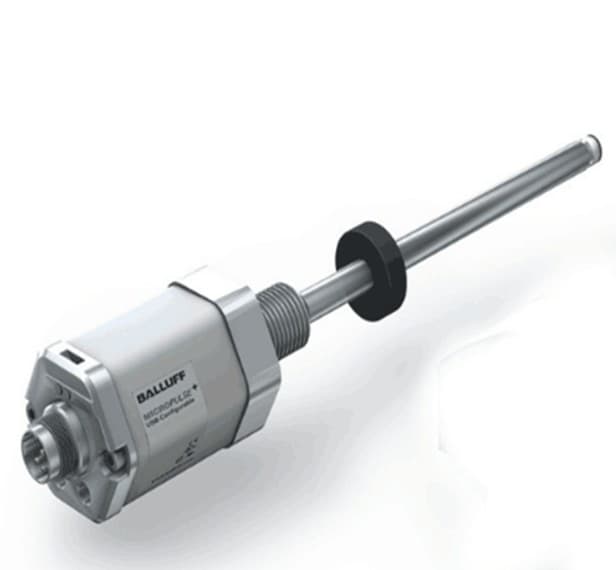
Balluff BTL7 Magnetostrictive Linear Position Sensor
The Balluff BTL7 is positioned as a best-in-class choice for bridge crane drive and control systems because it balances long stroke capability, industrial robustness and cost-effective integration (including common analog and digital outputs) for system integrators. Compared with higher-end magnetostrictive options on this list it typically offers faster delivery, simpler mounting and competitive pricing while still delivering the resolution and environmental protection needed for crane travel and trolley positioning.
Estimated$1,200 – $4,000
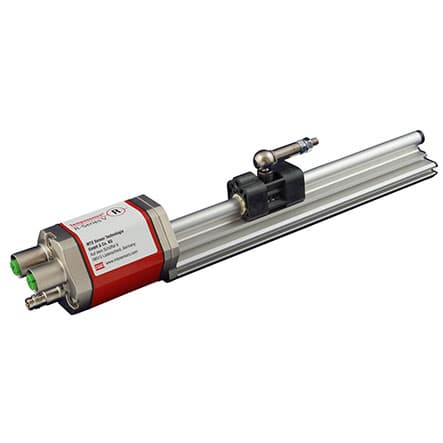
MTS Temposonics R-Series V Linear Position Sensor
The Temposonics R-Series V from MTS is the market leader for safety-critical bridge crane applications thanks to industry-leading magnetostrictive accuracy, long-stroke capability and proven thermal and EMC stability; it is commonly specified where SIL/PL-rated feedback or the highest positional certainty is required. That premium performance comes at a higher purchase price than compact inductive options, but the R-Series V's reliability, long lifecycle and certification advantages reduce lifecycle risk and maintenance costs on heavy-duty crane drives.
Estimated$2,000 – $6,000
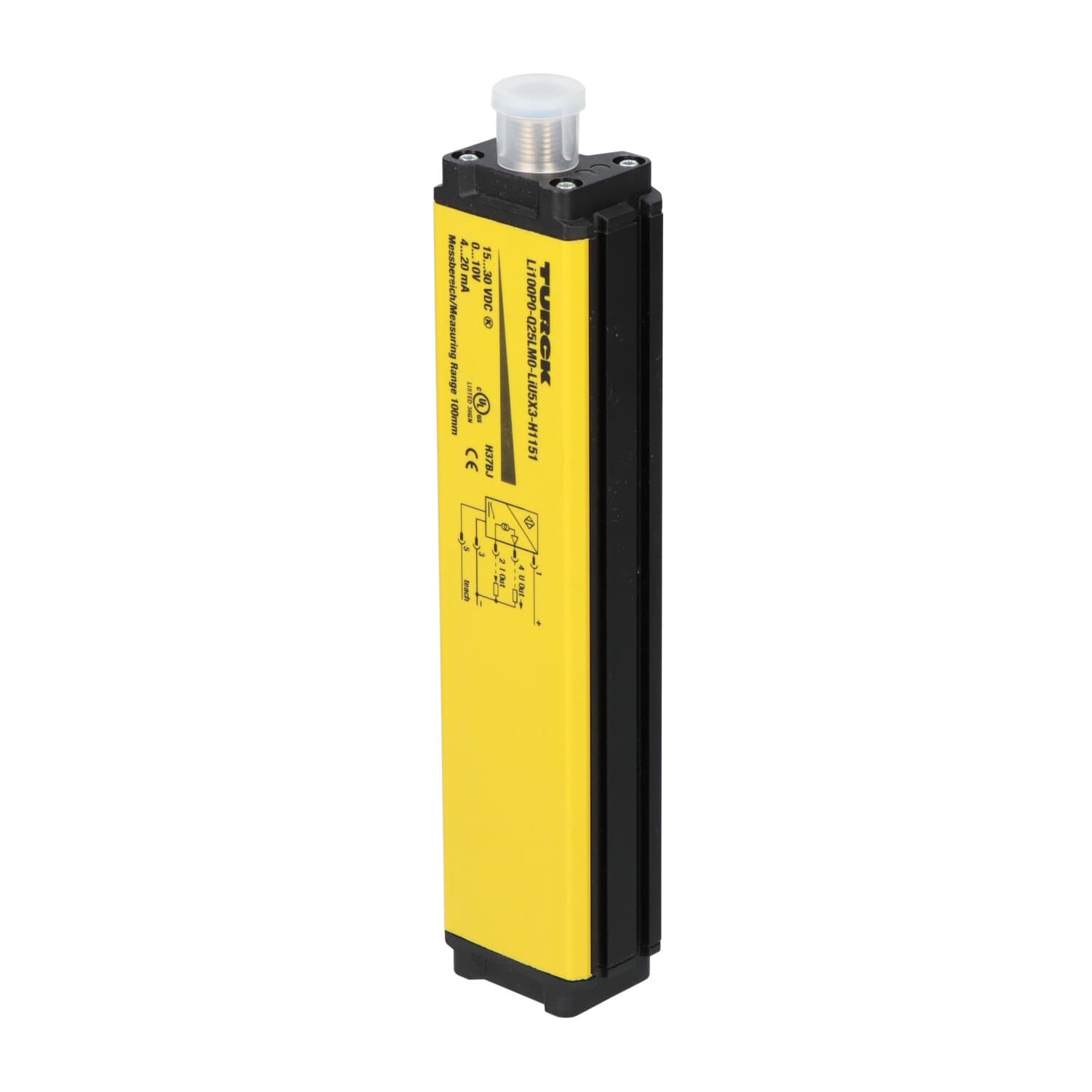
Turck LI-Q25 Inductive Linear Position Sensor
Turck's LI-Q25 is a compact, inductive linear sensor that offers a very cost-effective, robust solution for short-stroke crane tasks such as hoist limit sensing, auxiliary axis feedback or retrofit projects exposed to dust and moisture. It does not match the long-stroke range or absolute precision of magnetostrictive units like MTS or SICK, but its lower unit price, simplicity and high immunity to contamination make it an attractive economical option for non-safety-critical position sensing on bridge cranes.
Estimated$400 – $1,200
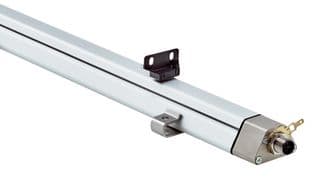
SICK DAX Magnetostrictive Linear Encoder
SICK's DAX magnetostrictive encoder combines absolute position output, extensive fieldbus connectivity and advanced diagnostics, making it especially well-suited for modern crane drive control architectures that require networked status and predictive-maintenance data. Technically it rivals other magnetostrictive offerings for accuracy and ruggedness, and its strong system integration features can lower commissioning and troubleshooting labor compared with simpler sensors, delivering a competitive total cost of ownership for intelligent crane systems.
Estimated$1,500 – $4,500
Honeywell MLT Magnetostrictive Linear Transducer
The Honeywell MLT family is a durable magnetostrictive transducer line that delivers high repeatability and customizable stroke lengths, making it a versatile midrange choice for bridge crane drives where tailored lengths and global support are important. While it may not carry the same niche certifications as the top-tier MTS units, Honeywell's broad distribution and option flexibility frequently yield faster project turnaround and predictable pricing versus bespoke offerings.

Estimated$1,500 – $5,000
Why these sensors matter and what the research shows
Sensor technology for linear positioning is grounded in established physical principles. Magnetostrictive sensors use a torsional wave and provide long travel absolute position with high repeatability. LVDT devices rely on magnetic coupling and are valued for stability and longevity. Inductive sensors are robust in dirty, wet environments, while laser and optical encoders deliver very high resolution where a clean line of sight is possible. Recent industry research and application studies have focused on how accurate position feedback improves closed-loop control (reducing sway and improving placement), supports safety functions, and enables condition-based maintenance when combined with analytics.
Magnetostrictive sensors have been demonstrated in industry white papers to deliver sub-millimeter repeatability over long strokes, which is critical for precise load placement.
LVDT technology is frequently cited in reliability studies for its long-term stability and resistance to drift in demanding temperature cycles.
Comparative tests and field case studies show inductive sensors retain accuracy in contaminated or splash-prone environments better than exposed optical systems.
Industry reports and pilot projects combining linear sensors with IIoT telemetry show measurable reductions in unplanned downtime through early fault detection and trend analysis.
Safety and functional-safety analyses indicate absolute position feedback from modern transducers is a key enabler to meeting higher safety integrity levels when implemented with certified controllers and redundancy.
Frequently Asked Questions
Which sensor should I pick for bridge crane control integrators?
Choose the MTS Temposonics R-Series V Linear Position Sensor for safety-critical bridge crane applications, since it’s described as the market leader for magnetostrictive accuracy and long-stroke capability, with a 4.8 average rating.
Does the Balluff BTL7 use magnetostrictive for crane position feedback?
Yes—the Balluff BTL7 Magnetostrictive Linear Position Sensor uses magnetostrictive technology for high-accuracy absolute position feedback, and it has a 4.6 average rating.
Is the Turck LI-Q25 a cheaper option for hoist limit sensing?
For short-stroke crane tasks like hoist limit sensing, the Turck LI-Q25 Inductive Linear Position Sensor is positioned as a very cost-effective solution, with a 4.5 average rating and simple analog output options.
What makes Turck LI-Q25 suitable for dust and moisture?
The Turck LI-Q25 Inductive Linear Position Sensor has strong immunity to dirt, dust, and electrical noise common in crane environments, uses contactless sensing, and carries a 4.5 average rating.
Conclusion
This collection highlights top options in Canada for 2026: Balluff BTL7 Magnetostrictive Linear Position Sensor, MTS Temposonics R-Series V Linear Position Sensor, Turck LI-Q25 Inductive Linear Position Sensor, SICK DAX Magnetostrictive Linear Encoder, and Honeywell MLT Magnetostrictive Linear Transducer. Each model targets heavy-duty crane applications with strong accuracy and ruggedness, but for most bridge crane drive and control systems the Balluff BTL7 stands out as the best overall choice because of its combination of precision, modern diagnostics, and ease of integration. We hope you found the overview helpful. If you want to narrow results by travel length, output type, safety rating, or price, you can refine or expand your search to find the exact sensor that fits your crane project in Canada.