

Top 8 Commercial Truck Tires in Canada 2026: Heavy-Duty, Fuel-Saving, Retread-Ready
Published on Monday, July 20, 2026
Commercial truck tires in Canada serve medium and heavy commercial trucks, vans, and fleet vehicles across long-haul, regional, and urban applications. Fleet managers and owner-operators prioritize tires that deliver high mileage, low rolling resistance for fuel savings, robust load capacity, regulatory compliance for provincial and federal requirements, and designs compatible with retreading to lower lifecycle cost and environmental impact. Canadian buyers also weigh seasonal needs, including winter traction and province-specific rules, plus growing trends such as telematics integration and tires engineered for electric trucks. This category brings together heavy-duty options built for uptime, predictable maintenance intervals, and total cost of ownership for fleets operating in diverse Canadian climates and routes.
Top Picks Summary
The Goodyear Fuel Max RSA focuses on immediate fuel savings and stable handling for commercial steer applications, with an engineered tread that promotes low rolling resistance and even wear. Financially it aims to deliver rapid payback through lower fuel consumption and competitive pricing, placing it as a practical choice for fleets prioritizing operational savings over maximum mileage. Compared to the high-mileage Michelin or the retread-friendly Continental, Goodyear emphasizes near-term economy and reliable wet-weather performance.
Show More Commercial Truck Steer Tires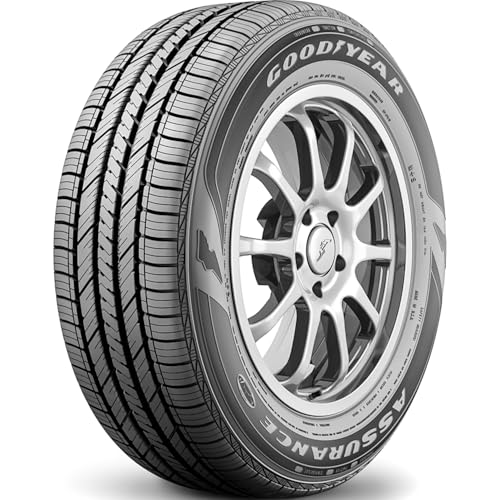
The Toyo M655 is a value-focused commercial drive tire now on the market, providing dependable traction and a lower upfront cost that suits short-haul and regional fleets or mixed-service trucks. While it generally does not match the high-mileage durability or fuel-efficiency of the Michelin X Multi D or Goodyear Fuel Max LHD, its lower acquisition cost and solid wet-weather performance make it an economical choice for operators prioritizing purchase price and predictable replacement intervals.
Show More Commercial Truck Drive Tires
The Yokohama BluEarth 109L is part of Yokohama's eco‑focused lineup, offering solid rolling resistance improvements and balanced tread life aimed at cost‑conscious fleets. While it may not always match the premium mileage of the top Michelin or some Bridgestone compounds, it frequently provides a favorable upfront price and respectable fuel‑efficiency gains, delivering an attractive cost‑to‑performance ratio for smaller or mid‑size operators.
Show More Commercial Truck Trailer Tires
Michelin X Multi Energy Z is positioned as a best-in-class commercial truck all-position tire thanks to its low-rolling-resistance compound and reinforced casing that extend tread life and retreadability for long-haul and mixed-service fleets. Compared with the Bridgestone R283A Ecopia and Goodyear Fuel Max RSA, it emphasizes total cost of ownership over lowest up-front price by delivering predictably higher mileage and reduced fleet operating costs across service cycles.
Show More Commercial Truck All Position TiresWhere to buy Michelin X Multi Energy Z in Canada: the trusted retailers we track in this market, with the best price we have observed at each. Prices are checked regularly and can change, and the retailer confirms the final price at checkout.
We may earn a commission on purchases. It never affects our rankings.
$550 – $750
The Michelin X Multi D is positioned as the best-in-class choice for commercial truck regional service tires thanks to its balance of long mileage, excellent retreadability and low rolling resistance that reduce total cost-per-mile for regional fleets. Compared with the other tires on this list, it typically delivers higher lifecycle value (offsetting a higher upfront price) and is best for operators prioritizing maximum mileage and minimized replacement frequency on distribution and regional routes.
Show More Commercial Truck Long Haul Tires
Where to buy Michelin X Multi D in Canada: the trusted retailers we track in this market, with the best price we have observed at each. Prices are checked regularly and can change, and the retailer confirms the final price at checkout.
We may earn a commission on purchases. It never affects our rankings.
$500 – $900
The Michelin X Works Z is positioned as a best-in-class severe-service commercial tire thanks to its reinforced casing and engineered tread compound that prioritize long tread life and low cost-per-mile for mixed severe applications. Compared with the other tires on this list, it typically offers superior retreadability and marginally better rolling resistance, translating to lower operating costs over the life of the casing. For fleets that prioritize durability and total-cost-of-ownership over the lowest up-front price, the X Works Z is a strong financial and technical choice.
Show More Commercial Truck Regional Service Tires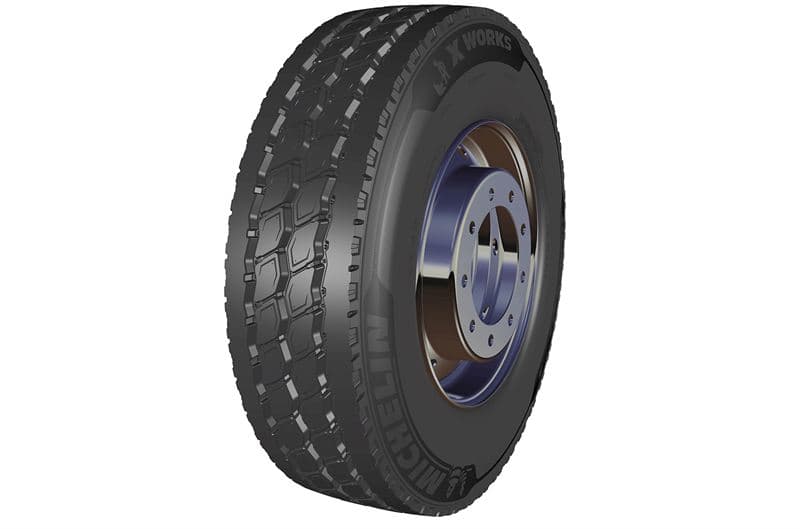
The Bridgestone R283A Ecopia stands out in this commercial truck retreadable casing comparison for its low rolling resistance compound and thermal management features that drive fuel savings over long service lives. Compared with higher-durability casings like Michelin’s XDA5+, the R283A often delivers superior on-road fuel economy, making it attractive for operators prioritizing operating cost reductions per mile while still offering a reliably retreadable casing.
Show More Commercial Truck Urban Delivery Tires
Where to buy Bridgestone R283A Ecopia in Canada: the trusted retailers we track in this market, with the best price we have observed at each. Prices are checked regularly and can change, and the retailer confirms the final price at checkout.
We may earn a commission on purchases. It never affects our rankings.
$380 – $540
Bridgestone Ecopia H-Steer 002
The Bridgestone Ecopia H-Steer 002 is a market-leading steer tire that balances low rolling resistance with strong wet grip through a silica-enhanced compound, delivering competitive fuel economy at a more moderate price point than the highest-end offerings. It offers a cost-effective middle ground for fleets that want near-top fuel savings without Michelin's premium, and it competes well on treadwear and handling against Goodyear and Continental.
Show More Commercial Truck Severe Service Tires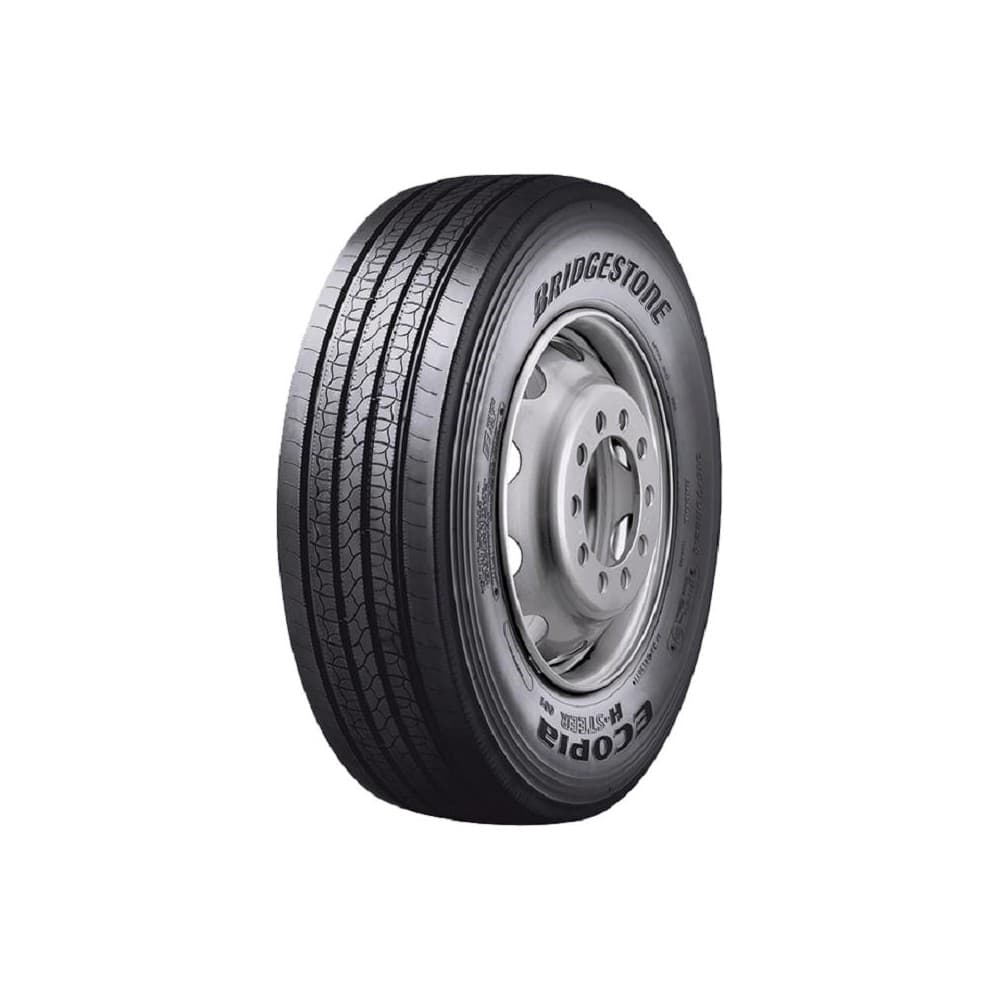
What Research and Testing Say About Commercial Truck Tire Benefits
Independent lab tests, manufacturer field trials, and industry studies consistently show that tire design choices measurably affect fuel consumption, tread life, and fleet uptime. Key performance attributes are assessed with standardized tests for rolling resistance, traction, and load ratings, while real-world fleet data and telematics studies demonstrate how predictive maintenance and tire-pressure monitoring reduce unplanned downtime. Environmental and economic analyses also support retreading as a cost-effective way to extend tire life and lower raw material use and emissions compared with one-time-only tires.
Rolling resistance and fuel economy: Lower rolling resistance compounds and optimized tread patterns reduce fuel use and CO2 emissions in long-haul and regional operations.
Tread compound and mileage: Wear-resistant compounds and optimized casing strength lead to higher mileage per tire, improving total cost of ownership.
Retreading benefits: Retread-compatible casings extend service life and reduce waste and material consumption while maintaining safety when performed to industry standards.
Load capacity and safety testing: Tires rated and tested for specified load indexes and inflation practices maintain safe handling and legal compliance under Canadian weight regulations.
Telematics and predictive maintenance: Tire pressure monitoring systems and telematics data enable proactive maintenance, improving uptime and reducing casing damage.
Seasonal traction and winter testing: Winter traction tests and province-specific requirements inform tire selection for safe operation on snow, ice, and mixed conditions.
Frequently Asked Questions
Which tire should I pick for long-haul fuel savings?
Choose the Goodyear Fuel Max LHD: it has an average rating of 4.6, a low rolling‑resistance compound for measurable fuel savings on long hauls, and a robust casing built for extended mileage and retreadability.
What spec makes the Yokohama BluEarth 109L more efficient?
The Yokohama BluEarth 109L uses a BluEarth silica compound that improves wet traction while maintaining low rolling resistance, plus a tread design balancing long mileage and reliable traction for regional and highway runs.
Is the Yokohama BluEarth 109L worth $270.67 in Canada?
At $261.69 CAD, the Yokohama BluEarth 109L (average rating 4.3) delivers low rolling resistance with improved wet traction via its BluEarth silica compound, and it’s built with a durable casing suitable for multiple retreads.
Does the Goodyear Fuel Max RSA work for regional stop-and-go?
Yes—the Goodyear Fuel Max RSA (average rating 4.5) is built for stop-and-go regional routes and highway hauling, using a fuel-saving tread formulation and optimized contact patch to lower consumption, with strong wet-weather performance and long usable tread life.
Conclusion
Whether you manage a long-haul fleet, regional delivery routes, or urban service vehicles, the right commercial truck tire balances mileage, fuel efficiency, load capacity, maintenance simplicity, and regulatory compliance across Canadian conditions. We hope this guide helped you identify viable options for 2026. Use the site search and filters to refine by vehicle application, tire size, retread compatibility, province or climate, or to expand your search to seasonal and specialty options.