

Canada's Top 6 Utility Trucks for 2026: Bucket Trucks, Digger Derricks and Service Bodies
Utility trucks are specialized work vehicles designed for utilities, contractors, municipalities and telecom providers. In Canada, the top choices blend rugged cold-weather performance with advanced safety equipment, insulated aerials, modular storage systems and upfit-ready electrical architectures that support auxiliary tools and electrified accessories. Buyers favor trucks that maximize uptime through telematics and easy maintenance, offer configurable payload and storage to match diverse jobs, and meet regulatory and safety standards for live-line work and roadside operations. For 2026, expect the leading models to emphasize worker protection, efficient power management for auxiliary systems, and flexible platforms that simplify future upgrades or electrification.
Inception's AI took the time to understand this market in Canada · · How we pickWe may earn a commission on purchases. It never affects our rankings.
Top Picks Summary
The Altec AT40G is a dependable medium duty aerial bucket truck designed for everyday utility and contractor applications, prized for its durable construction, straightforward serviceability, and fleet-friendly footprint. Compared with longer-reach models in this list it offers a lower acquisition price and strong resale value, making it a cost-effective choice for organizations that prioritize uptime, simple maintenance and predictable lifecycle costs over maximum reach or specialized insulation.
Show More Medium Duty Aerial Bucket Trucks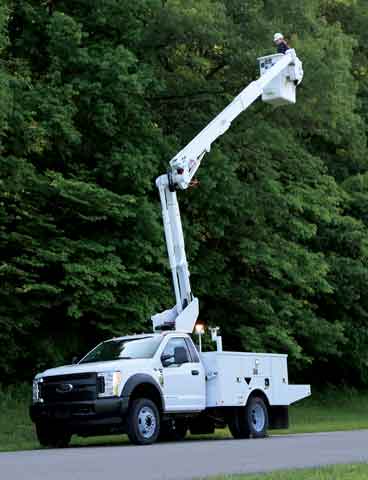
We may earn a commission on purchases. It never affects our rankings.
Estimated$130,000 – $190,000
The Elliott L60R HiReach distinguishes itself with extended reach and specialized boom geometry that improves access on constrained or elevated job sites, a technical edge useful for many medium duty utility digs. That reach and precision can translate to fewer set-ups and faster job completion than shorter-boom alternatives, offsetting a modest premium in purchase cost. Versus the other trucks listed, the L60R is the technically focused choice for crews who need maximum reach and deployment flexibility on routine medium-duty work.
Show More Medium Duty Digger Derrick Trucks
Estimated$380,000 – $650,000
Ford F-550 Super Duty with Reading Classic II Service Body
The Ford F-550 Super Duty paired with Reading's Classic II body is a best-in-class choice for medium duty service trucks thanks to Ford's proven Super Duty chassis, broad dealer/support network and Reading's modular, service-oriented compartment layout. It delivers class-leading towing and payload capacity and typically stronger resale and fleet-finance programs than niche imports, while the Reading body keeps acquisition costs predictable and simplifies tool organization compared with some heavier or more specialized upfits on this list.
Show More Medium Duty Service Body Trucks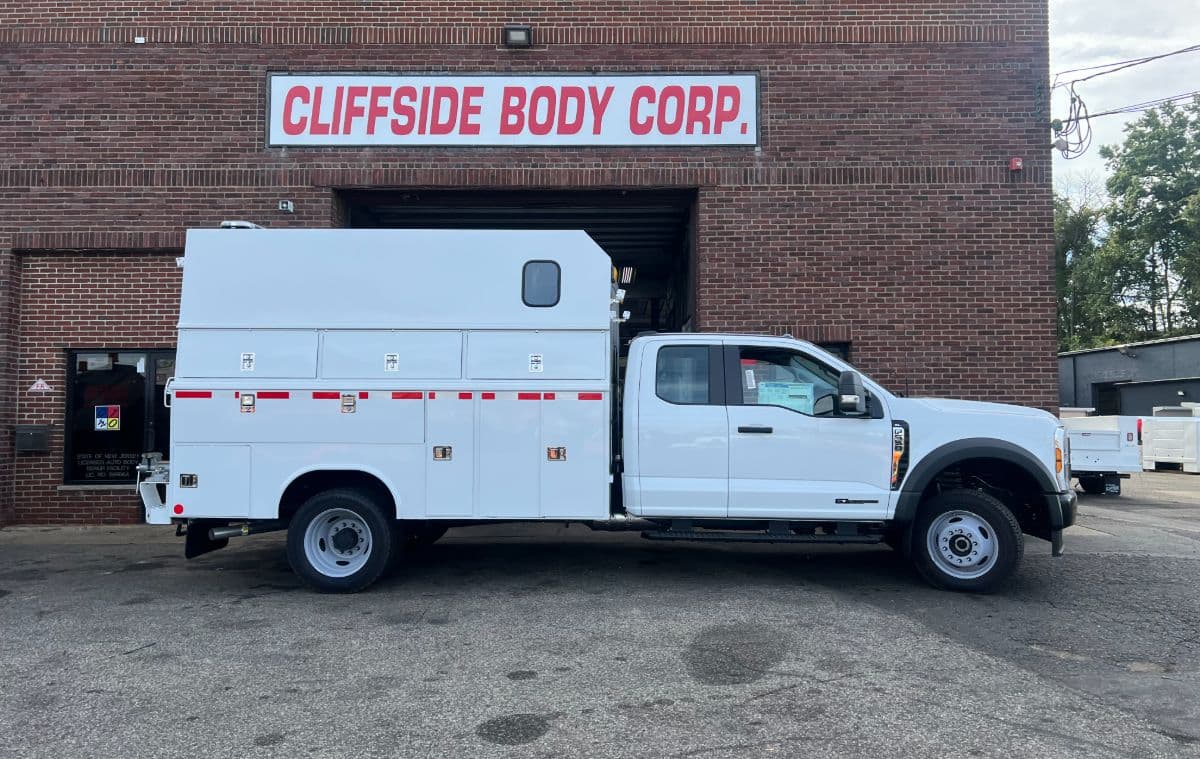
We may earn a commission on purchases. It never affects our rankings.
Estimated$85,000 – $120,000
The Ram 5500 Chassis Cab earns a market-leading position for medium-duty platform work by balancing strong payload capability with lower entry price and excellent maneuverability for urban routes. Against the F-650 and Silverado 6500HD it typically offers a more cost-effective acquisition and simpler service profile, while compared to the Hino and International it can deliver comparable vocational performance with a lighter footprint and attractive fleet incentives.
Show More Medium Duty Platform Body Trucks
We may earn a commission on purchases. It never affects our rankings.
Estimated$80,000 – $110,000
Freightliner M2 106 Mobile Command Unit
The Freightliner M2 106 Mobile Command Unit is built on a proven medium-duty platform and excels where customized electrical systems, redundant HVAC and mission-critical communications are required for long-duration mobile electronics operations. It leads for chassis durability and upfit flexibility, offering a premium, turnkey mobile command solution that reduces retrofit complexity even though it commands a higher upfront and lifecycle cost than the smaller trucks in this set.
Show More Medium Duty Telecommunications Trucks
Estimated$250,000 – $450,000
Altec's AT40G mounted on the Freightliner M2 106 earns its place for medium duty line maintenance by pairing a proven insulated articulating boom with the M2's best-in-class chassis payload and serviceability, minimizing downtime for busy utility fleets. Compared with the other trucks on this list it offers wide parts availability and dealer support that lower lifecycle costs, making it a practical choice when prioritizing uptime and total cost of ownership over the absolute highest reach.
Show More Medium Duty Line Maintenance Trucks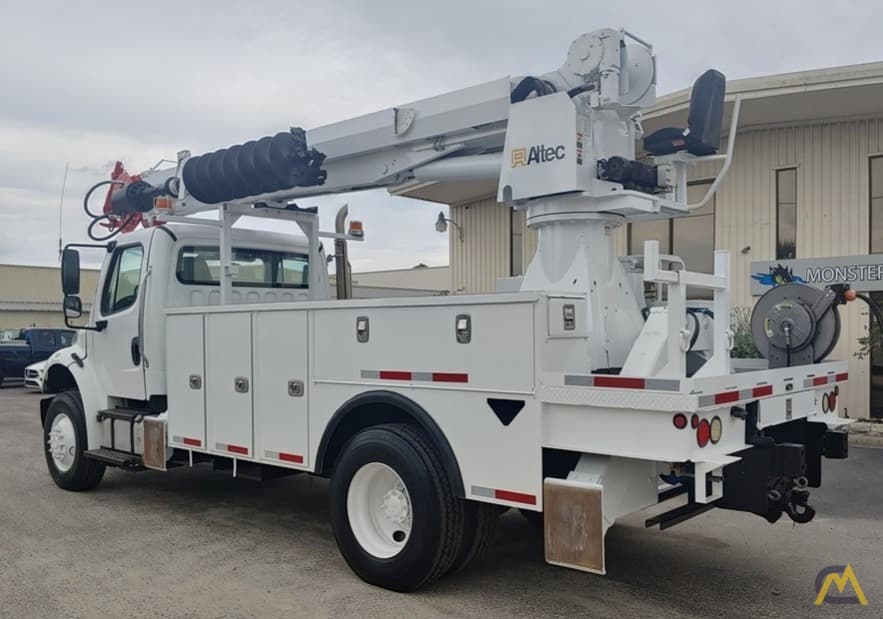
Estimated$220,000 – $300,000
What Research and Industry Guidance Say About Utility Truck Benefits
Industry research and government guidance highlight several consistent benefits of modern utility truck design. Agencies and technical bodies such as Transport Canada, Natural Resources Canada, NIOSH and standards organizations like SAE emphasize improved worker safety from insulated aerial devices and properly designed fall protection, better fleet efficiency from telematics and modular upfits, and lower operational emissions when auxiliary systems are optimized for electrified power. These findings help fleet managers prioritize investments in equipment that reduce injury risk, shorten service times, and support long term total cost of ownership goals.
Insulated aerials and tested dielectric components reduce the risk of electrical contact injuries when used and maintained according to standards.
Modular storage and organized service bodies shorten time on site by making tools and parts easier to access, which increases first-time fix rates.
Upfit-ready electrical architectures simplify adding auxiliary systems like hydraulic pumps, battery inverters and onboard chargers, reducing installation errors and downtime.
Telematics and predictive maintenance programs, supported by Transport Canada and industry reports, have been shown to improve vehicle uptime and lower fleet operating costs.
Electrified accessories and hybrid drivetrains can cut emissions and fuel consumption, but require proper thermal management for reliable cold-climate operation in Canada.
Frequently Asked Questions
Which utility truck should I choose: Altec D3060-TR or Freightliner M2 106?
Choose Altec D3060-TR if you need 60' reach for tougher soil and heavier pole work; it targets digging torque and lift capability, with a 4.8 rating.
What does the Altec D3060-TR specifically do for digging?
The Altec D3060-TR is built around robust derrick and auger systems for demanding soil conditions, plus heavy-duty torque (auger boss) and fast cycle quick hole-making.
How do the prices compare for Altec D3060-TR versus Freightliner M2 106?
Price isn’t provided for either Altec D3060-TR or Freightliner M2 106 Mobile Command Unit, so you’ll need listing or quote details to compare value.
Is the Freightliner M2 106 Mobile Command Unit meant for mobile tech work?
Yes—Freightliner M2 106 Mobile Command Unit is designed for long-duration mobile electronics operations, with comprehensive HVAC, redundant onboard power systems, and advanced cable management; rating 4.7.
Conclusion
Whether you are specifying a bucket truck, digger derrick or a service body for a contractor fleet, the right combination of safety features, modular storage and an upfit-ready electrical platform will drive productivity and reduce risk. We hope this guide helped you find the features and models to consider for Canada in 2026. If you need to narrow results by region, payload, or powertrain, use the search to refine or expand your options.