

Top 4 Medium Duty Telecommunications Trucks in Canada for 2026
Medium duty telecommunications trucks are purpose-built work vehicles configured for fiber and wireless network deployment with dedicated storage for spools, cable reels, and specialized splicing or testing equipment. In Canada, these trucks are popular with contractors, utility fleets, and municipal crews because they balance the payload and workspace capacity of larger trucks with city-friendly maneuverability. Newer builds prioritize cable management systems, onboard power and climate control for sensitive electronics, and integrated safety features for pole and rooftop access. Buyers in 2026 often look for models that offer modular bodies for rapid reconfiguration, telematics for fleet efficiency, compliance with Canadian safety and emissions standards, and options for electrified or hybrid powertrains to lower operating costs and emissions in urban areas.
Inception's AI took the time to understand this market in Canada · · How we pickWe may earn a commission on purchases. It never affects our rankings.
Top Picks Summary
Reading Utility Vehicles Fiber Splicing Body
Reading’s fiber splicing body is positioned as a best-in-class, splicing-centric upfit that prioritizes large integrated workbenches, built-in splice tray storage and internal cable reel management to streamline technician workflows. It delivers a cost-efficient, purpose-built layout that undercuts the higher-capex aerial providers on total acquisition cost while offering more splicing-specific features than general service bodies like Knapheide or modular packages like EZ STAK.
Show More Reel Handling and Dispensing Utility Trucks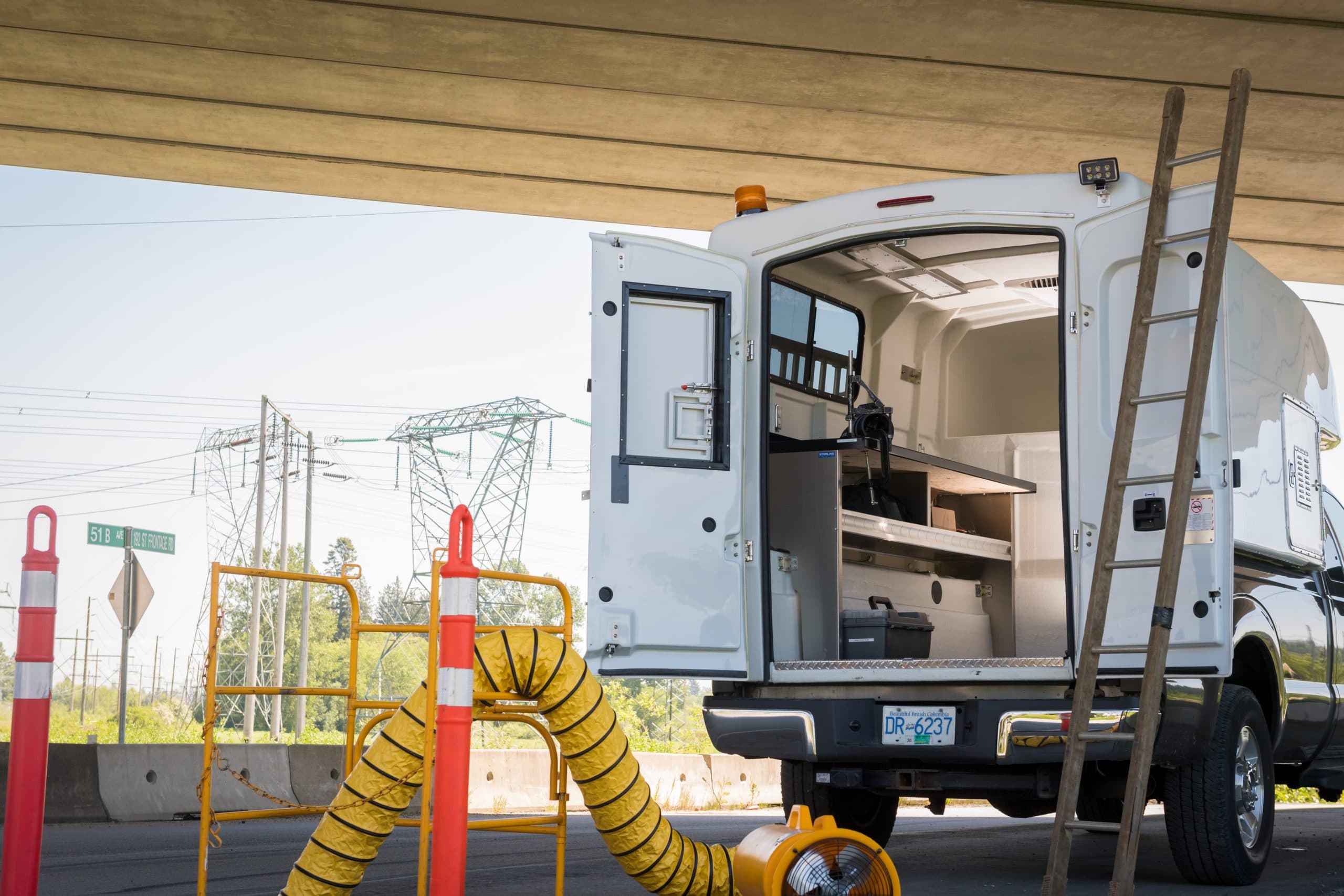
Estimated$25,000 – $55,000
Freightliner M2 106 Mobile Command Unit
The Freightliner M2 106 Mobile Command Unit is built on a proven medium-duty platform and excels where customized electrical systems, redundant HVAC and mission-critical communications are required for long-duration mobile electronics operations. It leads for chassis durability and upfit flexibility, offering a premium, turnkey mobile command solution that reduces retrofit complexity even though it commands a higher upfront and lifecycle cost than the smaller trucks in this set.
Show More Fiber Splice and Test Utility Trucks
Estimated$250,000 – $450,000
The Altec AT40G is a compact, nimble 40-foot platform designed for tight urban pole and rooftop access where maneuverability and a small vehicle footprint matter most. Financially it can be a lower-capex option versus larger-reach models on this list, and technically it competes by offering fast setup and good maneuvering compared with larger footprint machines like the Dur-A-Lift DPM2-52. For utilities and contractors working in congested areas, the AT40G trades top-end reach for lower operating and parking costs while still providing safe insulated options.
Show More Climate Controlled Electronics Utility Trucks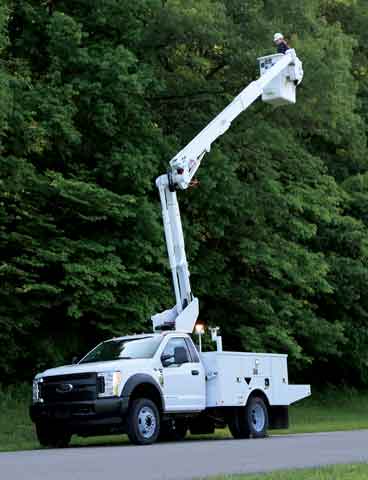
We may earn a commission on purchases. It never affects our rankings.
Estimated$160,000 – $240,000
Ford F-550 Super Duty Chassis Cab
The Ford F-550 Super Duty Chassis Cab is prized for its balance of payload capacity, serviceability, and lower acquisition cost, making it a practical best-in-class choice for mobile network deployment teams that need a durable baseline for utility upfits. Compared with the heavier vocational trucks on this list it delivers better fuel economy and lower total cost of ownership while still supporting common crane, generator and service-body packages, though it trades off some GVW and cabin refinement found on larger Freightliner and International models.
Show More Cable Management and Storage Utility Trucks
We may earn a commission on purchases. It never affects our rankings.
Estimated$85,000 – $150,000
Why research supports modern telecom truck features
Academic studies, government reports, and industry guidance consistently highlight benefits that align with modern medium duty telecommunications truck design. Research and best practice resources from organizations such as Transport Canada, Natural Resources Canada, the Canadian Centre for Occupational Health and Safety, and industry ergonomics studies show that improved cable handling, integrated power systems, climate control for electronics, telematics-enabled fleet management, and engineered access systems increase productivity, reduce equipment failures, and lower injury risk for crews. These findings translate directly into operational and financial advantages for telecom fleets in Canada.
Ergonomic cable management and organized reel storage reduce repetitive strain and handling time, improving technician safety and first-pass completion rates.
Onboard power systems and conditioned climate compartments help protect test equipment and splicing gear, reducing downtime and repair costs.
Telematics and route optimization tools are shown to cut idle time and fuel use, enhancing fleet productivity and lowering operating expenses.
Electrified or hybrid medium duty platforms can reduce local greenhouse gas emissions and, in many use cases, deliver lower total cost of ownership over the vehicle life cycle when paired with appropriate charging and duty cycles.
Engineered access solutions, certified ladders, and fall protection equipment align with Canadian occupational safety guidance to reduce fall and access-related incidents.
Frequently Asked Questions
Which truck should I pick for fiber splicing work?
Reading Utility Vehicles Fiber Splicing Body is the better pick for fiber splicing because it has a dedicated climate-controlled splicing compartment with organized fiber storage and modular drawer/cabinet storage sized for fusion splicers and test instruments, with a 4.65 average rating.
What exact spec does the Terex Hi-Ranger TL50 offer?
Terex Hi-Ranger TL50 offers a 50 ft working height telescopic boom, plus smooth hydraulic telescoping and 360° turret rotation for precise positioning, and it has a 4.6 average rating.
How do prices compare for the Freightliner M2 106?
The provided details for the Freightliner M2 106 Mobile Command Unit don’t include a price, so I can’t compare value versus other trucks here; it does list a 4.7 average rating and features like comprehensive HVAC and redundant onboard power systems.
Is the Freightliner M2 106 suitable for mobile command operations?
Yes—the Freightliner M2 106 Mobile Command Unit is described as excelling for customized electrical systems and mission-critical communications during long-duration mobile electronics operations, with a turnkey mobile command interior including modular consoles and integrated communications racks, at a 4.7 average rating.
Conclusion
Whether you are evaluating new builds or upfits, the top medium duty telecommunications trucks for Canada in 2026 emphasize safer access, smarter cable management, and reliable onboard power. We hope this overview helps you find the right truck for your fleet or project. Use filters like powertrain type, payload capacity, body configuration, and safety packages to refine or expand your search and compare the six leading options for your specific Canadian operating needs.