

4 Best Metal 3D Printers in Canada, 2026
Metal 3D printers are revolutionizing the manufacturing landscape in Canada, enabling the creation of strong and durable metal components that stand up to demanding conditions. These advanced machines cater to various sectors including aerospace, automotive, and industrial applications, making them highly appealing to businesses looking to innovate and streamline production processes. With the increasing demand for affordable and reliable 3D printing solutions in the Canadian market, metal 3D printers are at the forefront, driving efficiency and creativity in the design and manufacturing industries.
Inception's AI took the time to understand this market in Canada · · How we pickWe may earn a commission on purchases. It never affects our rankings.
Top Picks Summary
The Desktop Metal Shop System is positioned as a best-in-class binder jet metal platform for machine shops and small-to-medium production runs, combining an office-friendly footprint with an emphasis on predictable, economical per-part costs. Compared with larger-volume offerings like the HP Metal Jet S100 it targets lower capital outlay and quicker ROI, while offering higher throughput and lower overhead than lab-focused systems such as the ExOne InnoventPro.
Show More Direct Metal Laser Sintering 3D Printers
Estimated$450,000 – $750,000
Miller Electric ADDere targets shops and mid-size fabricators with an easy-to-deploy, cost-conscious WAAM package that emphasizes usability and fast shop-floor adoption. Compared with larger, automation-centered systems like GEFERTEC or Lincoln, it typically has lower upfront capital needs and simpler operator training requirements, giving smaller operations a financially sensible path into WAAM albeit with fewer out-of-the-box heavy-automation features.
Show More Electron Beam Melting 3D PrintersEstimated$100,000 – $300,000
TRUMPF TruLaser Cell 3000 is a turnkey, industrial-grade laser metal deposition cell known for high throughput, repeatable precision and deep factory automation; its robust hardware and global service network make it a go-to choice for production-scale DED applications, albeit usually at a higher CAPEX than smaller or retrofit-focused systems. Compared with the other systems in this list it prioritizes automation and integration over retrofit flexibility—offering stronger out-of-the-box productivity than Optomec and Meltio, and a larger installed-solution advantage versus BeAM, while competing with DMG MORI on industrial reliability but with less integrated machining capability than the LASERTEC 65 DED.
Show More Selective Laser Melting 3D Printers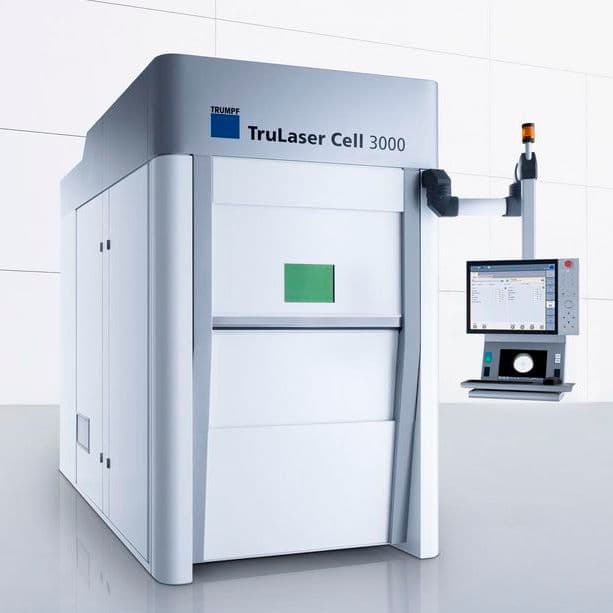
Estimated$1,200,000 – $2,500,000
LightSPEE3D est l'imprimante métallique cold spray compacte et déployable sur le terrain de SPEE3D, conçue pour les réparations rapides et le prototypage à faible coût. Elle se distingue par sa portabilité et son faible investissement initial par rapport aux systèmes plus volumineux orientés production présents sur cette liste, offrant un retour sur investissement plus rapide pour une utilisation sur site tout en acceptant un débit inférieur à celui du WarpSPEE3D de SPEE3D et des installations industrielles lourdes.
Show More Binder Jetting Metal 3D Printers
Estimated$150,000 – $300,000
Every machine on this list is industrial capital equipment, not a consumer product. Budgets run from roughly $100,000 for a compact cold-spray or wire-DED cell up to $2.5 million for a production binder-jet or laser cell, and none of them are stocked by online retailers — you buy through the manufacturer or its Canadian distributor, after a site survey and a quote. What separates them is the process: binder jetting for volume production, directed energy deposition for large parts and repair cladding, and cold spray for fast, portable metal deposition in the field.
Understanding Metal 3D Printing
Metal 3D printing utilizes additive manufacturing technology to produce complex metal parts that offer flexibility, efficiency, and durability. Here are key insights:
Metal 3D printing allows for complex designs that are difficult to achieve with traditional manufacturing methods, offering greater design freedom.
The materials used in metal 3D printing, such as titanium and steel, provide high strength-to-weight ratios, making them ideal for demanding applications.
This technology reduces material wastage compared to subtractive manufacturing, making it a more sustainable option for businesses.
Rapid prototyping capabilities enable companies to quickly iterate on designs, significantly speeding up the production process.
Studies show that metal 3D printing can lower production costs by minimizing the need for tooling and setup, especially for low-volume production runs.
Advancements in technology are continuously driving down costs while improving reliability, making metal 3D printing increasingly accessible for small to medium-sized businesses.
Frequently Asked Questions
Which metal 3D printer on this list is best for industrial series production?
The HP Metal Jet S100 is the series-production pick here. It is a binder-jetting system built around throughput rather than one-off parts: a liquid binder is printed onto metal powder to form green parts that are then debound and sintered in batches, which is what drives the cost-per-part down at volume. It targets production materials such as stainless and tool steels, and the trade-off is a large capital outlay plus the sintering furnace and powder-handling infrastructure that has to sit alongside it.
Can you actually buy any of these machines online in Canada?
No. All four are quote-only capital equipment sold through the manufacturer or an authorised Canadian distributor, typically after an application review and a site survey covering power, ventilation, inert-gas supply and metal-powder handling. Expect a lead time measured in months, plus separate line items for installation, operator training and a service contract. Treat any listing that appears to offer one of these systems as a retail add-to-cart item as a mismatch — it will be a consumable, a spare part or unrelated welding equipment.
Which option is best for on-site repairs rather than a factory floor?
The SPEE3D LightSPEE3D is the pick for field work. It uses cold-spray deposition to print functional metal parts fast in a compact, portable unit, which suits repairs and low-volume prototypes, though parts usually need post-processing to hit tight tolerances.
What printing technology does the HP Metal Jet S100 use?
The HP Metal Jet S100 uses binder jetting: it lays a liquid binder onto metal powder to form green parts that are then sintered. It's built for high-throughput, low cost-per-part production of stainless and tool steels.
Conclusion
In summary, metal 3D printers are set to transform various industries in Canada by enhancing production capabilities and reducing costs. We hope you found the information you were looking for, and if you have any more specific inquiries, feel free to use the search bar.