

Top 5 Wire-Arc Additive Manufacturing 3D Printers in Canada for 2026
Wire-Arc Additive Manufacturing (WAAM) employs an electric arc to melt a continuous wire feed, creating robust metal components through layer-by-layer deposition. This technique is particularly effective for larger components in construction and aerospace. In Canada, WAAM is gaining traction because it reduces lead times and material waste for large-format metal parts, lowers cost compared with conventional subtractive methods, and supports supply chain resilience by enabling localized production and repair. Canadian buyers often prioritize systems that deliver high deposition rates, compatibility with common structural alloys such as steel, stainless steel, and titanium, and strong local support or service networks. Industries driving demand include aerospace, maritime and shipbuilding, oil and gas repair, heavy construction, and energy infrastructure. Government innovation funding, research partnerships at universities and national labs, and a growing base of skilled technicians are further accelerating WAAM adoption across Ontario, Quebec, Alberta, and British Columbia.
Inception's AI took the time to understand this market in Canada · · How we pickWe may earn a commission on purchases. It never affects our rankings.
Top Picks Summary
Lincoln Electric WAAM System
Lincoln Electric's WAAM System is positioned as a best-in-class industrial solution thanks to its deep welding expertise, broad global support network, and well‑tested process controls that speed qualification for production parts. Compared with the other WAAM offerings on this list, it delivers a mature supply chain and lower integration risk for large manufacturers, giving a financial advantage through reduced downtime and easier certification versus newer entrants while offering broader automation and consumables compatibility than more specialized systems.
We may earn a commission on purchases. It never affects our rankings.
Estimated$120,000 – $450,000
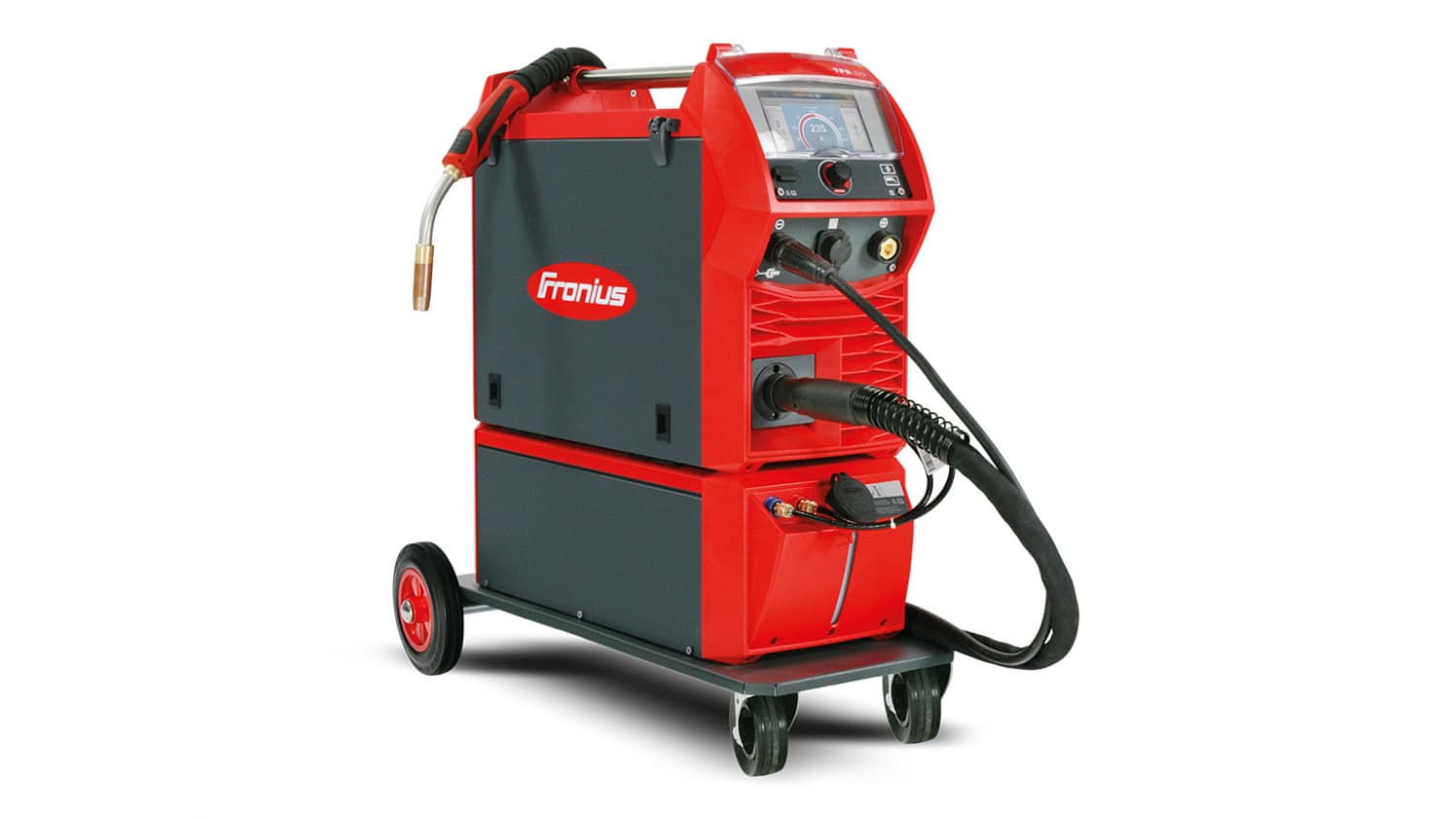
Fronius TPS/i WAAM
Fronius TPS/i WAAM stands out for its inverter-based power electronics and precise, closed-loop thermal control that improve bead consistency and reduce rework costs in WAAM builds. Technically it offers finer heat-input management and energy efficiency compared with conventional power sources, making it attractive where surface finish and dimensional accuracy matter, and providing an operational-cost advantage over less-efficient arc packages in long-run, high-volume production scenarios.
Estimated$80,000 – $200,000
Miller Electric ADDere
Miller Electric ADDere targets shops and mid-size fabricators with an easy-to-deploy, cost-conscious WAAM package that emphasizes usability and fast shop-floor adoption. Compared with larger, automation-centered systems like GEFERTEC or Lincoln, it typically has lower upfront capital needs and simpler operator training requirements, giving smaller operations a financially sensible path into WAAM albeit with fewer out-of-the-box heavy-automation features.
Estimated$100,000 – $300,000
GEFERTEC arc605
The GEFERTEC arc605 is a market-leader for automated, high-throughput WAAM production cells, combining industrial robotic motion control with tightly integrated process software for large-format metal parts. Its technical strength is precision motion and automation scalability, which delivers productivity and repeatability advantages for aerospace and energy components; this capability commands a higher CAPEX than compact solutions but yields lower per-part costs for large series and complex geometries compared with smaller or less-automated systems.

Estimated$350,000 – $900,000
MX3D M1 Metal AM
MX3D's M1 Metal AM system is a cutting-edge, robot-based WAAM platform focused on freeform geometries, digital workflow integration, and smart-factory connectivity, making it ideal for bespoke, complex metal structures. Compared to traditional industrial offerings it emphasizes software-driven part optimization and IoT-enabled monitoring—providing technical advantages in design freedom and traceability—though buyers should weigh those benefits against typically higher per-unit costs for one-off and small-batch production.

Why WAAM Works: Research-Backed Benefits
Scientific studies and industry trials show that WAAM delivers high deposition rates, material efficiency, and the ability to produce large, structurally sound metal parts with competitive mechanical properties after appropriate process control and post-processing. Research from university labs and national research centers demonstrates WAAM's suitability for large-scale components, the feasibility of using common structural alloys, and strategies to manage residual stress and microstructure through heat treatment and controlled deposition.
Deposition efficiency: WAAM achieves far higher deposition rates than powder-bed systems, making it ideal for large parts and reducing per-part production time and cost.
Material choices: Studies show successful WAAM builds with carbon steel, stainless steel, titanium, and nickel-based alloys, enabling applications across multiple sectors.
Mechanical properties: With proper parameter control and post-processing, WAAM parts can reach strength and toughness comparable to wrought material for many structural uses.
Process control and hybrid workflows: Combining WAAM with CNC machining or in-process monitoring improves dimensional accuracy and repeatability.
Sustainability and supply chain impact: Research highlights reduced material waste and lower transport-related emissions when large parts are manufactured locally using WAAM.
Frequently Asked Questions
Which WAAM printer should a Canadian shop choose for adoption?
Miller Electric ADDere is the easier choice for shops wanting fast, cost-conscious WAAM adoption, since it bundles welding power, wire feed, and a robot interface with a user-friendly HMI and workflow-focused software for toolpath execution.
What feature matters most for better bead consistency in WAAM?
Fronius TPS/i WAAM uses inverter-based power electronics with precise, closed-loop thermal control to improve bead consistency and reduce rework costs, plus built-in data logging and adaptive arc stabilization for long, multi-pass deposits.
How does price compare between Lincoln WAAM and Fronius?
The provided product data doesn’t list any prices for Lincoln Electric WAAM System or Fronius TPS/i WAAM, so I can’t compare value by cost; I can only compare ratings: both show an averageRating of 4.5.
Is Lincoln Electric WAAM System compatible with multi-axis robots?
Yes—Lincoln Electric WAAM System specifies a multi-axis robot integration for large, complex metal builds with high deposition rates and repeatability, and it uses industrial-grade controls for stable arc performance on steels and stainless alloys.
Conclusion
In the Canadian context, WAAM is a practical solution for companies that need large, durable metal components while keeping costs and lead times down. This page highlights five leading WAAM systems available or supported in Canada: Lincoln Electric WAAM System, Fronius TPS/i WAAM, Miller Electric ADDere, GEFERTEC arc605, and MX3D M1 Metal AM. For most Canadian buyers looking for a balance of industrial reliability, local support network, and proven field performance, the Lincoln Electric WAAM System stands out as the best choice among these options. We hope you found the information you were looking for. Use the site search to refine by industry, material, or budget, or expand your search to compare technical specifications and service options.