

Best Super Telephoto Lenses in Canada 2026 — Top 5 Picks
Super telephoto lenses are designed for capturing distant subjects with extraordinary detail. Ideal for wildlife photography, birding, and sports, these lenses offer powerful zoom capabilities, strong subject isolation, and exceptional image quality at long range. In Canada, where expansive parks, coastal shorelines, and seasonal wildlife migrations are common, buyers prioritize reach, reliable autofocus, weather sealing for cold and wet conditions, and an attractive balance of weight and cost. Enthusiasts and professionals alike look for lenses that deliver sharpness across the frame, effective image stabilization for handholding, and strong compatibility with popular mirrorless and DSLR systems sold in the Canadian market.
Inception's AI took the time to understand this market in Canada · · How we pickWe may earn a commission on purchases. It never affects our rankings.
Top Picks Summary
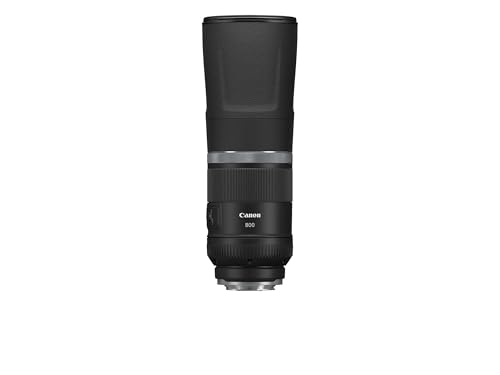
Canon RF 800mm f/11 IS STM
The Canon RF 800mm f/11 IS STM is best-in-class for photographers who need extreme reach with minimal weight and cost — its fixed f/11 design and compact construction make handheld or gimbal use realistic compared with bulky prime and zoom super-telephotos. While it concedes light-gathering and AF speed to the faster-aperture or pro-grade zooms in this list, its price-to-reach ratio and portability give it a unique financial and practical advantage for travel and casual wildlife work.
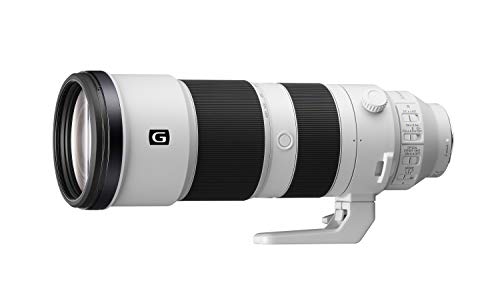
Sony FE 200-600mm f/5.6-6.3 G OSS
Sony's FE 200-600mm f/5.6-6.3 G OSS is the market-leading long telephoto zoom for the Sony E-mount, offering a flexible focal-length range, strong optics and built-in OSS that make it a go-to for wildlife and sports shooters who need versatility without switching lenses. Compared to the fixed 800mm and the 150–600/150–500 third-party options, it trades the highest reach for better close-range performance and zoom flexibility, while remaining more affordable and lighter than many professional, constant-aperture super-telephoto primes.
Nikon NIKKOR Z 180-600mm f/5.6-6.3 VR
The Nikon NIKKOR Z 180-600mm f/5.6-6.3 VR stakes its claim as Nikon's answer for reach-plus-value in the Z ecosystem, delivering long-range versatility, effective VR and optimized communication with Z bodies for reliable AF and stabilization. In this lineup it competes directly with Sony's 200–600 for range and price but offers Nikon users system-native ergonomics and lens control; it sits between the ultra-light fixed 800mm and heavier third-party 150–600 alternatives as a balanced, system-integrated option.

We may earn a commission on purchases. It never affects our rankings.
$2,729.00CAD
Sigma 150-600mm f/5-6.3 DG OS HSM Sports
Sigma's 150-600mm Contemporary is best-in-class among third-party super-telephoto zooms for value-conscious shooters, pairing a broad 4x zoom range and reliable OS with competitive image quality at a significantly lower price than many manufacturer-branded telephoto zooms and primes. Compared to the Tamron 150–500 and the native-brand 180–600/200–600 lenses, it offers the maximum top-end reach at a very attractive cost, though it is bulkier than the RF 800mm and can be a bit slower on AF in some camera pairings.

Estimated$1,200 – $1,400
Tamron 150-500mm f/5-6.7 Di III VC VXD
Tamron's 150-500mm Di III VC VXD is best-in-class for mirrorless users seeking a compact, fast-focusing telezoom that balances reach, weight and modern autofocus performance thanks to its VXD linear motor and effective VC. It typically undercuts many pro-branded zooms on price while delivering snappier AF and lighter carry than the 150–600mm alternatives, making it an attractive middle ground between the ultra-light fixed 800mm and the longer—but heavier—600mm-class zooms.

How super telephoto lenses deliver results: optics, stabilization, and tracking
The advantages of super telephoto lenses come from a combination of optical design and image stabilization, backed by decades of optics research and practical field testing. Longer focal lengths let you frame distant subjects tightly without cropping, and they compress perspective to create strong subject separation. Modern lens designs use advanced glass elements and coatings to reduce chromatic aberration and flare, and multi-element autofocus systems paired with predictive AF algorithms improve subject acquisition and tracking in wildlife and sports scenarios. Image stabilization systems, often referred to as VR, OSS, or VC depending on brand, measurably reduce motion blur and let photographers use slower shutter speeds while maintaining usable sharpness. Scientific work in optics and applied photography shows that proper stabilization, good autofocus algorithms, and careful handling are the primary factors that let telephoto users achieve consistently sharp images at long distances.
Image stabilization commonly provides between three and five stops of benefit, reducing motion blur from camera shake during handholding.
Long focal lengths increase sensitivity to atmospheric turbulence; shooting at lower sun angles and closer distances improves perceived sharpness.
Modern autofocus tracking uses predictive algorithms and high-speed phase-detect sensors to maintain focus on erratically moving subjects like birds in flight.
Optical corrections such as low-dispersion elements and anti-reflective coatings reduce chromatic aberration and flare, improving contrast and micro-detail.
Using a tripod or monopod, combined with stabilization and appropriate shutter speed, consistently yields the sharpest results for distant subjects.
Frequently Asked Questions
Which super telephoto lens should I buy for birds?
Choose the Canon RF 800mm f/11 IS STM for birding if you want extreme reach in a compact, lightweight 800mm prime; it has built-in optical Image Stabilization and a fixed f/11 aperture, with an average rating of 4.5.
What zoom range does the Sony FE 200-600mm offer?
The Sony FE 200-600mm f/5.6-6.3 G OSS delivers a 200–600mm zoom range, plus Optical SteadyShot (OSS) built in for steadier handheld shooting, rated 4.5 on average.
Is the Nikon 180-600mm worth the higher price?
The Nikon NIKKOR Z 180-600mm f/5.6-6.3 VR costs $2288.97 and gives you an 180-600mm reach designed for Nikon Z-mount, with Vibration Reduction (VR), plus a 4.4 average rating.
Which lens has weather-sealed construction for outdoor use?
The Sony FE 200-600mm f/5.6-6.3 G OSS is weather-sealed for outdoor use, includes OSS stabilization, and is made for Sony E-mount full-frame mirrorless bodies; it lists at $2,598.00 CADand averages a 4.6 rating.
Conclusion
In Canada, super telephoto lenses unlock distant action from national parks to local rinks and shorelines. The five standout options for 2026 each serve different needs: the Canon RF 800mm f/11 IS STM is a compact, lightweight super-tele prime suited to travel and birders on a budget; the Sony FE 200-600mm f/5.6-6.3 G OSS offers an excellent balance of reach, resolution, and autofocus performance and is the best overall choice for most Canadian photographers; the Nikon NIKKOR Z 180-600mm f/5.6-6.3 VR brings broad zoom range and strong stabilization for Z mirrorless users; the Sigma 150-600mm f/5-6.3 DG OS HSM Contemporary provides great value and compatibility across mounts for those prioritizing reach per dollar; and the Tamron 150-500mm f/5-6.7 Di III VC VXD is a lightweight, travel friendly zoom for mirrorless shooters. I hope you found what you were looking for; you can refine or expand your search using the site search to compare mounts, weight, and price or to look for dealer availability and used-lens deals.