

Top 5 Infrared Heaters for Ultimate Comfort in Canada - 2026
Top 5 Infrared Heaters for Ultimate Comfort in Canada - 2026 presents a focused guide to infrared heating options that match Canadian needs for rapid comfort, zone heating, and reliable safety. As the cold months approach, many Canadians look beyond traditional convection heaters and choose infrared units that emit radiant heat to warm people and objects directly. One point is worth stating plainly: every plug-in electric heater, infrared or ceramic, converts essentially all the electricity it draws into heat, so a 1500W infrared model does not cost less per hour to run than any other 1500W electric heater. What infrared changes is delivery. Radiant heat reaches you in seconds instead of waiting for the room air to warm, which lets you hold a lower thermostat setting and heat only the room you occupy, and that is where real savings come from. Consumers in Ontario, Quebec, British Columbia, Alberta, and other provinces favor infrared heaters for their quiet operation, portability, and built-in safety features such as tip-over protection and overheat shutoff. Modern units also include programmable thermostats, remote control or Wi-Fi connectivity, and multiple heat settings so buyers can match capacity to room size and usage patterns. Whether you need supplemental heat for a living room, bedroom, garage, or a small business area, infrared heaters offer a practical blend of performance and convenience for Canadian households.
Inception's AI took the time to understand this market in Canada · · How we pickWe may earn a commission on purchases. It never affects our rankings.
Top Picks Summary
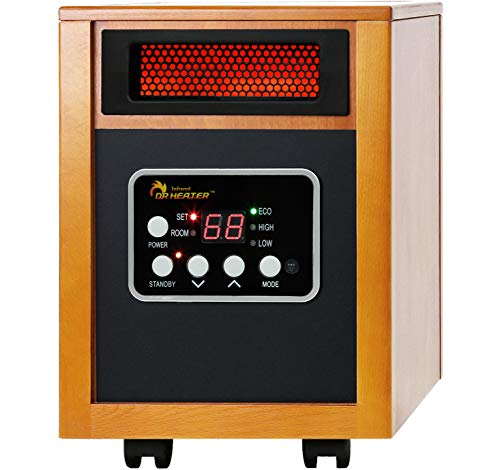
Dr Infrared Heater DR-968
The Dr Infrared Heater DR-968 stands out for its dual heating system, which combines an infrared quartz element with a convection blower to spread warmth through a room faster than radiant-only units. Like every 1500W electric heater it converts essentially all the power it draws into heat, so it does not cost less per hour to run than a standard heater; what it offers is quicker perceived comfort, which lets you hold a lower thermostat setting. Its programmable timer, remote control and quiet fan make it more user-friendly than many competitors.
Heat Storm HS-1500-PHX-WIFI
With its HS-1500-PHX-WIFI model, Heat Storm has revolutionized smart heating solutions. This infrared heater can be controlled remotely via WiFi, making it a convenient choice for tech-savvy consumers. Its sleek design and ability to heat large spaces efficiently set it apart from others in the marketplace. Additionally, it offers a wall-mounted option, saving valuable floor space while delivering effective heating power.

We may earn a commission on purchases. It never affects our rankings.
$210.00CAD$226.00
Duraflame 3D Infrared Electric Fireplace Stove DFI-5010
Duraflame's 3D Infrared Electric Fireplace Stove DFI-5010 pairs convincing flame visuals with efficient infrared heating, making it ideal for Canadians who want both cozy ambiance and supplemental warmth in living rooms or dens. Its combination of decorative appeal and reliable room heating delivers strong value for money compared with performance-first units on this list, since it can substitute for a separate heater and décor piece while keeping purchase and installation costs lower.

Estimated$450 – $500
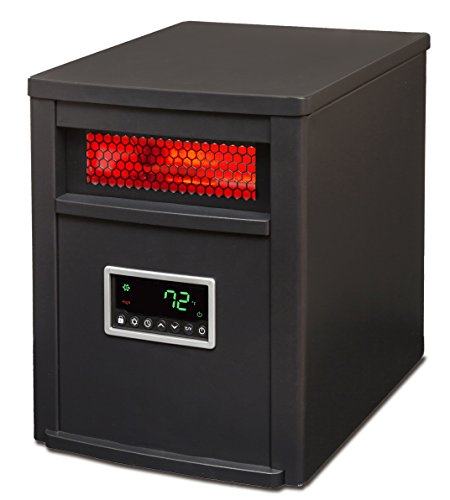
Lifesmart 6 Element Large Room Infrared Heater
The Lifesmart 6 Element Large Room Infrared Heater uses six quartz infrared elements and adds an LED display and built-in thermostat. Spreading the same 1500W across six elements does not produce more heat than a single-element 1500W unit, since a standard 15A/120V circuit caps portable heaters at that draw, but the wider element array distributes radiant heat more evenly across a room. The manufacturer's large-room coverage figure is a marketing estimate; treat this as supplemental heat for one open room.
Estimated$300 – $400
EdenPURE CopperSMART 1500W Infrared Heater
The EdenPURE CopperSMART 1500W Infrared Heater uses copper heating elements, which the manufacturer says shorten warm-up time and extend element life. Copper conducts heat well, but the element material does not change running cost: at 1500W this draws the same power and produces the same heat as any other 1500W electric heater, and independent testing does not support claims that it heats a home for less than comparable units. It pairs a digital thermostat with multiple heat and fan modes, plus tip-over and overheat cutoffs.

Estimated$200 – $250
What research says about infrared heating
Infrared heaters transfer energy as electromagnetic radiation that warms solid surfaces and people directly rather than primarily heating the surrounding air. That direct radiant transfer can increase perceived warmth at lower ambient air temperatures and provide faster comfort. It does not change the electricity a heater consumes: infrared, ceramic, oil-filled and fan heaters are all electric resistance heaters and all convert essentially 100% of the power they draw into heat, so at the same wattage they cost the same to run per hour. Energy agencies and building researchers note that infrared and radiant zone heating can be a sensible option for targeted heating when used as a supplement to central systems, or for well-insulated spaces where fast, on-demand warmth is needed.
The efficiency claim, corrected: all electric resistance heaters are about 100% efficient at turning electricity into heat, so an infrared heater is not inherently more efficient than a ceramic or oil-filled one at the same wattage. Savings come from zone heating and a lower thermostat setting, not from the element type.
Faster comfort: Infrared units produce immediate warming of people and objects, reducing the lag time common with convection-only heaters.
Better perceived warmth: Because infrared heats surfaces and occupants, people often feel warmer at the same thermostat setting compared to conventional air heating.
Indoor air quality and circulation: Infrared heaters do not rely on forced-air circulation, so they tend to stir up less dust and allergens than blowers, which can be preferable for people with dust sensitivities.
Safety and standards: Keep any space heater at least three feet (1 m) from anything that can burn, plug it directly into a wall outlet and never into an extension cord or power strip, and switch it off when you leave the room or go to sleep. Look for models certified to Canadian electrical safety standards, and prefer units with tip-over protection and overheat shutoff.
Practical note: For whole-home heating needs, consult a heating professional. Infrared heaters are most efficient as supplemental or zone heating solutions.
Wattage reality check: 1500W is the practical maximum for a portable heater on a standard 15A/120V Canadian circuit, which is why nearly every model here is 1500W. Manufacturer square-footage coverage figures are marketing estimates, not a tested standard, and real performance depends on insulation, ceiling height and outdoor temperature.
Frequently Asked Questions
Which infrared heater should I buy for fast comfort?
Choose Dr Infrared Heater DR-968 for fast, efficient comfort thanks to its dual infrared + convection heating system, plus comfortable thermostat control and silent operation; it has an average rating of 4.5.
Does Duraflame DFI-5010 provide infrared heating power?
Yes—Duraflame 3D Infrared Electric Fireplace Stove DFI-5010 includes 1500W infrared heating with a thermostat and multiple heat settings, with a 3D flame effect, remote control, and overheat protection; it has an average rating of 4.4.
Is Heat Storm HS-1500-PHX-WIFI worth the higher price?
Heat Storm HS-1500-PHX-WIFI costs $210.00 CADand adds WiFi-enabled remote control plus adjustable thermostat settings and a compact, wall-mountable design; its average rating is 4.4.
Which heater has cool-touch housing safety features?
Duraflame DFI-5010 includes built-in safety features such as overheat protection and cool-touch housing, along with remote control and a programmable timer; it is rated 4.4.
Conclusion
This roundup highlights five strong infrared options for Canadian buyers: Dr Infrared Heater DR-968, Heat Storm HS-1500-PHX-WIFI, Duraflame 3D Infrared Electric Fireplace Stove DFI-5010, Lifesmart 6 Element Large Room Infrared Heater, and EdenPURE CopperSMART 1500W Infrared Heater. All five are 1500W units that draw the same power and cost the same per hour to run, so the choice comes down to how the heat is delivered, the controls, and the form factor. For most Canadians the Dr Infrared Heater DR-968 stands out as the best overall choice thanks to its balance of power, coverage, safety, and value. We hope you found the information you were looking for; you can refine or expand your search using the site search to compare features, read user reviews, or find models that match your room size and budget.