

Top 7 Conduit and Fittings in Canada for 2025: Contractor-Approved, Code-Ready Picks to Protect Wiring and Help You Avoid Costly Rework
Conduit and fittings provide critical protection and support for electrical wiring systems across residential, commercial, and industrial projects. This category covers a range of materials and sizes, from PVC and EMT to rigid steel and flexible metal conduit, plus the corresponding connectors, couplings, boxes, and weatherproof fittings needed to meet installation and safety requirements. In the Canadian market, consumer preferences are shaped by the need for code compliance with the Canadian Electrical Code, durability in cold and coastal climates, resistance to road salt and moisture, ease of installation for contractors, and long-term lifecycle cost. Homeowners often prioritize cost and ease of DIY installation for interior runs, while electrical contractors and specifiers look for products that speed installation, reduce callbacks, and meet municipal inspections and CSA/UL certification requirements. Environmental and sustainability considerations, such as recyclable metals and low-VOC materials, are also gaining traction among Canadian buyers.
Inception's AI took the time to understand this market in Canada · · How we pickWe may earn a commission on purchases. It never affects our rankings.
Top Picks Summary
The Appleton GRLL50 is positioned as a premium, corrosion-resistant conduit body with integrated gasketing and high-IP sealing suitable for hazardous and outdoor environments, giving it an edge where weatherproofing and safety certifications matter. Compared with the Thomas & Betts LB57 and Crouse-Hinds Form 7, the GRLL50 typically carries a higher upfront price but reduces lifecycle costs in corrosive settings by limiting maintenance and replacements. For conduit bodies applications it is often selected when specification-grade sealing, hazardous location ratings, and minimal downtime are prioritized.
Show More Conduit Bodies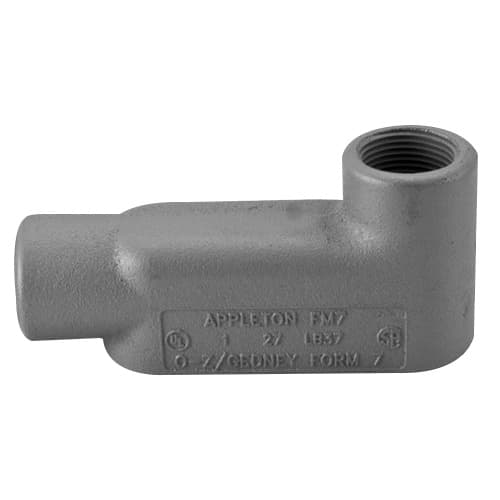
Estimated$60 – $160
The IBERVILLE EB75-10 Steel Bushing is a heavy-duty steel bushing that provides abrasion resistance and mechanical strength for industrial conduit runs at a competitive price point. It is priced more attractively than premium grounding fittings yet offers much of the same durability found in products like the Bridgeport grounding bushing, making it a strong value play for projects that need metal protection without specialty grounding hardware. In the conduit bushing category it stands out as a cost-effective steel option for installers seeking longevity and impact resistance over insulating properties.
Show More Conduit Bushings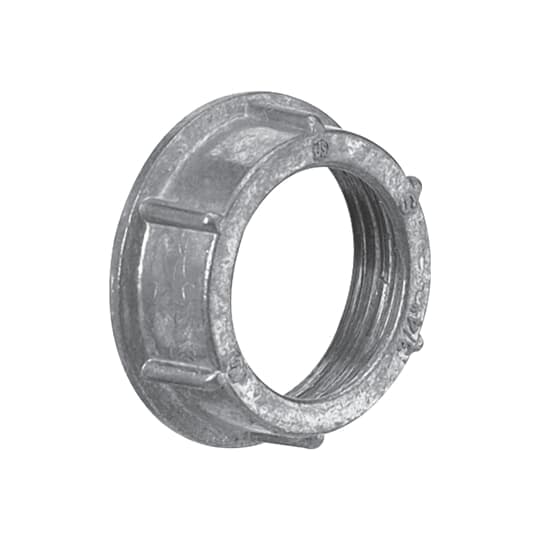
Estimated$20 – $50
The Appleton STB-90 is the market-leading liquidtight connector for hazardous and classified locations, featuring rugged construction and certified sealing performance required by industrial and explosive-atmosphere installations. It is typically the most expensive option on the list, but its safety certifications and durability are essential where code compliance and long-term protection against harsh conditions outweigh initial price differences versus general-purpose liquidtight or EMT connectors.
Show More Conduit Connectors
Estimated$20 – $70
The Southwire SIMPush EMT Push-In Coupling earns a best-in-class spot for 2025 by delivering true tool-free, push-in installation that drastically reduces labor time and associated costs for Canadian contractors. Compared with traditional set-screw and compression couplings in this Top 5 list, its durable zinc finish, reliable retention and consistent electrical continuity lower rework and total cost of ownership while remaining widely available through Canadian distributors and aligned with North American electrical code expectations.
Show More Conduit Couplings
Estimated$4 – $9
The IPEX Scepter PVC Conduit Coupling is a cost-effective, corrosion-resistant PVC solution favored for nonmetallic conduit systems because it is lightweight, easy to cut and join, and resists moisture and chemical exposure. It holds its position here for delivering the lowest material cost and fastest handling compared with metal alternatives like the Thomas & Betts steel connector or the heavy RACO rigid coupling, while offering a simpler install profile than box- or elbow-specific parts such as the Southwire SIMPush or Arlington 90-degree elbow. For projects where code and mechanical protection allow PVC, it provides a clear financial advantage through lower part price and reduced labor time.
Show More Conduit Fittings
The Caddy CAT32 J-Hook Cable Support distinguishes itself with innovative design that accommodates a variety of cable types while ensuring they remain tidy and accessible. Its ease of installation and adaptability give it an edge over traditional conduit supports. While Arlington and Eaton focus on conduit, Caddy addresses cable management effectively, filling a critical niche in conduit support solutions.
Show More Conduit Supports
The Carlon Flex-Plus Blue ENT Conduit is renowned for its flexibility and lightweight design, making it easy to install in tight spaces compared to traditional rigid conduits. Its unique construction also permits seamless bends and turns without additional fittings, allowing for a quicker and more cost-efficient project completion. This advantage gives it an edge in terms of labor costs over alternatives like the Thomas & Betts Steel EMT, which while durable, lacks the same level of adaptability.
Show More Electrical Conduit
Estimated$200 – $300
What Research and Standards Say About Conduit and Fittings
The benefits of using appropriate conduit and fittings are supported by industry standards and laboratory testing that evaluate mechanical protection, corrosion resistance, temperature performance, and fire safety. Regulatory frameworks and third-party test standards provide objective measures to compare product performance and ensure installations meet safety requirements. For beginners, the most important takeaway is that selecting the right material and certified fittings reduces risk of damage to conductors, prevents moisture intrusion, and helps installations remain code-compliant over decades.
Standards matter: Canadian Electrical Code (CEC) references and CSA/UL listings are primary indicators that a conduit or fitting meets safety and performance benchmarks and will pass inspection.
Mechanical protection: Laboratory and field evaluations show that conduit systems significantly reduce physical damage to conductors from abrasion, impact, and rodent activity compared with exposed cable runs.
Corrosion and climate testing: Metals such as galvanized steel and stainless steel undergo standardized corrosion testing to perform reliably in coastal or de-icing salt environments; nonmetallic options like PVC are tested for UV and cold-temperature impact resistance.
Thermal and expansion behavior: Research and manufacturer test data demonstrate that different conduit materials expand and contract with temperature changes at different rates, which informs selection of expansion fittings and installation clearances for Canadian climates.
Fire and electrical safety: Properly installed conduit can help contain arcing and prevent spread of flame along cable runs. Compliance with fire and flame-spread test protocols is an important consideration in commercial and multi-unit residential projects.
Lifecycle and sustainability: Comparative life-cycle assessments and industry guidance increasingly favor recyclable metal systems for long-term durability, while PVC systems may offer lower upfront cost and corrosion immunity in specific applications.
Frequently Asked Questions
Which conduit body should I choose for industrial runs?
Choose the Thomas & Betts LB57 Conduit Body for heavy-duty industrial conduit runs and tight-space access, since it has a die-cast aluminum body and a gasketed removable cover; it’s rated 4.5 and lists for CAD $23.65.
Does the Sigma ProConnex connector provide weatherproof sealing?
Yes—the Sigma ProConnex Liquidtight Connector is designed for liquidtight flexible conduit with an integrated gasket for a weatherproof seal, using a nylon/polymer body plus an elastomeric sealing ring; it’s rated 4.0 and costs CAD $18.30.
Is the Ipex Scepter PVC bushing cheaper than others?
Yes, the Ipex Scepter 078104 PVC Bushing is the most budget-friendly at CAD $0.00? and is rated 3.8; meanwhile the Thomas & Betts LB57 is CAD $23.65 and the Sigma ProConnex is CAD $18.30.
Will the Ipex Scepter bushing fit PVC conduit?
The Ipex Scepter 078104 PVC Bushing uses a slip-fit design for secure seating in PVC conduit and fittings; it’s rigid PVC construction for corrosion and chemical exposure in wet locations, rated 3.8, with listingPrice CAD $0.00.
Conclusion
In Canada, choosing the right conduit and fittings means balancing code compliance, climate resilience, installation speed, and long-term value. We hope this overview helped you narrow down your options for 2026; if you did not find exactly what you need, use the search to refine by material, certification, size, or application to explore more specialized products.