

Top 7 Conduit Fittings in Canada (2026): Connectors, Couplings and Elbows
Conduit fittings connect different sections of conduit to ensure safe and efficient electrical installations. This category covers connectors, couplings, elbows and related accessories for PVC, EMT and rigid conduit systems. In Canada, buyers prioritize code compliance with CSA and the Canadian Electrical Code (CEC), corrosion resistance for coastal and cold-climate applications, ease of installation for busy job sites, and long-term mechanical protection for wiring in residential, commercial and industrial projects. Growing trends that make conduit fittings especially appealing include modular construction, wider installation of EV chargers and renewable energy systems, and a push toward faster push-in and compression technologies that reduce labor time while maintaining grounding continuity and mechanical integrity. Contractors and DIY buyers in Canada are also looking for durable materials that stand up to freeze-thaw cycles, road salt exposure and long service life with minimal maintenance.
Inception's AI took the time to understand this market in Canada · · How we pickWe may earn a commission on purchases. It never affects our rankings.
Top Picks Summary
- IPEX Scepter PVC Conduit Coupling
- Thomas & Betts Steel City EMT Compression Connector
- Arlington Industries 90-Degree Liquid-Tight Connector
- Southwire SIMPush EMT Push-In Connector
- RACO Rigid Conduit Three-Piece Coupling
- Appleton Reelite Rigid Conduit Elbow
- Hubbell-Raco Die Cast Zinc EMT Set Screw Connector
IPEX Scepter PVC Conduit Coupling
The IPEX Scepter PVC Conduit Coupling is a cost-effective, corrosion-resistant PVC solution favored for nonmetallic conduit systems because it is lightweight, easy to cut and join, and resists moisture and chemical exposure. It holds its position here for delivering the lowest material cost and fastest handling compared with metal alternatives like the Thomas & Betts steel connector or the heavy RACO rigid coupling, while offering a simpler install profile than box- or elbow-specific parts such as the Southwire SIMPush or Arlington 90-degree elbow. For projects where code and mechanical protection allow PVC, it provides a clear financial advantage through lower part price and reduced labor time.

Thomas & Betts Steel City EMT Compression Connector
The Steel City EMT compression connector is best-in-class for mechanically secure EMT terminations, offering a robust steel body and proven compression design that maintains grounding continuity under vibration. It typically delivers lower life-cycle cost for commercial installations compared with premium liquid-tight fittings, and it provides a more durable, long-lasting connection than basic set-screw options when installed in high-traffic or high-stress locations. Compared to push-in connectors, it trades slightly longer install time for superior mechanical retention and corrosion resistance.

Arlington Industries 90-Degree Liquid-Tight Connector
Arlington's 90-degree liquid-tight connector is the market leader for weatherproof and strain-relief conduit terminations, combining a sealed boot and right-angle geometry that protects conductors and reduces bending stress in wet or outdoor environments. Although it carries a higher upfront price than plain EMT fittings like compression or set-screw connectors, the watertight performance and reduced rework make it cost-effective for exposed or corrosive installations. Its specialty liquid-tight function complements rather than replaces EMT or rigid fittings, offering unique protection and labor savings where moisture or space constraints matter.

Estimated$8 – $30
Southwire SIMPush EMT Push-In Connector
The Southwire SIMPush push-in EMT connector leads on speed and simplicity, enabling tool-less, one-handed installations that cut labor time on large projects and retrofits. It is generally less expensive in total installed cost than slower methods because reduced installer time offsets a modest unit premium, though it is not as heavy-duty as compression or rigid fittings for high-vibration or mechanical-stress applications. For contractors prioritizing rapid deployment across many terminations, the push-in design delivers measurable productivity and handling advantages compared to set-screw and threaded connectors.
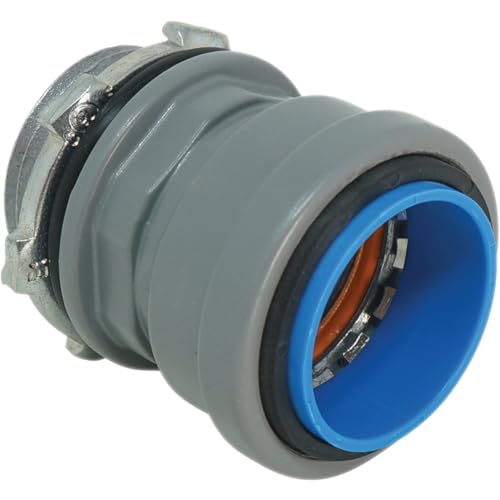
Estimated$3 – $15
Appleton Reelite Rigid Conduit Elbow
The Appleton Reelite rigid conduit elbow is a leader for industrial and hazardous-location conduit bends, built to withstand heavy mechanical loads with smooth interior bends that ease wire pulling and reduce conductor wear. It commands a premium price versus common EMT fittings, but that upfront cost is justified in environments requiring robust mechanical protection, higher temperature ratings, or specific certifications that typical EMT fittings do not provide. Rather than competing directly with EMT connectors, the Reelite elbow fills a distinct role where durability and compliance with demanding specs are required.

Estimated$35 – $150
Hubbell-Raco Die Cast Zinc EMT Set Screw Connector
The Hubbell-Raco die cast zinc set-screw connector is a market leader for economical, general-purpose EMT terminations, providing a low-cost, widely available option that is easy to install and adjust in the field. Its die-cast construction balances affordability and corrosion resistance, making it attractive for budget-conscious projects and maintenance work where ultimate mechanical retention is not the primary concern. While it can’t match the vibration resistance of compression connectors or the speed of push-in designs, its upfront savings and ubiquity make it a practical choice for many standard installations.

Estimated$2 – $12
What research and standards say about conduit fittings
Industry standards and independent tests back the core benefits of modern conduit fittings. Compliance with CSA and CEC standards ensures basic safety, mechanical strength and grounding continuity. Corrosion-resistance testing, including salt spray and cyclic corrosion exposure used by manufacturers, demonstrates that properly specified materials and coatings materially extend service life in coastal and winter-service conditions. Installer surveys and independent field evaluations consistently show that push-in and compression fittings reduce installation time and error rates compared with traditional methods, while manufacturer test protocols and third-party verifications confirm that properly installed compression and push-in connectors maintain electrical continuity and mechanical integrity over time.
Standards bodies such as CSA and the Canadian Electrical Code specify performance and safety requirements that fittings must meet for Canadian installations.
Corrosion testing and material selection matter: stainless steel, properly coated steel, and PVC fittings resist chemical and salt exposure prevalent in many Canadian regions.
Independent installer surveys and field tests show push-in and compression fittings reduce labor time and installation mistakes versus set-screw only methods.
Laboratory continuity and mechanical pull-out tests indicate that compression and certified push-in connectors can maintain grounding and mechanical strength equal to or better than older connector types when installed correctly.
Selecting fittings rated for the intended conduit type (PVC, EMT, rigid) and environment reduces long-term maintenance and replacement costs.
Frequently Asked Questions
Which conduit fitting should I buy for EMT terminations?
Choose the Thomas & Betts Steel City EMT Compression Connector (average rating 4.7) for mechanically secure EMT terminations, with a steel body and compression nut designed to maintain grounding continuity under vibration.
What exact feature does the Arlington 90-degree connector include?
The Arlington Industries 90-Degree Liquid-Tight Connector includes a 90-degree design for a watertight transition for liquid-tight flexible conduit, plus a sealing nut and ferrule for strain relief against moisture and dust.
How does the Arlington liquid-tight connector price compare?
The Arlington Industries 90-Degree Liquid-Tight Connector lists at $133.75, and it’s rated 4.5, offering a sealed boot, sealing nut/ferrule strain relief, and a threaded hub for wet locations.
Is the IPEX Scepter PVC coupling suitable for indoor and underground?
Yes—the IPEX Scepter PVC Conduit Coupling is commonly used in underground and indoor non-metallic conduit installations, with a slip/solvent-weld design made from durable PVC for lightweight, corrosion-resistant joins.
Conclusion
This list highlights seven dependable options available in Canada for 2026: IPEX Scepter PVC Conduit Coupling, Thomas & Betts Steel City EMT Compression Connector, Arlington Industries 90-Degree Liquid-Tight Connector, Southwire SIMPush EMT Push-In Connector, RACO Rigid Conduit Three-Piece Coupling, Appleton Reelite Rigid Conduit Elbow, and Hubbell-Raco Die Cast Zinc EMT Set Screw Connector. Each product suits different needs: the IPEX Scepter coupling for durable PVC systems, the Arlington liquid-tight connector for weather-resistant terminations, the Southwire SIMPush for fastest push-in installation, the RACO three-piece for heavy rigid conduit jobs, the Appleton elbow for tight routing in industrial projects, and the Hubbell-Raco zinc connector for economical EMT applications. For most Canadian professionals looking for the best overall balance of code compliance, long-term reliability and installation performance, the Thomas & Betts Steel City EMT Compression Connector stands out as the top choice. We hope you found what you were looking for; you can refine or expand your search using the search function to compare specs, approvals and local availability.