

Top 5 Flea and Tick Collars for Dogs in Canada: What's Still Registered, and How They Compare
Flea and tick collars for dogs are long lasting devices that release low doses of active ingredients over weeks or months to repel or kill fleas and ticks and interrupt their life cycles. Newer collars use sustained-release technologies and multi-target formulations to prevent tick attachment and disrupt multiple life stages of fleas, offering continuous, low-maintenance protection for busy pet owners. In Canada, buyers favor collars that combine proven duration, water resistance for outdoor dogs, clear safety guidance for varied climates and life stages, and regulatory approval. Consumers also weigh cost-per-month, ease of use compared with monthly topicals or oral options, and vet recommendations—especially in regions where tick activity and tick-borne disease risk have expanded.
Inception's AI took the time to understand this market in Canada · · How we pickWe may earn a commission on purchases. It never affects our rankings.
Top Picks Summary
Seresto Flea and Tick Collar for Dogs
Seresto is widely regarded as the best-in-class collar for dog flea and tick control because of its long-duration, low-maintenance design that spreads active ingredients gradually over several months, making it cost-effective over time compared with frequently replaced alternatives. It commands a premium price but delivers sustained protection and convenience that many cheaper collars on this list, like Hartz or Zodiac, do not match in terms of documented longevity and user convenience.

Hartz UltraGuard Pro Flea and Tick Collar
Hartz UltraGuard Pro is positioned as a budget-friendly, mass-market flea and tick collar that appeals to price-conscious buyers seeking immediate basic protection. While it lacks the long-duration claims and veterinary backing of premium options like Seresto or Bayer K9 Advantix, its lower upfront cost and wide retail availability make it a practical entry-level choice for owners on a tight budget or those who prefer more frequent product rotation.

Adams Plus Flea & Tick Collar for Dogs
Adams Plus occupies a middle ground by offering balanced performance and affordability, often marketed with supplemental ingredients intended to disrupt flea development and enhance overall efficacy. It typically costs more than economy collars such as Hartz or Zodiac but less than top-tier options, making it a solid compromise for owners who want better technical protection than generic collars without the higher investment of Seresto or pharmaceutical-grade Bayer products.

Estimated$18 – $35
Zodiac Flea Tick Collar for Dogs
Zodiac flea and tick collars focus on straightforward, no-frills protection at an accessible price, delivering reliable baseline control that makes them an attractive value pick for large kennels or multi-dog households. They generally undercut premium collars on price and provide easier short-term budgeting compared with long-lasting premium collars, though they typically require more frequent replacement to match the multi-month coverage some competitors advertise.

Estimated$15 – $30
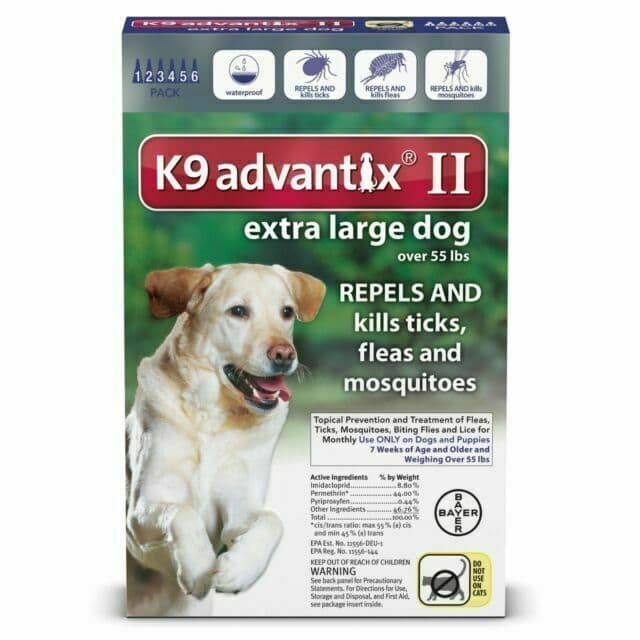
K9 Advantix II Flea and Tick Topical Treatment for Dogs
K9 Advantix II is not a collar — it is a monthly topical spot-on applied along the dog's back, included here as the mainstream alternative for owners whose collar options have narrowed. It combines imidacloprid, permethrin and pyriproxyfen to kill adult fleas, flea eggs and larvae, ticks and lice and to repel mosquitoes, and it is sold over the counter rather than by prescription. Permethrin is highly toxic to cats, so it must never be applied to a cat and treated dogs must be kept away from cats until the application site is dry.
Estimated$30 – $60
What the Science and Field Trials Say
Research and controlled field trials show that sustained-release flea and tick collars can deliver measurable reductions in flea counts and prevent certain tick attachments for several months. Studies looking at collars with modern release systems report consistent protective levels of active ingredients over time, which helps reduce household reinfestation cycles and the need for frequent reapplication. Regulatory agencies in Canada and elsewhere evaluate collars for efficacy and safety using lab and field data; post-marketing surveillance captures real-world safety signals. For pet owners, the key evidence-based advantages are continuous protection, lower dosing frequency, and improved compliance relative to monthly treatments when used correctly.
Duration: Multiple field studies report that properly used long-wear collars maintain effective protection for months, which can lower the risk of reinfestation and reduce missed applications.
Mechanism: Sustained-release technology maintains steady, low-level exposure to the active ingredient on the dog’s coat, targeting fleas at different life stages and interfering with tick attachment or survival.
Safety and regulation: Health Canada's Pest Management Regulatory Agency registers every legal pest control product with a PCP number. Its Special Review Decision SRD2021-01 cancelled the registration of all tetrachlorvinphos (TCVP) flea and tick pet collars in Canada over unacceptable post-application exposure risk, chiefly to children, so TCVP collars can no longer be legally sold here.
Real-world impact: Trials and surveillance indicate collars can reduce household flea burdens and lower incidence of tick contacts when combined with environmental control and tick checks.
Limitations: Efficacy can vary by formulation, application, dog behavior (swimming, rolling), and the specific tick species present in an area; collars are one part of an integrated parasite control plan.
Frequently Asked Questions
Which of these flea and tick collars is still legally registered in Canada?
Only the Seresto collar. Health Canada's Special Review Decision SRD2021-01 cancelled the registration of all tetrachlorvinphos (TCVP) flea and tick pet collars because the post-application exposure risk — chiefly to children handling a treated dog — was found unacceptable, so the Hartz UltraGuard Pro, Adams Plus and Zodiac collars on this page can no longer be legally sold in Canada. K9 Advantix II is a monthly topical spot-on, not a collar. Every legal pest control product sold in Canada carries a PCP registration number on its label — check for it before you buy.
Which flea and tick collar should I buy for 8-month coverage?
For 8-month coverage, the Seresto Flea and Tick Collar for Dogs is the only collar on this list rated for up to 8 months. It uses imidacloprid 10% and flumethrin 4.5% in a sustained-release polymer matrix. Note that full 8-month duration assumes the dog is not bathed more than once a month; frequent swimming or bathing shortens it to roughly 5 months for fleas and 7 months for ticks.
What active ingredients are in these flea and tick collars?
Seresto uses imidacloprid 10% plus flumethrin 4.5%. The Hartz UltraGuard Pro, Adams Plus and Zodiac collars all use tetrachlorvinphos (TCVP, an organophosphate) at about 14.55%, with Hartz and Adams Plus also adding the insect growth regulator (S)-methoprene; those TCVP collars were rated for about 7 months but their Canadian registration has been cancelled. K9 Advantix II is a topical, not a collar, and combines imidacloprid, permethrin and pyriproxyfen — permethrin is lethal to cats, so a treated dog must be kept away from cats until the application site is completely dry.
Are counterfeit Seresto collars a concern?
Yes. Counterfeit Seresto collars are common on third-party marketplaces and may contain incorrect or unsafe ingredient levels and offer little real protection. Buy from the manufacturer (Elanco) or an authorized retailer, check the holographic security features on genuine packaging, and be wary of prices well below the typical $55-80 CAD range.
Conclusion
In the Canadian context, long-wear flea and tick collars are a practical option for many dog owners who want continuous, low-maintenance protection through changing seasons — but only if the collar is still registered here. This page compares the Seresto Flea and Tick Collar for Dogs, the Hartz UltraGuard Pro, Adams Plus and Zodiac collars, and K9 Advantix II (a monthly topical spot-on, not a collar). Of these, only Seresto is a currently registered Canadian pest control collar: the Hartz, Adams Plus and Zodiac collars are tetrachlorvinphos products whose Canadian registration Health Canada cancelled under SRD2021-01, and they are listed here for comparison only. We hope you found what you were looking for; you can refine or expand your search using the site search to compare price, sizing, active ingredients, and vet guidance for your dog.