

Top 10 Filtration Systems and Media in Canada for 2025: An Expert-Reviewed Guide to Canister, Sump, HOB & Advanced Media for Clearer Water and Greater Peace of Mind
This category covers mechanical, biological, and chemical filtration equipment and media popular in Canada in 2026, including canister filters, sump systems, hang-on-back (HOB) units, sponge filters, and the media that power them: activated carbon, bio-balls, ceramic rings, zeolite, and modern nitrate- and phosphate-targeted media. Canadian consumers choose filtration solutions based on reliability, low maintenance, energy efficiency, and media that deliver measurable water-quality improvements while minimizing environmental impact. Hobbyists and small-scale commercial users alike value systems that balance strong mechanical debris removal, established biological colonization surfaces, and targeted chemical media to control organics, phosphates, and nitrates. Regional factors such as colder climates, local availability of replacement media, and a preference for energy-efficient pumps also shape purchasing decisions in Canada.
Inception's AI took the time to understand this market in Canada · · How we pickWe may earn a commission on purchases. It never affects our rankings.
Top Picks Summary
The Fluval 407 provides a strong balance of performance and compact design, offering multi-stage filtration and modern features at a mid-range price point ideal for medium aquariums. It delivers many of the practical advantages of the FX6 in a smaller footprint and typically offers greater build quality, quieter operation, and more configurable media capacity than budget models like the SunSun HW-304B and more modern conveniences than the older-style Eheim Classic 250.
Show More Canister Filters for Aquariums
Estimated$250 – $350
Innovative Marine Spin Stream Return Nozzle
The Innovative Marine Spin Stream Return Nozzle is a flow-shaping accessory that converts point-return flow into a wider, more laminar spread to improve circulation and reduce dead spots in the display. It doesn’t control volume like the valves or the Sicce controller, but it is an inexpensive, low-tech way to improve distribution and reduce microbubbling when paired downstream of precision or bulk-flow valves. As a complementary component for sump return plumbing, it offers a cost-effective performance boost compared with rearranging plumbing or adding additional pumps.
Show More Sump and Wet Dry Systems for Aquariums
We may earn a commission on purchases. It never affects our rankings.
$40.24CAD
The Marina i25 Internal Filter is a compact, budget-friendly internal filter aimed at small tanks and first-time hobbyists and is available for purchase. It stands out for its low entry cost and simple maintenance compared with the Fluval U2 and Eheim Aquaball, though it sacrifices the premium flow control and longevity those higher-end units offer.
Show More Internal Submersible Filters for Aquariums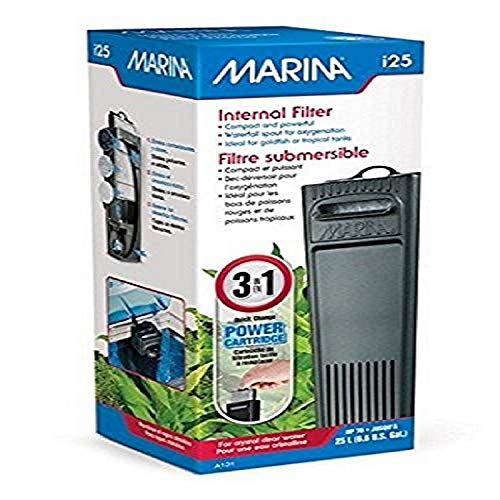
We may earn a commission on purchases. It never affects our rankings.
$27.98CAD
The Aquarium Co-Op Nano Sponge Filter earns a best-in-class spot for nano and shrimp tanks thanks to its compact footprint, fine pore sponge and reliable biological filtration that punches above its size. It balances performance and price better than premium-branded pre-filters like Fluval while offering more consistent build quality and flow design than many generic double-sponge units in this list. For small setups it delivers top bacterial colonization and low maintenance compared with larger or denser foams that are geared toward higher bio-loads.
Show More Sponge and Air Driven Filters for Aquariums
AquaClear Filter Insert Foam is engineered to fit AquaClear hang-on filters and balances mechanical trapping with biological surface area, providing a reliable middle ground between coarse foam and ultra-fine pads. It is competitively priced and easier to service than disposable cartridges, offering better flow and tailored fit than generic blocks while not matching the longevity of high-density synthetic paddings like Eheim's.
Show More Mechanical Filter Media for Aquariums
We may earn a commission on purchases. It never affects our rankings.
$11.99CAD
Plant!t Clay Pebbles focus on accessibility and user-friendly packaging — pre-washed and ready-to-use options reduce prep time for biological filters and hobbyist systems. While they may not match the ultra-high uniformity of Hydroton or Mother Earth, they outshine some competitors by lowering labor and equipment preparation costs, making them a practical choice for smaller facilities or growers. Compared with Grow!t and General Hydroponics, Plant!t prioritizes convenience and clean presentation over the lowest unit price.
Show More Biological Filter Media for Aquariums
Estimated$12 – $35
Seachem PhosGuard is best-in-class for selective phosphate and silicate removal, offering high capacity and predictable performance that helps control algae without stripping trace elements unnecessarily. Its targeted chemistry and long service life distinguish it from general-purpose carbons and from cheaper phosphate removers on the market; although it carries a premium, the reduced replacement frequency and compatibility with organics removers like Purigen can lower lifecycle costs for planted and reef systems.
Show More Chemical Filter Media for Aquariums
We may earn a commission on purchases. It never affects our rankings.
$13.59CAD
Brita Elite holds a best-in-class position for Combination Media Cartridge Subscription Packs by pairing familiar carbon-based adsorption with proprietary ion-exchange layers to deliver consistent, affordable contaminant reduction across home pitchers and dispensers. It stands out against premium rivals by offering the lowest per-cartridge subscription price and the widest retail availability, making it the practical choice for households prioritizing predictable ongoing costs and easy replacement cadence. Compared with the deeper-acting 5-stage and specialty contaminant cartridges in this list, Brita Elite emphasizes cost-efficiency and broad compatibility in mixed-media subscription bundles.
Show More Filter Cartridges and Replacement Packs for Aquariums
Estimated$30 – $60
The Sicce Syncra SDC 9.0 is a market leader for straightforward, reliable return pumping with energy-efficient synchronous DC technology and a reputation for long service life at a competitive price point. Compared to smarter, app-driven powerheads, the Syncra SDC focuses on raw hydraulic efficiency and simple analog/digital control, offering a lower entry cost for hobbyists who prioritize consistent performance over advanced connectivity. Its conservative thermal and mechanical design also makes it an economical workhorse for sump-based filtration systems.
Show More Powerheads and Return Pumps for Aquarium Filtration
Estimated$120 – $180
What Research and Practical Evidence Say About Filtration Benefits
Scientific literature and aquaculture practice consistently support three core filtration principles: high surface-area media promote stable biological nitrification, mechanical pre-filtration improves clarity and reduces media fouling, and targeted chemical media can reduce dissolved organics, phosphates, or ammonia-derived compounds when used appropriately. Studies from university aquaculture programs and industry trials emphasize staged filtration approaches (mechanical -> biological -> chemical) and show that tailored media combos yield measurable reductions in nitrates and phosphates compared to single-media setups. For beginners, the key takeaway is that system design and maintenance cadence are as important as media choice: appropriate flow, staging, and periodic media renewal determine long-term water quality.
Biological filtration: Research shows that porous media with high specific surface area (ceramic rings, bio-balls, sponge) encourage nitrifying bacteria colonization, stabilizing ammonia and nitrite in aquaria and ponds.
Mechanical filtration: Studies and field trials confirm pre-filtration of solids (filter socks, foam) reduces clogging of biological and chemical media, improving overall system efficiency and lowering maintenance frequency.
Activated carbon and GAC: Peer-reviewed work demonstrates that granular activated carbon removes dissolved organics and discoloration effectively for weeks to months, but its adsorption capacity is finite and depends on load and flow rate.
Phosphate- and nitrate-targeted media: Ion-exchange and specialist media (e.g., lanthanum-based phosphate binders, nitrate-reducing resins, denitrifying bio-ceramics) can significantly lower nutrient levels when used as part of a multi-stage strategy; effectiveness depends on contact time and regeneration/replacement schedules.
Flow and contact time: Evidence indicates that higher surface area plus sufficient contact time (not only high flow) improves biological conversion rates and chemical adsorption performance.
Energy and environmental considerations: Recent Canadian and international studies highlight energy-efficient pumps and reusable or regenerable media as ways to reduce operating cost and waste without sacrificing water quality.
Frequently Asked Questions
Which filter should I buy for a small tank?
For a small-to-medium aquarium, the Eheim Classic 250 is a strong pick because it delivers dependable flow with excellent biological filtration, has an average rating of 4.6, and costs $149.83.
What spec does the PhosBan Reactor 150 control?
The Two Little Fishies PhosBan Reactor 150 is engineered for heavy phosphate and nitrate control, with a high-capacity chamber optimized for PhosBan and other phosphate-removing media; it has a 4.5 rating and costs $89.99.
Is the Marina Slim S20 worth $49.99?
Yes—at $49.99, the Marina Slim S20 offers a slim, space-saving hang-on-back design for narrow tanks, with cartridge-based filtration and quiet operation; it has a 3.9 average rating.
Does the Eheim Classic 250 come with phosphate media?
No—Eheim Classic 250 media details aren’t specified as including phosphate media, while the Two Little Fishies PhosBan Reactor 150 is specifically for phosphate-removing media; Eheim is $149.83 with a 4.6 rating.
Conclusion
Whether you are setting up a freshwater aquarium, renovating a reef display, or upgrading a backyard pond, Canada’s 2026 options for filtration systems and media deliver flexible, evidence-informed choices for clearer, healthier water. We hope this guide helped you narrow down what you need. If you want to refine results by tank size, target contaminants, budget, or preferred maintenance level, use the search options to expand or focus your selection.