

Top 8 Terrariums and Enclosures in Canada for 2026: Buyer Guide to Glass Tanks, PVC Habitats, Bioactive-Ready Racks and Custom Setups
Short answer: for one adult ground-dwelling lizard, a 4 x 2 x 2 ft front-opening PVC enclosure is the current default in Canada — it holds heat and humidity better than glass, opens from the front instead of the top, and takes deep substrate for a bioactive build. Glass terrariums are still the best value for small-to-medium tropical species and for anyone who wants a display piece. Open-air screen cages suit chameleons and other high-airflow arboreal lizards and very little else. Rack systems are for breeders housing many animals, not for a single pet. This guide covers the glass tanks, PVC habitats, modular racks and custom builds available in Canada for 2026, sized against what adult animals need rather than hatchling minimums. Canadian buyers also weigh a few things more heavily than US buyers: an enclosure has to hold humidity through a dry forced-air winter, survive cross-country shipping intact, and work with heating and monitoring gear that is easy to source locally.
Inception's AI took the time to understand this market in Canada · · How we pickWe may earn a commission on purchases. It never affects our rankings.
Top Picks Summary
- Reptizoo Glass Terrarium RK0119
- Lee's Kritter Keeper
- Zen Habitats 4x2x2 Wood PVC Reptile Enclosure
- Zoo Med ReptiBreeze Open Air Screen Cage Medium
- Vision Products V-35 Rack System
- Zilla Aquatic Turtle Kit 40 Gallon Breeder
- Exo Terra Natural Terrarium Large Low
- Penn-Plax Reptology Life Science Turtle-Topper Above-Tank Basking Platform
The Reptizoo Glass Terrarium RK0119 is a cost-conscious glass enclosure that gives hobbyists a large floor area for ground-dwelling reptiles and amphibians at a lower price per liter than many branded options. Its main advantage in a breeding or rearing context is upfront affordability and straightforward sliding-door access, while it generally sacrifices some of the build refinement, integrated accessories and breeder-oriented features found in Zoo Med and Exo Terra products.
Show More Glass Terrariums for Reptiles and Amphibians
Estimated$140 – $200
Lee's Kritter Keeper is a budget-friendly, lightweight plastic carrier ideal for quick moves, shows, and short transports — its low cost and ventilated design make it the go-to choice for frequent, low-risk transfers. Versus the more rigid Exo Terra Faunarium or the specialized breeding boxes here, Lee's offers the best price-to-portability ratio for hobbyists who prioritize economy and ease of handling over long-term durability or feature-rich construction.
Show More Acrylic and Plastic Enclosures for Reptiles and Amphibians
Zen Habitats' 4x2x2 Wood PVC Reptile Enclosure is a practical, value-oriented unit that pairs a wood cabinet exterior with a PVC-lined interior for improved moisture resistance and easier cleaning; its standardized 4×2×2 footprint and sliding front make it an economical, ready-to-use solution compared with bespoke builders on this list. Financially it undercuts most custom shops while delivering better humidity resilience than bare-wood boxes, making it a strong choice for hobbyists who want reliable performance without a custom price premium.
Show More Wooden Vivariums for Reptiles and Amphibians
Estimated$900 – $1,300
Zoo Med ReptiBreeze Open Air Screen Cage Medium
Zoo Med's ReptiBreeze Medium is the market leader for open-air screen cages thanks to its wide availability, lightweight aluminum frame, and budget-friendly price that make it easy to set up and relocate for arboreal species that thrive with high ventilation. Compared with the taller, heavier Reptiloo unit, the ReptiBreeze prioritizes airflow and affordability—excellent for species that require fast air exchange or for keepers who want a cost-effective, modular solution—though it sacrifices some humidity retention and vertical space. Its practical advantages include simple assembly, broad accessory compatibility, and a price point that lowers the barrier to entry for new reptile and amphibian keepers.
Show More Screen Mesh Enclosures for Arboreal Reptiles and Amphibians
Estimated$110 – $165
Vision Products V-35 Rack System
The Vision V-35 Rack System is widely regarded as a market-leading solution for rack and breeder systems for reptiles and amphibians thanks to its durable injection-molded drawers and modular, stackable design that simplifies maintenance and microclimate control. It holds its position by offering premium build quality and consistent thermal performance that many professional breeders prefer, although it typically commands a higher price than simpler alternatives like the Reptile Basics CB-70. Compared with steel or custom systems (e.g., ARS Caging or Freedom Breeder), the V-35 trades off brute strength for lightweight, scalable affordability and ease of cleaning, making it a top pick for operations prioritizing throughput and hygiene.
Show More Rack and Breeder Systems for Reptiles and Amphibians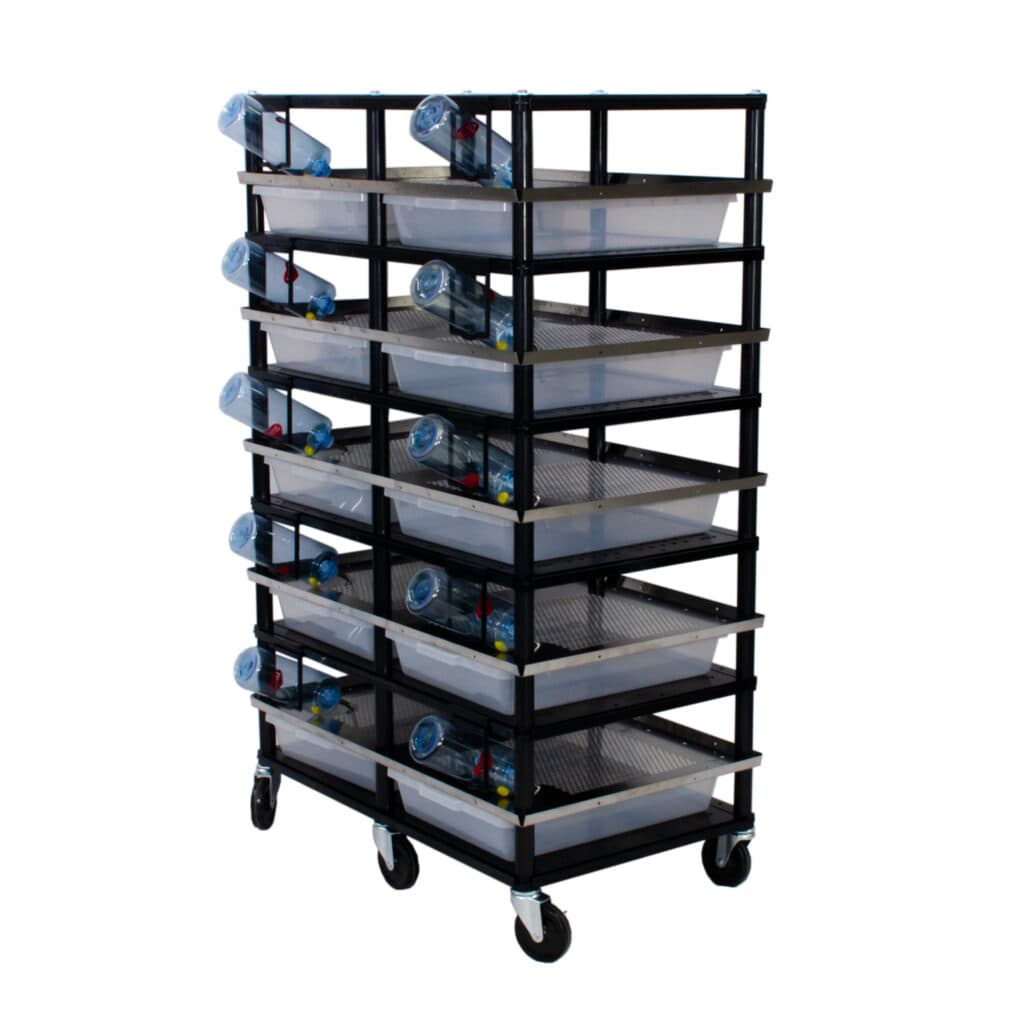
Estimated$250 – $450
Zilla Aquatic Turtle Kit 40 Gallon Breeder
The Zilla Aquatic Turtle Kit 40 Gallon Breeder stands out as the market leader for semi‑aquatic turtle setups because it bundles a large footprint with included filtration, lighting, and basking components that reduce out‑of‑the‑box setup time and additional purchases. Compared to the NCAGE and Aqueon tanks, the Zilla kit offers a higher water volume and equipment-ready approach, which is financially advantageous for hobbyists wanting a complete aquatic environment without sourcing separate gear. While not purpose‑built for planted bioactive systems, its equipment package and roomy breeder dimensions make it a practical, time-saving choice for larger semi‑aquatic reptiles.
Show More Paludariums for Semi Aquatic Reptiles and Amphibians
Estimated$160 – $300
Exo Terra Natural Terrarium Large Low
Exo Terra's Large/X-Tall Natural Terrarium earns the market-leader spot by combining a roomy, vertically oriented footprint with purpose-built features for bioactive builds—sturdy front-opening doors, integrated ventilation, and a textured background that encourages plant rooting. Its premium materials and widespread accessory ecosystem make it more expensive than compact options like the Zilla Micro, but the higher upfront cost buys long-term technical flexibility and scalability for larger amphibians and arboreal reptiles compared with the more budget-focused enclosures in this list.
Show More Bioactive Ready Enclosures for Reptiles and Amphibians
Estimated$250 – $350
Penn-Plax Reptology Life Science Turtle-Topper Above-Tank Basking Platform
Penn-Plax's Reptology Life Science Turtle-Topper Above-Tank Basking Platform stands out as a compact, economical accessory that simplifies providing a secure dry-area within custom aquatic terrariums without major structural changes. Technically it allows builders to create effective land-water gradients and integrate basking zones more cheaply than bespoke platforms or heavy remodeling, making it a practical add-on that complements full-kits like the Zoo Med and Zilla systems.
Show More Custom Built Enclosures for Reptiles and Amphibians
We may earn a commission on purchases. It never affects our rankings.
$36.97CAD
What Science Says About Well-Designed Terrariums and Bioactive Enclosures
A growing body of research and husbandry literature supports the welfare benefits of enclosures that replicate key aspects of an animal's natural microhabitat. Properly designed tanks and bioactive systems help maintain stable humidity and thermal gradients, allow expression of natural behaviors, and can reduce stress and shedding problems when set up and maintained correctly. Evidence also points to improved husbandry outcomes when enclosures are sized and arranged for species-specific needs and when keepers use validated environmental monitoring. For beginners, following research-informed design principles reduces trial-and-error and promotes healthier captive reptiles and amphibians.
Size by adult animal, not by hatchling: current keeper guidance is a 4 x 2 x 2 ft minimum for an adult bearded dragon, 36 x 18 x 18 in (about 4.5 sq ft of floor) for an adult leopard gecko, and 18 x 18 x 24 in as a crested gecko starter with more height preferred long term.
Gradients, not a single temperature: animals thermoregulate by moving between zones, so an enclosure needs a distinct warm end, cool end and a moist retreat. A footprint too small to build a real gradient is the most common husbandry failure.
Material decides humidity: PVC panels insulate and seal, glass with a full mesh top vents moisture continuously and usually needs the mesh partly covered, and open-air screen holds essentially none. Match the material to the species before you shop on price.
Enrichment and complexity: enclosures with structural complexity and hiding places are associated with reduced stress-related behaviors and improved feeding responses in captive reptiles and amphibians.
Bioactive benefits and caveats: microbial and invertebrate communities can assist waste breakdown and reduce ammonia, but success depends on proper substrate selection, microfauna balance, and maintenance.
Surface and substrate safety: husbandry guidance highlights risks from inappropriate substrates or enclosure materials and recommends species-specific vetting to avoid impaction, toxicity, or mold growth.
Monitoring improves outcomes: reliable temperature, humidity and UVB measurement at the animal's level — not at the lid — is what keeps conditions inside the intended range.
Space and breeding: rack systems are effective for breeders when environmental needs are met, but they require careful attention to airflow, heating consistency, and quarantine practices, and they are not a substitute for a display enclosure for a single pet.
Frequently Asked Questions
What size enclosure does my reptile actually need?
Size for the adult animal, not the hatchling you are bringing home. Current keeper guidance puts an adult bearded dragon at a 4 x 2 x 2 ft minimum, an adult leopard gecko at 36 x 18 x 18 in with roughly 4.5 sq ft of floor space, and a crested gecko at 18 x 18 x 24 in as a starter with about 36 in of height preferred long term. Floor space matters most for ground-dwelling species; height matters most for climbers. Buying the adult-size enclosure once is cheaper than upgrading twice.
Glass, PVC or screen: which holds humidity best?
PVC holds it best, glass is in the middle, and screen holds almost none. A PVC-panelled enclosure insulates and seals, so a tropical species stays stable with less misting. A glass terrarium with a full mesh top vents moisture steadily and usually needs the mesh partly covered to hold tropical levels. An open-air screen cage is built to exchange air constantly and will not hold humidity at all — that is the point for chameleons and a problem for anything else.
Is an open-air screen cage safe for any reptile?
Only for species that need constant airflow, mainly chameleons and similar arboreal lizards. In a Canadian home on forced-air heat in winter, a screen cage sits at room humidity, which is far too dry for crested geckos, most frogs and tropical snakes. It also loses heat quickly, so a stable basking gradient is harder to hold. Choose a glass terrarium or a PVC enclosure for those animals.
Which type of enclosure on this list should I start with?
For a single adult ground-dwelling lizard, a 4 x 2 x 2 ft front-opening PVC enclosure is the modern default: it holds heat and humidity, opens from the front so you are not reaching down over the animal, and takes deep substrate for a bioactive build. Use the small plastic units here for transport, quarantine and grow-out rather than as permanent housing, and use a screen cage only for high-airflow arboreal species.
Conclusion
Whether you are outfitting a single gecko, building a frog bioactive vivarium, or setting up a breeder rack, buy for the animal's adult size and for the humidity it needs — those two decisions rule out most of the catalogue before price ever comes up. You can refine this list by filtering for material, size, bioactive-ready options, rack compatibility, or budget to find the best match for your species and living space.