

Discover Canada's Top 5 Emergency Signaling Devices for 2026
When you're out exploring the breathtaking landscapes of Canada, safety is key, especially in remote areas where communication can be challenging. Emergency signaling devices are essential for outdoor enthusiasts and anyone who values personal safety. In this comprehensive guide, we examine five top-rated emergency signaling devices for 2026, including the Garmin inReach Mini 2, ACR ResQLink View RLS, Princeton Tec Meridian Strobe/Beacon, Fox 40 Classic Whistle, and SOL Rescue Flash Signal Mirror. As more Canadians engage in outdoor activities like hiking, camping, and boating, the demand for reliable signaling devices continues to grow. Consumers seek products that offer not only quality and reliability but also ease of use and compact design. These signaling devices can be lifesavers in critical situations, enabling users to communicate their location and need for assistance effectively. Whether you're planning a weekend getaway or an extended backcountry expedition, investing in an emergency signaling device is not just a precaution; it's a smart step towards ensuring peace of mind in the great outdoors. Each of the highlighted devices in our comparison boasts unique features tailored to a range of outdoor activities, making them valuable additions to any adventure kit. Come along as we delve into the specifics of each device to help you choose the right one for your needs.
Inception's AI took the time to understand this market in Canada · · How we pickWe may earn a commission on purchases. It never affects our rankings.
Top Picks Summary
Garmin inReach Mini 2
The Garmin inReach Mini 2 is best-in-class for campers and hikers who need two-way satellite communication and an SOS capability in a very compact package. Its global Iridium connectivity and messaging/tracking features give it a clear technical advantage over passive signaling gear on this list, though it carries higher upfront cost and requires an ongoing subscription compared with subscription-free PLBs like the ACR ResQLink. For trips where remote coordination, weather updates and confirmation of rescue are important, its active-communication capability makes it the market leader.

Estimated$400 – $550
ACR ResQLink View RLS
The ACR ResQLink View RLS is a market-leading personal locator beacon (PLB) that transmits a one-way distress signal with integrated GPS to international search-and-rescue satellites. Unlike satellite communicators it requires no monthly subscription—making it a financially attractive, set-and-forget option—though it lacks the two-way messaging and tracking of the Garmin inReach Mini 2. Its technical strength is a high-power emergency broadcast and simplicity, ideal as a reliable backup to lights, whistles and mirrors.

We may earn a commission on purchases. It never affects our rankings.
$811.95CAD
Princeton Tec Meridian Strobe/Beacon
The Princeton Tec Meridian Strobe/Beacon is a compact, high-output visual strobe designed for low-light signaling and scene illumination while camping or hiking. Technically optimized for long battery life and visibility at night, it is far more affordable than satellite communicators and PLBs but cannot summon rescue services remotely; it pairs well with devices like the Garmin or ACR for full-coverage emergency plans. For users prioritizing night-time visibility and low ongoing cost, the Meridian is a practical and lightweight beacon.

Estimated$60 – $90
Fox 40 Classic Whistle
The Fox 40 Classic Whistle is a rugged, pea-less whistle known for reliably projecting a loud, attention-getting signal in all weather without batteries or maintenance. It is the lowest-cost item on the list and offers a proven acoustic advantage at close to medium range, complementing visual tools and electronic beacons by helping rescuers home in once they are nearby. As a durable, no-fail device it’s an essential, budget-friendly backup for any signaling kit.

Estimated$6 – $12
SOL Rescue Flash Signal Mirror
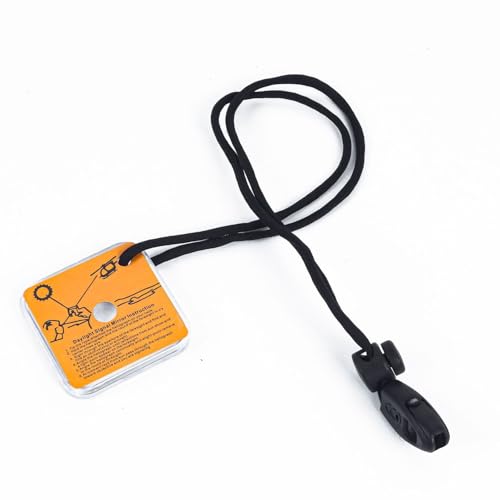
The SOL Rescue Flash Signal Mirror is a lightweight, no-battery visual signaling tool that uses reflected sunlight to attract attention over long distances during daytime. Financially inexpensive and virtually maintenance-free, it provides a long-range daylight advantage compared with strobes and whistles, though it won’t work at night or send an automated distress signal like the ACR PLB or the Garmin communicator. As a compact daylight backup it pairs well with electronic devices to cover multiple signaling scenarios.
We may earn a commission on purchases. It never affects our rankings.
$7.99CAD
Emergency signaling devices offer crucial benefits for outdoor safety, combining reliability, portability, and ease of use. These devices ensure you can effectively signal for help when needed, whether through advanced satellite communication like that of the Garmin inReach Mini 2, visible alerts from the Princeton Tec Meridian Strobe/Beacon, or simple signaling methods like the Fox 40 Classic Whistle. Their diverse features and capabilities make them invaluable tools for anyone venturing into the great outdoors.
What research and operational reports say about signaling devices
A range of operational reports and scientific work supports using multiple, redundant signaling methods when venturing into remote areas. International search and rescue systems and national agencies report that electronic beacons and two-way satellite communicators significantly reduce location time when activated, while high-intensity visual signals and loud audible devices improve detectability during the approach phase. Human factors and environmental visibility studies also show that contrast, strobe frequency, and sustained sound patterns affect how quickly rescuers spot or hear a signal. For beginners, this means combining complementary devices — for example, an electronic beacon for remote alerts plus a whistle and visual reflector for local signaling — produces the best practical outcomes.
Electronic beacons and two-way satellite communicators are associated with faster responder notification and clearer location data in remote rescues, improving the chance of timely assistance.
Strobe lights and high-visibility materials increase detection in low-light or poor-visibility conditions; rechargeable strobes ensure repeated use on longer trips.
Whistles remain an effective, low-cost audible tool; standard emergency signaling patterns (three short blasts) are universally recognized by many SAR organizations.
Signal mirrors and reflective panels are most effective in daylight when aimed correctly; they provide a weight-free option with long visual range under good lighting.
Redundancy matters: combining audible, visual, and electronic signals addresses different phases of a rescue and mitigates single-point failures such as drained batteries or severe weather.
Conclusion
In summary, the right emergency signaling device can significantly enhance your safety during outdoor excursions in Canada. This comparison covers the Garmin inReach Mini 2, known for its satellite communication capabilities, the ACR ResQLink View RLS with its built-in GPS for precise location tracking, the Princeton Tec Meridian Strobe/Beacon, which offers powerful visibility, the Fox 40 Classic Whistle for straightforward signaling, and the SOL Rescue Flash Signal Mirror, which utilizes sunlight for effective signaling. Each product has its strengths, catering to different preferences and use cases, but for comprehensive communication and versatility, the Garmin inReach Mini 2 stands out as the best choice among them. We hope you found this information helpful as you navigate the choices available in emergency signaling devices. If you're looking for additional options or want to refine your search, feel free to use the search function on our site to discover more products tailored to your needs.