

Top 5 Low-Loss External Antenna Extension Cables with SMA Connectors in Canada (2026) — Expert-Tested Options for Reliable Cellular, WiFi and IoT Links
Low-loss coaxial extension cables terminated with SMA connectors provide reliable external antenna connections for cellular, WiFi and IoT applications. These cables prioritize minimal attenuation, consistent impedance, and robust shielding so that external antennas deliver stronger signals and more stable RF performance than direct device mounts or poor-quality jumpers. Canadian consumers and businesses choose these cables for a mix of reasons: they reduce signal degradation over long runs to rooftop or pole-mounted antennas, they simplify upgrades to boosters and routers, and they enable flexible routing in residential, rural and commercial deployments. In Canada specifically, demand is driven by expanding rural broadband initiatives, growing IoT/telemetry installations in agriculture and industry, and increased home and business reliance on cellular failover and fixed wireless access. Buyers typically balance three priorities: measured loss per meter at their operating frequency, mechanical flexibility for installation, and weatherproof connector quality for harsh climates.
Inception's AI took the time to understand this market in Canada · We may earn a commission on purchases. It never affects our rankings.
Top Picks Summary
Times Microwave LMR-400 SMA Cable Assembly
Times Microwave's LMR-400 SMA assemblies are best-in-class for low-loss external antenna extension runs, offering industry-leading attenuation performance and heavy-duty shielding that outperforms thinner RG58 and LMR-195 alternatives for long-distance feeds. They are the technical choice where minimal insertion loss and long-term durability justify the premium price compared with more economical options on this list, making them ideal for mission-critical or long-run installations.

Wilson Electronics RG58 Low-Loss SMA Extension Cable
Wilson Electronics' RG58 SMA extension cables are a market-leading, cost-effective choice for short to medium external antenna extensions, delivering good flexibility and wide availability at a lower price point than LMR-400 and many LMR-195 options. While RG58 has higher loss than the Times Microwave and Proxicast LMR-195 assemblies, Wilson's value and mobile-friendly construction make it a practical option for budget-conscious or temporary deployments where very low loss is not critical.

Proxicast Low-Loss Coax Extension Cable LMR-195 SMA
Proxicast's LMR-195 SMA extension strikes a practical balance between flexibility, low loss, and price, offering noticeably lower attenuation than RG58 while remaining more affordable and easier to route than LMR-400 assemblies. This makes it a strong mid-market choice for installers who need better RF performance than RG58 but without the weight and higher cost of LMR-400, and Proxicast's length and connector options add good commercial value for varied deployments.

Data Alliance CFD200 SMA Extension Cable
The Data Alliance CFD200 SMA extension cable is positioned as a compact, budget-oriented low-loss solution optimized for tight routing and space-constrained external antenna setups, offering lower diameter and competitive pricing compared with full-size low-loss cables. Although its RF performance is generally behind heavier LMR-400 and some LMR-195 offerings, its price-to-size advantage and ease of installation make it attractive for IoT, consumer, and short-run applications where minimal bulk is important.
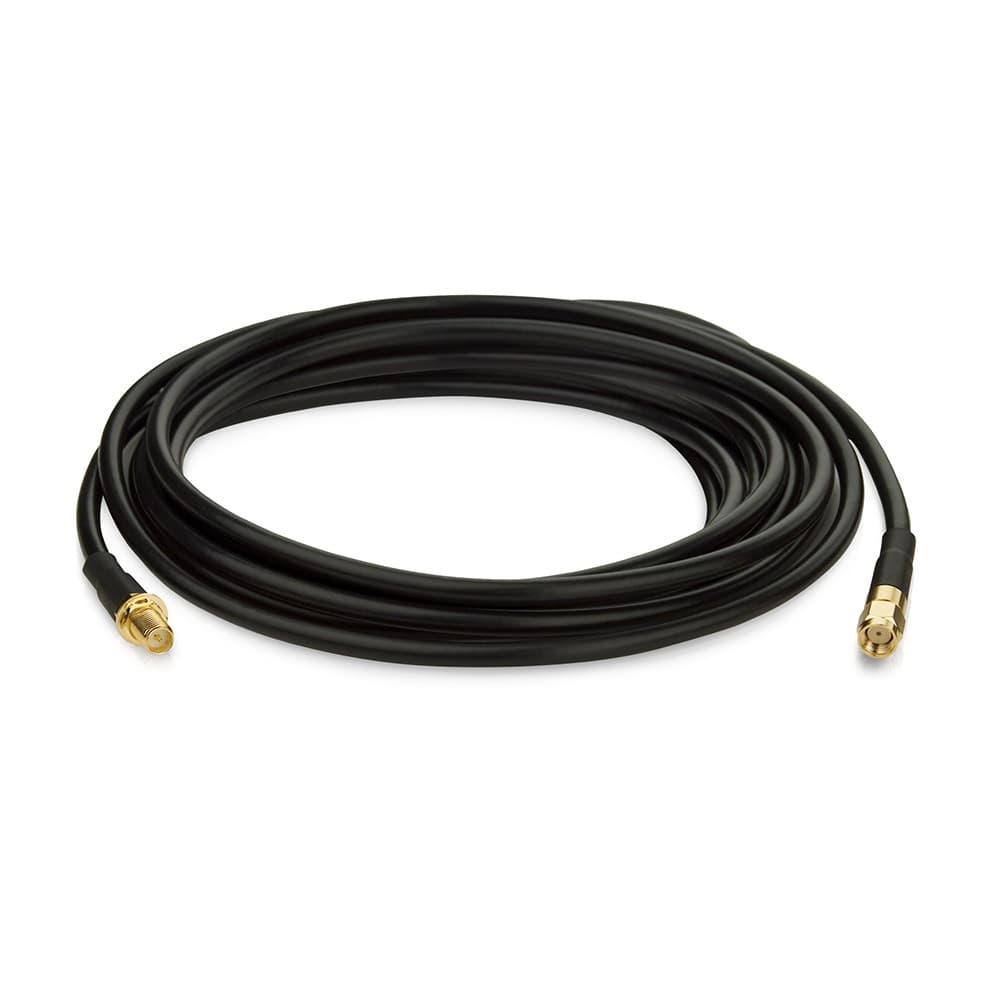
Where to buy Data Alliance CFD200 SMA Extension Cable in Canada: the trusted retailers we track in this market, with the best price we have observed at each. Prices are checked regularly and can change, and the retailer confirms the final price at checkout.
We may earn a commission on purchases. It never affects our rankings.
$30 – $100
Panorama Antennas C29SP Low-Loss SMA Cable
Panorama Antennas' C29SP low-loss SMA cable is engineered for professional external antenna installations, delivering a quality balance of low attenuation, rugged connectors, and corrosion-resistant finishes that place it between the premium Times Microwave assemblies and the more economical Proxicast and Wilson options. Its competitive pricing for professional-grade components and focus on antenna ecosystem compatibility make it a compelling choice for commercial and maritime users seeking reliable performance without the top-tier LMR-400 price.
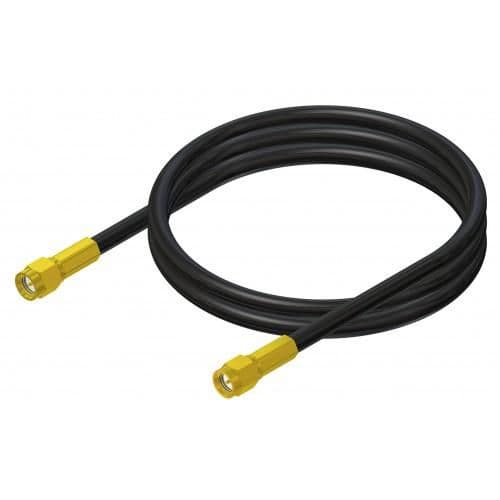
Where to buy Panorama Antennas C29SP Low-Loss SMA Cable in Canada: the trusted retailers we track in this market, with the best price we have observed at each. Prices are checked regularly and can change, and the retailer confirms the final price at checkout.
We may earn a commission on purchases. It never affects our rankings.
$40 – $120
Why Low-Loss Coaxial Cables Matter — Research and Practical Findings
Scientific principles and lab testing consistently show that the choice of coaxial cable and connector affects signal strength, throughput and link reliability. Loss in coaxial cable rises with frequency and cable length, while construction details such as center conductor size, dielectric material, braid coverage and shielding influence attenuation and return loss. Independent lab evaluations and manufacturer whitepapers compare common cable families (for example LMR series, RG58 derivatives and purpose-built low-loss coax) and demonstrate measurable differences in insertion loss, VSWR and durability. Those results translate into real-world improvements in received signal level, modem throughput and fewer dropped connections when low-loss cables are used in place of generic patch cords.
Attenuation increases with frequency and length: higher-frequency bands like LTE 1700/2100 MHz and 2.4/5 GHz WiFi show more loss over the same cable run than lower frequencies.
Cable construction matters: larger center conductors and denser braid/shielding typically deliver lower loss and better rejection of external interference.
Connector quality and proper termination reduce reflections (VSWR) and the risk of water ingress; proper sealing significantly extends outdoor service life.
Field and lab comparisons show switching from a general-purpose RG58-type jumper to a thicker low-loss cable (for example LMR-400 class) can improve received signal level and effective throughput, especially on longer runs.
Practical installation guidance from standards and industry testing emphasizes keeping runs as short as practical, using correct impedance-matched connectors (50 ohm SMA), and avoiding kinks and tight bends to preserve performance.
Frequently Asked Questions
Which SMA extension cable should I buy for long runs?
Choose the Times Microwave LMR-400 SMA Cable Assembly ($47.79 CADrating 4.6) for long external antenna feeds, since LMR-400 construction delivers very low attenuation compared with RG58/LMR-195 and includes heavy-duty shielding for rooftop and outdoor installs.
Does Proxicast LMR-195 provide lower loss than RG58?
Yes—Proxicast Low-Loss Coax Extension Cable LMR-195 SMA uses LMR-195 for lower attenuation than RG58, while staying more flexible and easier to route than LMR-400; it also has 50 Ω SMA terminations.
How does Wilson RG58 SMA price compare to Proxicast LMR-195?
Wilson Electronics RG58 Low-Loss SMA Extension Cable costs $29.99 CAD(rating 4.0), while Proxicast LMR-195 SMA costs $29.99 CAD(rating 4.0); Proxicast’s LMR-195 aims for lower loss than RG58 and easier routing than LMR-400.
Which cable is more flexible for tight conduit routing?
Proxicast Low-Loss Coax Extension Cable LMR-195 SMA is the easier routing option, since its smaller diameter helps with running through conduits and tight spaces; it still keeps 50 Ω SMA terminations commonly used for Wi‑Fi and cellular external antenna extensions.
Conclusion
In the Canadian context these low-loss SMA extension cables are practical upgrades for rooftop antennas, cellular boosters and IoT gateways across urban and remote deployments. The five options profiled here — Times Microwave LMR-400 SMA Cable Assembly, Wilson Electronics RG58 Low-Loss SMA Extension Cable, Proxicast Low-Loss Coax Extension Cable LMR-195 SMA, Data Alliance CFD200 SMA Extension Cable, and Panorama Antennas C29SP Low-Loss SMA Cable — cover the range from high-performance low-loss runs to budget and flexible installation choices. For most installations that prioritize the best balance of low attenuation and long-term reliability, the Times Microwave LMR-400 SMA Cable Assembly is the recommended choice. We hope you found what you were looking for; use the site search to refine by length, frequency band or connector gender, or expand your search to include weatherproof adapters and mounting accessories.