

Top 7 Manure Storage Tanks and Holding Vessels in Canada for 2025: A Farmer- and Engineer-Reviewed Guide to Leak Protection, Odor Control, and Real-Time Monitoring, Find the Right Fit for Your Operation
This category covers fixed and portable manure tanks, lined pits, and storage lagoons designed for short- and long-term containment, with a focus on leak protection, odor mitigation, and nutrient preservation. Canadian buyers increasingly favor covered and insulated systems, double-lined containment, and integrated real-time monitoring to meet cold-climate performance needs and regulatory requirements. Selection is driven by farm size, feedlot or crop operation, siting constraints, provincial environmental standards, and priorities such as minimizing emissions, protecting groundwater, and preserving fertilizer value. Practical features that appeal in the Canadian market include winterization, corrosion-resistant materials, modular portability, and options for covers or gas management.
Inception's AI took the time to understand this market in Canada · · How we pickWe may earn a commission on purchases. It never affects our rankings.
Top Picks Summary
Gill Precast Concrete Manure Storage System
Gill Precast's system is positioned as best-in-class for fixed concrete manure storage pits because its factory-cast panels emphasize tight tolerances, high compressive strength and rapid site assembly that minimize manure exposure and labor hours. Compared with poured-in-place competitors like Wieser and County Concrete it delivers faster commissioning and more predictable lifecycle costs, while its modular approach reduces on-site weather risk versus large-scale suppliers such as Lafarge and niche panel makers like Creacon.
Show More Fixed Concrete Manure Storage Pits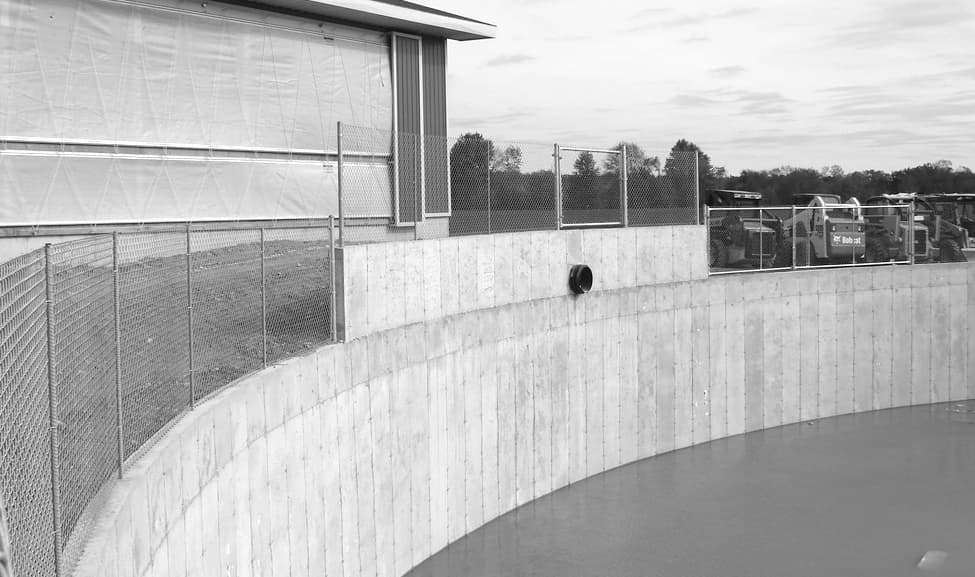
Estimated$60,000 – $220,000
Westeel Liquid Storage Tank
Westeel's aboveground steel tanks are a best-in-class choice for equestrian barns because they combine proven galvanized-steel construction with modular capacities that keep upfront capital costs lower than purpose-built slurry silos. Compared with larger, more specialized systems on this list, Westeel tanks are easier and cheaper to site and maintain for mid‑to‑small barns while still offering corrosion resistance and straightforward pump/venting integration for odor and runoff control.
Show More Aboveground Steel Manure Tanks for Equestrian Barns
Estimated$3,000 – $25,000
Biogas Solutions Canada HDPE Floating Cover System
A best-in-class HDPE floating cover engineered for long service life, welded seams and low gas permeability that minimize methane loss and maintenance costs for manure lagoons. Its technical advantages — superior chemical and UV resistance and predictable lifecycle costs — make it more durable and lower-risk over time than fabric-based covers like AgroFloat or some reinforced membranes, while still remaining cost-competitive for medium to large operations.
Show More Floating Cover Manure Lagoon Systems
Estimated$40-90 CAD/m²
Layfield Environmental AgriFlex Double Liner System
The AgriFlex Double Liner System from Layfield Environmental is positioned as a cost-efficient, highly flexible geomembrane solution for double lined manure containment systems; its welded seam technology and proven material formulations make it easy to install and repair compared with more rigid containment options. Financially it often delivers lower lifecycle cost for farms seeking a balance of durability and upfront affordability, while technically it trades off some of the structural rigidity offered by steel-backed systems like Westeel for improved resilience in freeze-thaw and settlement conditions.
Show More Double Lined Manure Containment Systems
Estimated$10,000 – $120,000
Canfab Underground FRP Storage Tank
Canfab's underground FRP storage tanks are best-in-class where chemical resistance, light weight and ease of installation are priorities for buried manure reservoirs, offering low maintenance and reduced excavation and lifting requirements. Compared with heavier precast or hybrid systems, FRP provides a lower installation bill and better corrosion resistance than plain steel, although it typically yields lower structural capacity under heavy surface loads and may need engineered backfill strategies.
Show More Buried Manure Storage Reservoirs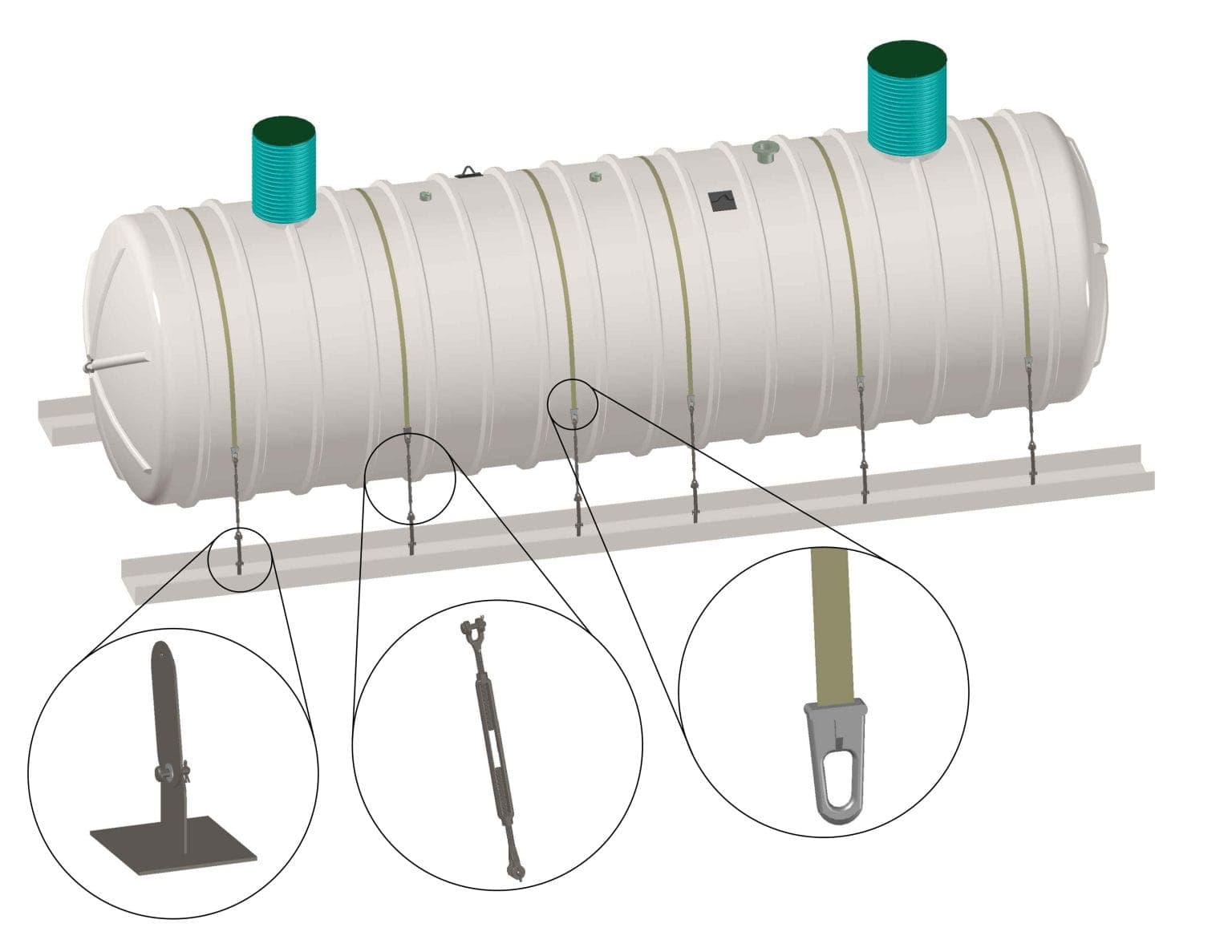
Estimated$12,000 – $60,000
SolidAT Manure Level Sensor System
SolidAT's Manure Level Sensor System is positioned as a best-in-class dedicated level sensor for manure storage, offering rugged, solids-tolerant sensing and simple site installs that reduce maintenance and downtime on farms. Compared with broader telemetry platforms like AgSense or Barn Owl, SolidAT focuses technical performance and cost-effectiveness on accurate level measurement, making it a lower-cost, high-value option for operators who only need reliable pit-level data. Its niche specialization often delivers faster ROI for manure-storage monitoring projects where frequent, precise level reads are the priority.
Show More Sensor Enabled Manure Storage Monitoring Systems
Estimated$1,200 – $2,500
What Research and Field Trials Say About Manure Storage Benefits
A range of Canadian and international studies, supported by agencies such as Agriculture and Agri-Food Canada, provincial agriculture ministries, and university research programs, indicate that properly designed storage systems reduce nutrient losses, lower odors and volatile emissions, and decrease the risk of groundwater contamination. Research also shows that physical barriers like liners and covers, combined with operational practices and monitoring, improve long-term containment performance and can preserve the agronomic value of manure. While results vary by climate, manure type, and management, the consistent finding is that design plus active management yields measurable environmental and operational benefits.
Liners and double-lined systems reduce seepage risk and protect groundwater compared with unlined pits, as demonstrated in provincial containment studies.
Covers and sealed storage reduce ammonia and odor emissions, improving air quality for neighboring communities and reducing nitrogen losses from stored manure.
Insulation and winterization measures preserve liquid consistency and enable year-round handling in cold Canadian conditions, reducing the need for thawing interventions.
Real-time monitoring (level, gas, and leak detection) helps detect problems early, supports regulatory compliance, and can prevent costly failures or nutrient losses.
Properly sized storage, paired with planned application timing, preserves nutrient value and can reduce reliance on synthetic fertilizers.
Field trials emphasize that engineering design, installation quality, and maintenance are as important as component selection for long-term performance.
Frequently Asked Questions
Which manure tank suits small farms with tight footprints best?
Stubbe's Precast Concrete Manure Tank is designed as precast units suited for small to medium farms and tight site footprints, with factory-controlled production for consistent strength and reduced porosity, plus an average rating of 4.15.
What liner thickness options are available for the Solmax system?
Solmax GSE HDPE Lagoon Liner System is available in a range of thicknesses and reinforcement options to match site-specific risk and lifespan requirements, and it has an average rating of 4.5.
Is Westeel cheaper than slurry silos for horse barns?
The Westeel Liquid Storage Tank is described as lowering upfront capital costs compared to larger, more specialized system slurry silos, uses galvanized steel construction, and has an average rating of 4.4.
How long is the warranty on the Westeel tank?
The provided product details for Westeel Liquid Storage Tank do not list a warranty duration, so I can’t confirm a warranty term; the tank’s average rating is 4.4.
Conclusion
Across Canada in 2025, choosing the right manure storage tank or holding vessel means balancing environmental protection, regulatory compliance, and farm economics. We hope this guide helped you identify options that match your needs. If you want to narrow results by capacity, lining type, monitoring features, or provincial regulations, use the search or filter tools to refine or expand your options.