

Top 8 Manure Handling and Waste Systems for Barns in Canada 2026: Automated Removal, Solids Separation and Composting
Manure handling and waste systems for barns include manure collection, conveyors, composters, solids separation, and ecofriendly disposal systems that streamline stall cleaning and reduce odor. For 2026 in Canada, the market is driven by demand for automated removal, improved solids separation, nutrient recycling, and systems that perform reliably in cold climates. Barn owners and managers favor solutions that cut labor, lower operating costs, reduce greenhouse gas emissions and odor, comply with provincial nutrient management rules, and recover nutrients as usable products. Popular options combine mechanical collection (scrapers, conveyors, vacuum systems), separation technologies, composting or digestion for pathogen reduction and stabilization, and value-added outputs like compost, pelletized fertilizer, or biogas.
Inception's AI took the time to understand this market in Canada · · How we pickWe may earn a commission on purchases. It never affects our rankings.
Top Picks Summary
Berg Equipment's Overhead Auger Conveyor is a market-leading, mid-capacity auger system that balances lower upfront capital with solid operational efficiency, making it a cost-effective choice for smaller to medium operations. Compared with Houle's chain-heavy platform it typically offers simpler installation and lower initial cost, while providing better energy efficiency than large chain systems and competitive durability relative to Westeel and Chore-Time for moderate throughput needs.
Show More Manure Conveyors and Augers
Estimated$7,000 – $30,000
The Worx WG509 TRIVAC earns its place as a versatile, electric multi-function vacuum with strong portability and innovative attachments that adapt well to spot manure removal in stalls and walkways. While originally targeted at leaf and yard debris, its compact footprint and good maneuverability make it attractive for quick cleanups where larger commercial units are overkill, and its lower price point often beats dedicated heavy-duty models on upfront cost. It is best suited for lighter, frequent cleanup tasks rather than continuous high-volume manure handling found on larger farms.
Show More Manure Vacuum and Suction Systems
Estimated$150 – $250
BDP Industries Plate Filter Press PF-800
The PF-800 is a heavy‑duty plate filter press optimized for high-volume barn manure applications where maximum cake dryness and high mechanical pressure are required. It competes with the McLanahan unit by offering larger plate capacity and thicker cake potential, giving it an edge where transport or sale of dewatered solids is a revenue stream; that advantage can offset higher upfront capital through reduced hauling and disposal costs over time.
Show More Solids Separation and Dewatering Equipment
The Ideal-Tridon Series 300 T-bolt clamps are best-in-class for equestrian manure pumps and piping systems due to their high tensile T-bolt construction and wide band that delivers exceptional uniform sealing on large-diameter, high-pressure slurry lines. They outlast lighter solutions (like ear clamps and worm-gear types) in corrosive, abrasive manure environments, reducing replacement frequency and overall lifecycle cost. Compared with flexible coupling bands, Series 300 offers superior clamp force and leak resistance where rigid, permanent connections are required.
Show More Manure Pumps and Piping Systems
Gill Precast Concrete Manure Storage System
Gill Precast's system is positioned as best-in-class for fixed concrete manure storage pits because its factory-cast panels emphasize tight tolerances, high compressive strength and rapid site assembly that minimize manure exposure and labor hours. Compared with poured-in-place competitors like Wieser and County Concrete it delivers faster commissioning and more predictable lifecycle costs, while its modular approach reduces on-site weather risk versus large-scale suppliers such as Lafarge and niche panel makers like Creacon.
Show More Manure Storage Tanks and Holding Vessels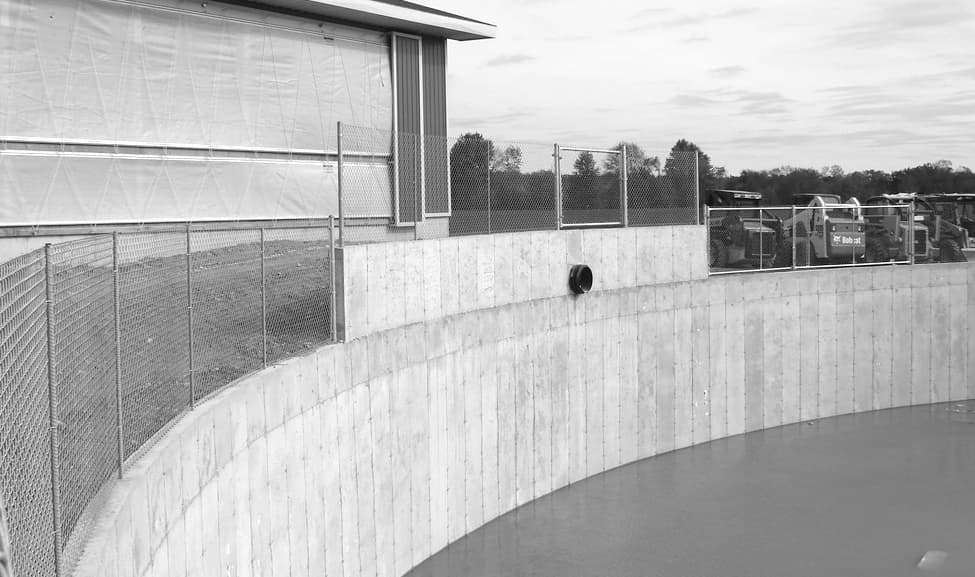
Estimated$60,000 – $220,000
The HOBO MX2301A is a compact, Bluetooth Low Energy temperature and relative-humidity data logger designed for reliable point monitoring inside barn compost piles and bays. It earns its best‑in‑class place for low cost, long battery life and simple mobile downloads, making it a financially efficient way to gather air‑profile data compared with cloud‑centric monitors like the InTemp CX402, though it does not provide built‑in cellular alerts or soil moisture profiling offered by other systems.
Show More Composters and Aerated Static Pile Systems
Estimated$180 – $260
HoSt Microferm Compact Digester
HoSt Microferm Compact Digester is a plug-and-play micro-AD solution focused on ease of use, minimal footprint and low maintenance for small farms and on-site recycling needs. It typically offers the lowest capital and operating complexity among the listed products, making it financially attractive for operators who prioritize rapid nutrient recycling and simple biogas recovery over the higher capacity or advanced nutrient-extraction features provided by larger systems.
Show More Biogas Digesters and Nutrient Recycling Units
Estimated$25,000 – $250,000
What Research and Practice Say About Modern Manure Management
A growing body of research and applied extension work supports the environmental, animal health, economic, and operational benefits of modern manure handling systems. Studies from Canadian universities, Agriculture and Agri-Food Canada, and peer-reviewed literature show that integrating mechanical collection, solids separation, and biological treatment can reduce odor and ammonia emissions, limit nutrient runoff, and create recoverable nutrients and energy. Research also emphasizes the importance of system design, maintenance, and operator training to achieve expected performance. Below are beginner-friendly highlights of the evidence base and practical findings.
Automated removal and mechanical scraping reduce time spent on stall cleaning and lower in-barn ammonia concentrations, improving barn air quality and worker safety.
Solids separation reduces the volume of material needing long-term storage, lowers volatile solids and biochemical oxygen demand in liquid fractions, and improves handling for composting or land application.
Composting and thermophilic treatment stabilize nutrients, reduce pathogens when temperature and residence time are controlled, and produce a transportable soil amendment.
Anaerobic digestion offers a route to recover energy as biogas while reducing methane emissions from unmanaged storage; digestate can be further processed for nutrient recovery.
Integrated systems that match separation, treatment, and storage to farm scale achieve better nutrient management outcomes and help meet provincial regulatory expectations for manure handling.
Peer-reviewed and extension research consistently shows that careful design, cold-climate adaptations, and regular maintenance are key to realizing the promised labor, odor, and environmental benefits.
Frequently Asked Questions
Which system should I choose for large barns?
For large barns needing continuous mechanical manure transfer, the Berg Equipment Overhead Auger Conveyor is the workhorse pick: it comes in multiple diameters and lengths to match high throughput, and variable-speed, reversible drives keep aisles and transfer runs moving. It carries a 4.5 average rating.
What's special about the Berg Equipment overhead auger conveyor?
The Berg Equipment Overhead Auger Conveyor uses heavy-gauge steel construction (with optional stainless sections for corrosion resistance) and offers variable-speed, reversible auger options, so it handles moderate-throughput transfer at a lower upfront cost than large chain systems. It has a 4.5 average rating.
How does the PF-800 compare on value and purpose?
The BDP Industries Plate Filter Press PF-800 is built for high-volume barn manure where drier cake needs higher mechanical pressure, using the PF-800 plate configuration for higher pressures; it has a 4.2 average rating, with available automation for plate shuttling and cloth washing to cut operator time.
Which listed system is the easiest to install?
The Gill Precast Concrete Manure Storage System is the most install-friendly fixed option here: its factory-cast reinforced panels assemble rapidly on-site with engineered watertight joints, reducing on-site weather risk and labor hours. It has a 4.6 average rating.
Conclusion
In the Canadian context, choosing the right manure handling system depends on barn size, livestock type, regional climate, regulatory requirements, and budget. We hope this overview of top technologies for 2026 helped you identify options that fit your goals for cleaner stalls, lower odor, and nutrient recycling. Use the site search to refine by system type, barn size, province, or price to find suppliers and detailed product comparisons.