

Top 6 Decanter Centrifuges for Barn Manure Dewatering in Canada — 2026
Decanter centrifuges apply high G-force to efficiently separate fine solids and suspended particles from manure liquids, delivering drier cakes and clearer centrate. In Canadian barn and feedlot applications where high throughput, advanced solids capture and nutrient separation are priorities, decanter centrifuges are increasingly selected for their ability to reduce storage and hauling costs, improve nutrient management, and support downstream processes such as anaerobic digestion and nutrient recovery. Buyers in Canada typically prioritize machines that deliver consistent cake dryness, low energy per tonne processed, robust cold-weather reliability, local parts and service support, and flexible control for polymer dosing and automation. Regional drivers such as stricter nutrient runoff regulations, expanding on-farm biogas projects, farm consolidation, and provincial incentive programs make centrifuge choice a balance of technical performance, lifecycle cost, and vendor support. This category overview covers the leading 2026 decanter centrifuge options suited to Canadian manure handling and solids separation needs, with practical buying considerations for producers, contractors, and integrators.
Inception's AI took the time to understand this market in Canada · · How we pickWe may earn a commission on purchases. It never affects our rankings.
Top Picks Summary
GEA ecoforce 2-Phase Decanter
The GEA ecoforce 2-Phase Decanter is positioned as a best-in-class solution for barn manure solids dewatering by using a two-phase separation approach that increases cake dryness and reduces liquid carryover for fibrous, variable manure feeds. It is engineered for high solids capture with lower energy per ton of dry solids compared with conventional single-phase decanters, trading a somewhat higher initial investment for reduced hauling and disposal costs over the unit lifecycle relative to the other units listed.

Estimated$250,000 – $600,000
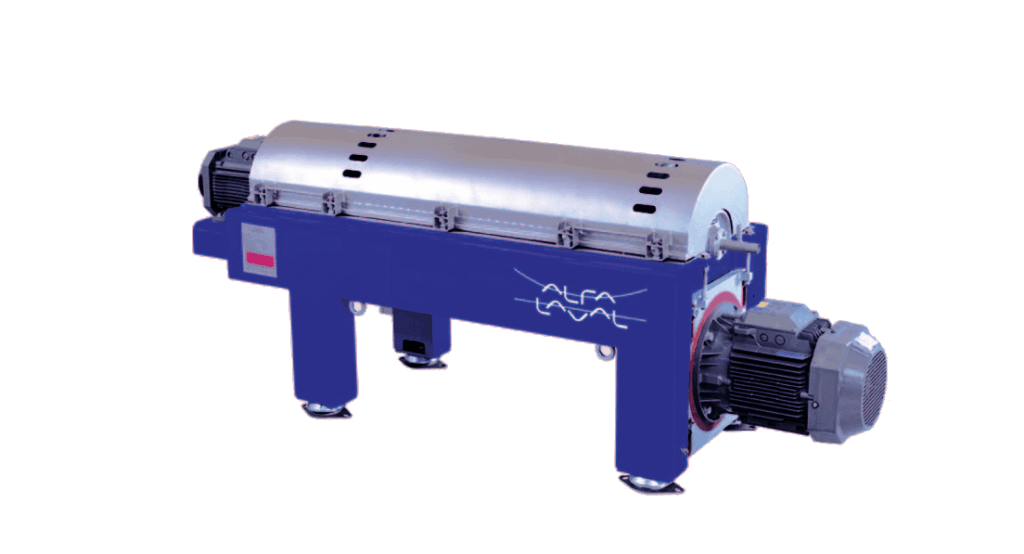
Alfa Laval ALDEC 40 Decanter Centrifuge
Alfa Laval's ALDEC 40 ranks as a best-in-class choice for barn manure solids dewatering because its heavy-duty construction, corrosion-resistant materials and energy-optimized drive provide high throughput with low lifecycle operating costs. While its upfront capital cost is typically higher than the Centrisys CS-26-4 and Hiller DP45-422, Alfa Laval's proven reliability and global parts/service network reduce downtime and total cost of ownership for large farms or centralized manure processing facilities.
Flottweg Z4E-4/454 Decanter
The Flottweg Z4E-4/454 Decanter is a specialist choice for abrasive, fibrous barn manure streams, offering adjustable conveyor geometry and wear-resistant components that maximize solids conveyance and cake dryness under demanding conditions. Compared with peers such as Pieralisi and Huber, Flottweg’s machine often yields higher mechanical reliability and longer component life in abrasive feeds, improving total cost of ownership when sand and grit are significant contributors to wear.

Estimated$120,000 – $350,000
Pieralisi FP600 Decanter Centrifuge
The Pieralisi FP600 Decanter Centrifuge is a cost-conscious, flexible option for small to mid-sized farming operations seeking reliable solids-liquid separation with straightforward integration and control. It typically requires a lower capital outlay than larger, high-end models like GEA or Flottweg, making it a sensible financial choice where budget and ease of installation are priorities, though it may deliver somewhat lower maximum dryness and throughput in very heavy-load applications.

Estimated$100,000 – $300,000
Centrisys CS-26-4 Decanter Centrifuge
The Centrisys CS-26-4 is a market leader for medium-scale barn manure dewatering by offering a competitive balance of lower initial purchase price, modular configuration options and strong North American service/support. Compared with the ALDEC 40 it is generally more affordable to buy and maintain, and relative to the Hiller DP45-422 it provides simpler controls and parts availability—making it a practical, cost-effective choice for many farms where capital and local support matter most.

Estimated$250,000 – $520,000
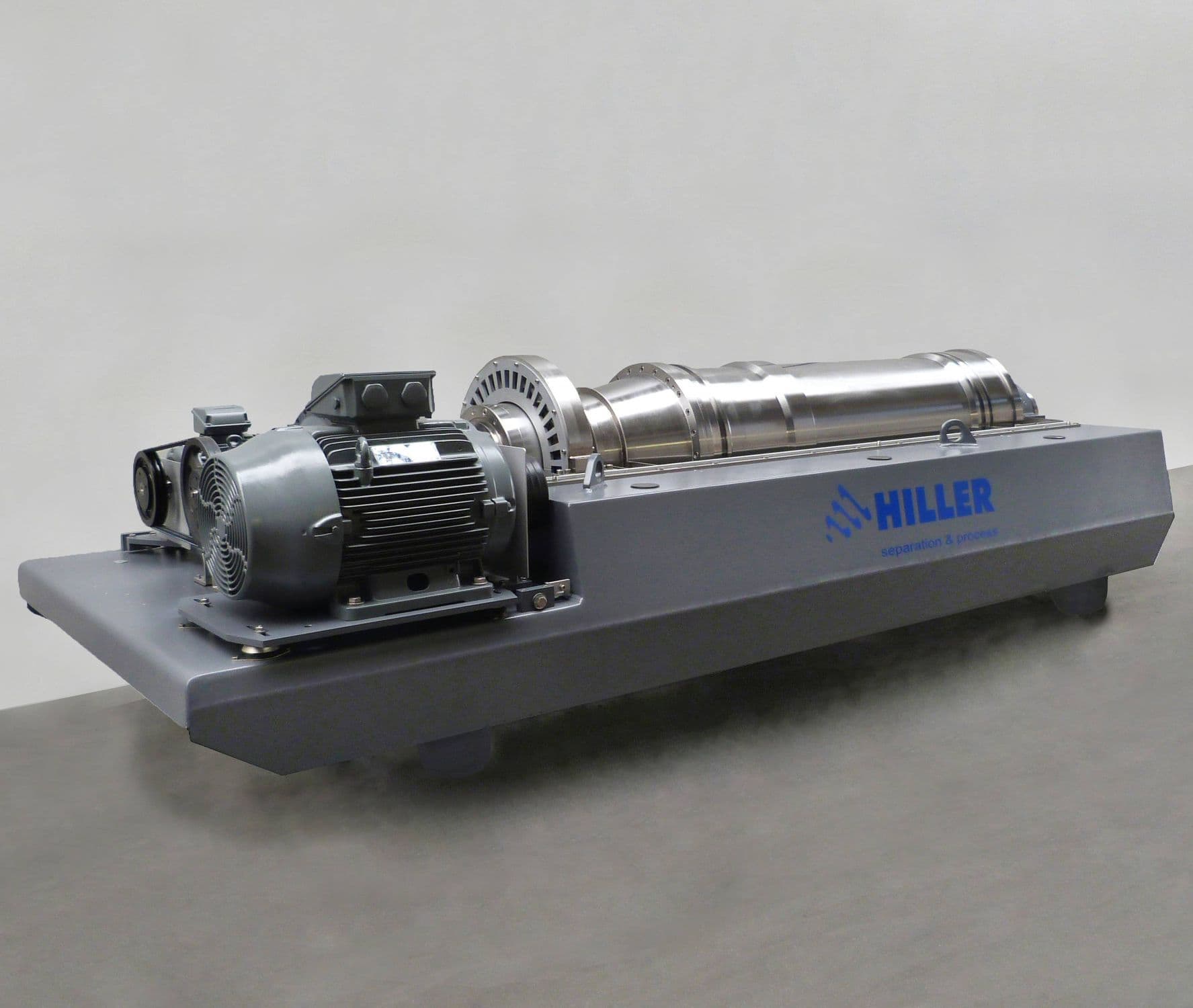
Hiller DP45-422 DecaPress Decanter
Hiller's DP45-422 DecaPress is positioned for operators who prioritize maximum cake dryness from barn manure; its specialized screw geometry and adjustable ponding deliver higher solids capture that can cut hauling and bedding costs. It frequently produces the best per-ton dewatering economics in applications where downstream transport or reuse value dominates, though its service footprint is typically smaller than Alfa Laval's and it offers fewer off-the-shelf configurations than Centrisys.
Estimated$120,000 – $300,000
How decanter centrifuges work and the evidence behind their benefits
Decanter centrifuges separate solids from liquids using continuous high-speed rotation that creates strong centrifugal forces. Conditioned manure (often dosed with polymer) flows into a rotating bowl where heavier solids move outward to form a cake while clarified liquid exits as centrate. Scientific research, peer-reviewed analyses, and industry field trials support key performance claims for manure dewatering: improved cake dryness lowers transport and storage costs; clearer centrate simplifies nutrient recovery and reduces solids loading on downstream treatment; and stable mechanical operation enables continuous processing at farm and facility scale. For Canadian conditions, research and trials also highlight the need for cold-weather design features, instrumented control of polymer feed, and routine maintenance schedules to sustain performance.
Separation principle: Centrifugal acceleration concentrates particles by density and size; higher bowl G-forces increase fine-particle capture and cake dryness under comparable feed conditions.
Polymer conditioning: Controlled polymer dosing is widely shown in field trials to improve cake formation and increase dry solids recovery; automation of dosing stabilizes performance across variable manure streams.
Operational benefits: Multiple studies and farm-level trials report reductions in hauled liquid volume and lower haulage costs when decanters are applied to slurry and manure streams, benefiting both storage and nutrient management.
Anaerobic digestion synergy: Trials comparing pre-dewatering to raw manure show improved digester solids handling and, in many cases, increased biogas yield per tonne of volatile solids when solids are stabilized and fed consistently.
Cold-climate considerations: Research and manufacturer guidance emphasize insulated piping, heated electronics enclosures, and winter commissioning practices to maintain reliability and reduce downtime in Canadian winter conditions.
Frequently Asked Questions
Which decanter centrifuge is best for barn manure?
For fibrous, variable barn manure streams, the Alfa Laval ALDEC 40 Decanter Centrifuge is a strong fit because it has a compact, skid-mounted design and a high-speed bowl with an adjustable scroll for solid-liquid separation. Rating: 4.7.
What feature helps the Flottweg Z4E-4/454 separate solids?
The Flottweg Z4E-4/454 Decanter uses a proprietary sedimentation/scroll design to improve solids capture and cake dryness, plus variable speed control and wear liners for abrasive manure. Rating: 4.5.
How does the Alfa Laval ALDEC 40 compare on power?
The Alfa Laval ALDEC 40 Decanter Centrifuge is described as having low energy draw for low lifecycle operating costs, with benefits including “Low energy draw — wallet-friendly.” Rating: 4.7. Price not provided.
Is the GEA ecoforce 2-Phase Decanter good for variable feed?
Yes—the GEA ecoforce 2-Phase Decanter includes advanced automation for variable feed rates with integrated solids discharge control, designed for barn manure solids dewatering via two-phase separation. Rating: 4.5. Warranty not provided.
Conclusion
This list highlights six decanter centrifuges well suited to Canadian barn manure solids dewatering in 2026: GEA ecoforce 2-Phase Decanter, Alfa Laval ALDEC 40 Decanter Centrifuge, Flottweg Z4E-4/454 Decanter, Pieralisi FP600 Decanter Centrifuge, Centrisys CS-26-4 Decanter Centrifuge, and Hiller DP45-422 DecaPress Decanter. Each machine offers different strengths: the GEA ecoforce 2-Phase for advanced two-stage capture, the Alfa Laval ALDEC 40 for proven global service and reliability, the Flottweg Z4E-4/454 for compact high-performance designs, the Pieralisi FP600 for heavy-duty agricultural duty cycles, the Centrisys CS-26-4 for a balanced mix of energy efficiency and North American support, and the Hiller DP45-422 DecaPress for robust cake-handling. For most Canadian farm and feedlot projects seeking the best mix of efficiency, cold-weather readiness, and local service, the Centrisys CS-26-4 Decanter Centrifuge stands out as the top overall choice among these six. We hope you found the comparison helpful; you can refine or expand your search to focus on throughput, cake dryness, energy use, or local dealer support to find the best match for your operation.