

Crank Arm Power Meters in Canada 2025: Top 5 Options
Sensors embedded in one or both crank arms to measure torque and cadence, offering a durable and unobtrusive option for power measurement. Crank arm meters are favored for compatibility with many cranksets and straightforward installation. Riders choose crank arm power meters because they deliver accurate, low-profile data with minimal changes to bike fit; they are often lighter and easier to install than full-crank or pedal systems, and left-side or dual-leg options let cyclists balance cost and precision. In the Canadian market, buyers also prioritize wet- and cold-weather reliability, regional warranty and support, and compatibility with common crank standards. For commuters, gravel riders and road cyclists who want a durable, serviceable power meter that integrates with standard head units and training platforms, crank arm power meters offer an excellent mix of practicality and performance.
Inception's AI took the time to understand this market in Canada · · How we pickWe may earn a commission on purchases. It never affects our rankings.
Top Picks Summary
4iiii Precision 3+ Left-Side
The 4iiii Precision 3+ Left-Side Power Meter is a best-in-class choice for riders seeking an affordable, lightweight and highly accurate left-only solution that balances price and performance. Compared with higher-cost dual-leg systems in this list it delivers most of the practical power data most cyclists need, with long battery life and easy crank transfers that make it the economical technical choice for upgrading multiple bikes.

We may earn a commission on purchases. It never affects our rankings.
$619.00CAD
Stages Cycling Power L Left Crank Arm
The Stages Cycling Power L Left Crank Arm is a market-proven left-side option known for its simplicity, durability and wide compatibility with many crank models, earning its place as a go-to single-sided meter. It competes closely with 4iiii on price and practicality but leans more on proven OEM-style durability rather than the lightest weight or the advanced dual-leg features offered by premium units like Rotor or Pioneer.

Estimated$330 – $480
Quarq DZero DUB Power Meter Spider
The Quarq DZero DUB Power Meter Spider is a spider-based leader prized for consistent total-power accuracy, broad crankset compatibility and ruggedness suitable for racing and training. While it usually costs more than single-arm options, its spider design provides whole-crank measurement and easier drivetrain neutrality compared with left-only meters, making it a technically robust middle-ground between affordable single-sided units and feature-rich dual-leg systems.

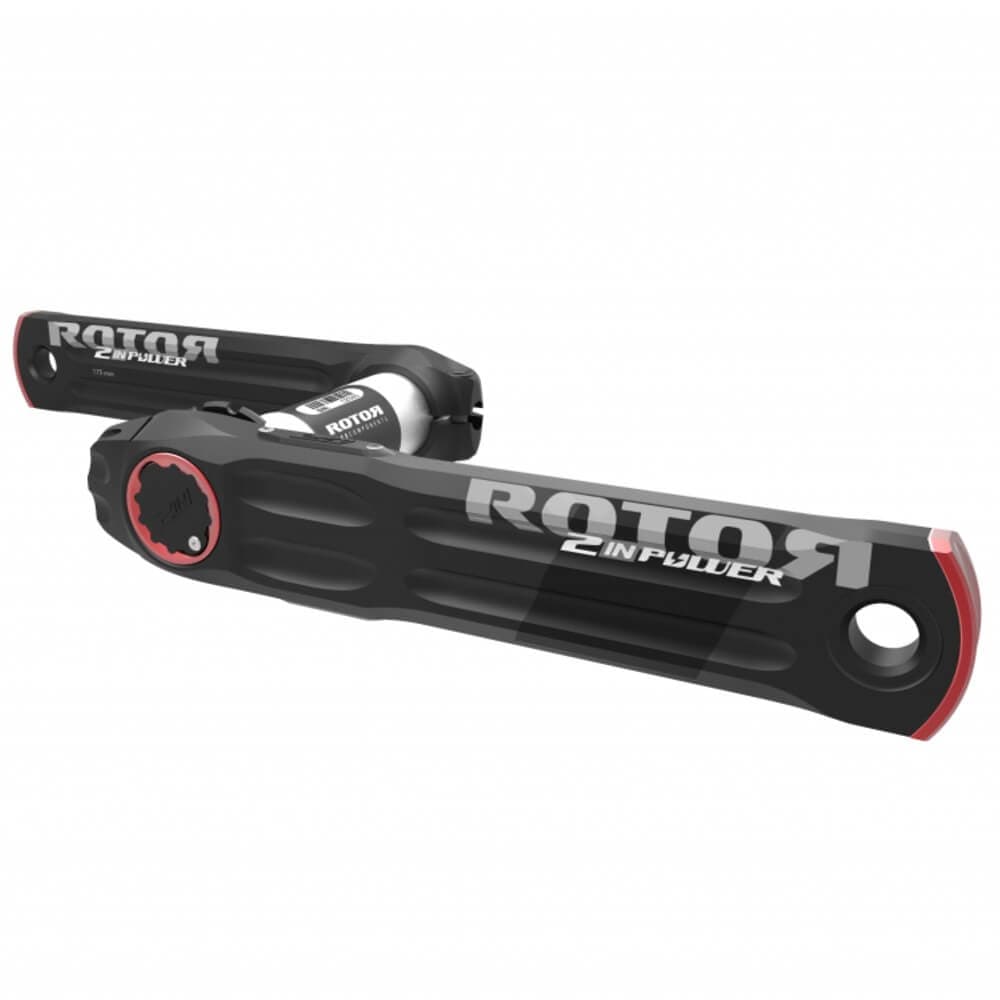
Rotor 2INpower DM Road Power Meter
The Rotor 2INpower DM Road Power Meter is a high-performance dual-leg system that delivers independent left/right measurements and advanced pedaling metrics, positioning it above single-sided and spider-only options for riders who want detailed leg balance data. It is pricier than basic left-only meters but offers technical flexibility and tuning features (such as pedaling analysis and modular compatibility) that justify the investment for performance-focused cyclists compared to Quarq, 4iiii and Stages.
We may earn a commission on purchases. It never affects our rankings.
Estimated$1,100 – $1,600
Pioneer Dual Leg Power Meter
The Pioneer Dual Leg Power Meter is a specialist dual-leg system famed for extremely high-resolution cadence and torque mapping that produces pro-level pedaling analytics. It is typically the most data-rich and expensive option on the list, offering more granular cycling metrics than the other units — an advantage for cyclists and coaches who prioritize in-depth analysis over the lower cost and simpler setup of single-sided meters.

Estimated$1,400 – $2,200
How Crank Arm Power Meters Work and the Research Behind Them
Crank arm power meters use strain gauges or similar sensors mounted to the crank arm to measure torque, combined with cadence data to calculate watts. The raw strain signals are converted to power through calibration and temperature compensation algorithms. Independent lab tests and field validations typically compare crank-based meters to laboratory dynamometers or dual-leg systems; results regularly show crank arm devices produce consistent and repeatable power readings suitable for structured training and performance analysis. For new users, the key scientific ideas are torque measurement precision, calibration stability, and how environmental factors like temperature and shock are managed by the device firmware.
Torque measurement: Strain gauges measure bending or torsion in the crank arm; accurate conversion to watts depends on good calibration and stable sensor mounting.
Calibration and temperature compensation: Modern crank meters include algorithms that correct for temperature shifts and sensor drift, which improves day-to-day consistency.
Validation versus gold standards: Multiple independent lab and field comparisons show crank-based power meters often agree within a small percent of lab dynamometers under steady efforts, making them reliable for training.
Left/Right analysis and training value: Dual-leg crank or paired crank arm solutions provide leg-balance data that can aid technique and rehabilitation; left-only options still reliably estimate total power for most training applications.
Performance outcomes: Controlled research comparing power-based training with heart-rate-only approaches shows measurable improvements in performance; using a reliable power meter is foundational to structured, data-driven training plans.
Frequently Asked Questions
Which crank arm power meter should I buy 4iiii or Quarq?
Choose the 4iiii Precision 3+ Left-Side Power Meter if you want an affordable lightweight left-only setup at $619.00 CADwith 4.4 rating; it gives Bluetooth/ANT+ torque and cadence and is easier to install than dual-leg spider options like the Quarq DZero DUB.
Does the Quarq DZero DUB measure left-right balance?
Yes—the Quarq DZero DUB Power Meter Spider is a spider-mounted dual-leg power meter that delivers complete power plus left/right balance, with temperature-compensated accuracy for consistent readings.
How much do 4iiii and Stages cost for left power?
The 4iiii Precision 3+ Left-Side Power Meter costs $619.00 CADwhile the Stages Cycling Power L Left Crank Arm lists for CA$685.59, both offering left-crank single-sided measurement with ANT+ and Bluetooth.
What connectivity does the 4iiii Precision 3+ support?
The 4iiii Precision 3+ Left-Side Power Meter supports Bluetooth and ANT+ for mobile app setup and firmware updates, with high precision around ±1% and long battery life.
Conclusion
In Canada, crank arm power meters are a strong choice for riders who want durable, unobtrusive measurement that works across common cranksets and road, gravel and commuter conditions. The top five options presented here are the 4iiii Precision 3+ Left-Side Power Meter, Stages Cycling Power L Left Crank Arm, Quarq DZero DUB Power Meter Spider, Rotor 2INpower DM Road Power Meter, and Pioneer Dual Leg Power Meter. For most Canadian riders looking for the best mix of accuracy, reliability and value, the 4iiii Precision 3+ Left-Side Power Meter stands out as the best choice among these main products. I hope you found what you were looking for — you can refine or expand your search using the search to filter by compatibility, left-side versus dual-leg, price or local availability.