

Best GPS Bike Computers in Canada 2026: Top 7 Picks for Navigation and Performance
For avid cyclists and weekend riders across Canada, a quality GPS bike computer transforms rides by combining navigation, training metrics, and sensor integration into a single compact device. Whether you ride city routes in Toronto, gravel trails in British Columbia, or long endurance routes in the Prairies, these units deliver turn-by-turn maps, route planning, elevation and gradient data, and live performance metrics such as speed, power, cadence, and heart rate. Canadian consumers increasingly favor devices with long battery life for multi-hour rides, reliable mapping for remote areas, robust sensor compatibility (ANT+ and Bluetooth), and seamless integration with popular fitness platforms for training analysis. Ease of use—clear screens, button vs touchscreen controls, and weather-resistant builds—also ranks high, along with advanced features such as multi-band GNSS, live incident sharing, and structured-workout guidance. As the market evolves, manufacturers are refining battery chemistry, map data, and app ecosystems to meet demands from competitive athletes and recreational cyclists alike.
Inception's AI took the time to understand this market in Canada · · How we pickWe may earn a commission on purchases. It never affects our rankings.
Top Picks Summary
Garmin Edge 1050
The Garmin Edge 1050 is the flagship, best-in-class GPS bike computer offering a large, bright touchscreen, multi-day battery life, and the deepest mapping and training ecosystem—making it the top choice for long-distance and tech-focused cyclists. Compared with the Karoo 3's high-resolution UI and Bryton's value focus, the Edge 1050 stands out for superior map detail, broader accessory compatibility and advanced live-event integrations, delivering the most complete performance-to-feature ratio for riders willing to pay a premium.

Garmin Edge 840
The Garmin Edge 840 is a compact, performance-focused GPS bike computer that packages advanced training features, safety integrations and touch navigation into a lighter, more affordable form than the 1040 Solar. It earns its position by offering many of Garmin's high-end analytics and routing capabilities at reduced cost and size, making it a better fit than the 1040 for riders who want pro features without flagship bulk, while still outpacing Wahoo's and Hammerhead's mid-range training datasets. For competitive cyclists who want sophisticated metrics and customizable training in a smaller unit, the Edge 840 is a strong technical and financial compromise among GPS bike computers.

Wahoo ELEMNT ROAM V2
The Wahoo ELEMNT ROAM V2 balances intuitive, phone-like simplicity with powerful turn-by-turn navigation and reliable GPS performance, making it a top choice for riders who want ready-to-ride routing without a steep learning curve. It undercuts the Garmin 1040 Solar on price and UI complexity while offering stronger out-of-the-box ease-of-use than the Karoo 2, though it lacks some of Garmin's advanced mapping depth and the Karoo's higher-resolution, app-like experience. For cyclists prioritizing straightforward navigation and fast course loading, the ROAM V2 is a strong market leader in value and usability among GPS bike computers.

We may earn a commission on purchases. It never affects our rankings.
$549.99CAD
Hammerhead Karoo 3
The Hammerhead Karoo 3 is a market-leading, smartphone-like GPS bike computer prized for its exceptionally sharp AMOLED display and snappy, app-driven user interface that makes navigation and on-ride interactions feel more modern. While it doesn't match Garmin's mapping depth or the Edge 1050's extended battery, the Karoo 3's intuitive routing, third-party app support and often more competitive street price give it strong technical and financial appeal for riders who prioritize screen quality and responsiveness.

Wahoo ELEMNT BOLT V2
The Wahoo ELEMNT BOLT V2 is a compact, aerodynamic and value-driven GPS bike computer designed for riders who prioritize simplicity, sensor integration and a small form factor. It secures its place by delivering fast setup, reliable navigation and excellent price-to-performance compared with larger, more expensive units like the ROAM V2 and Garmin 1040 Solar, though it lacks full-color mapping and the deep analytics of Garmin or the high-res touchscreen of the Karoo 2. For racers and commuters seeking a lightweight, cost-effective GPS bike computer, the BOLT V2 offers strong technical reliability without the premium features and price of market-leading flagships.

Estimated$300 – $420
Garmin Edge 540
The Garmin Edge 540 sits in the performance-focused midrange, delivering advanced metrics, aerodynamics modeling and precise routing in a lighter, more affordable package than the Edge 1050. Compared to the Karoo 3 and Bryton S800, the Edge 540 balances pro-level training data and a mature ecosystem with a lower price than the flagship, making it the best choice for serious racers who want detailed telemetry without flagship-level cost.

Estimated$449 – $549
Bryton Rider S800
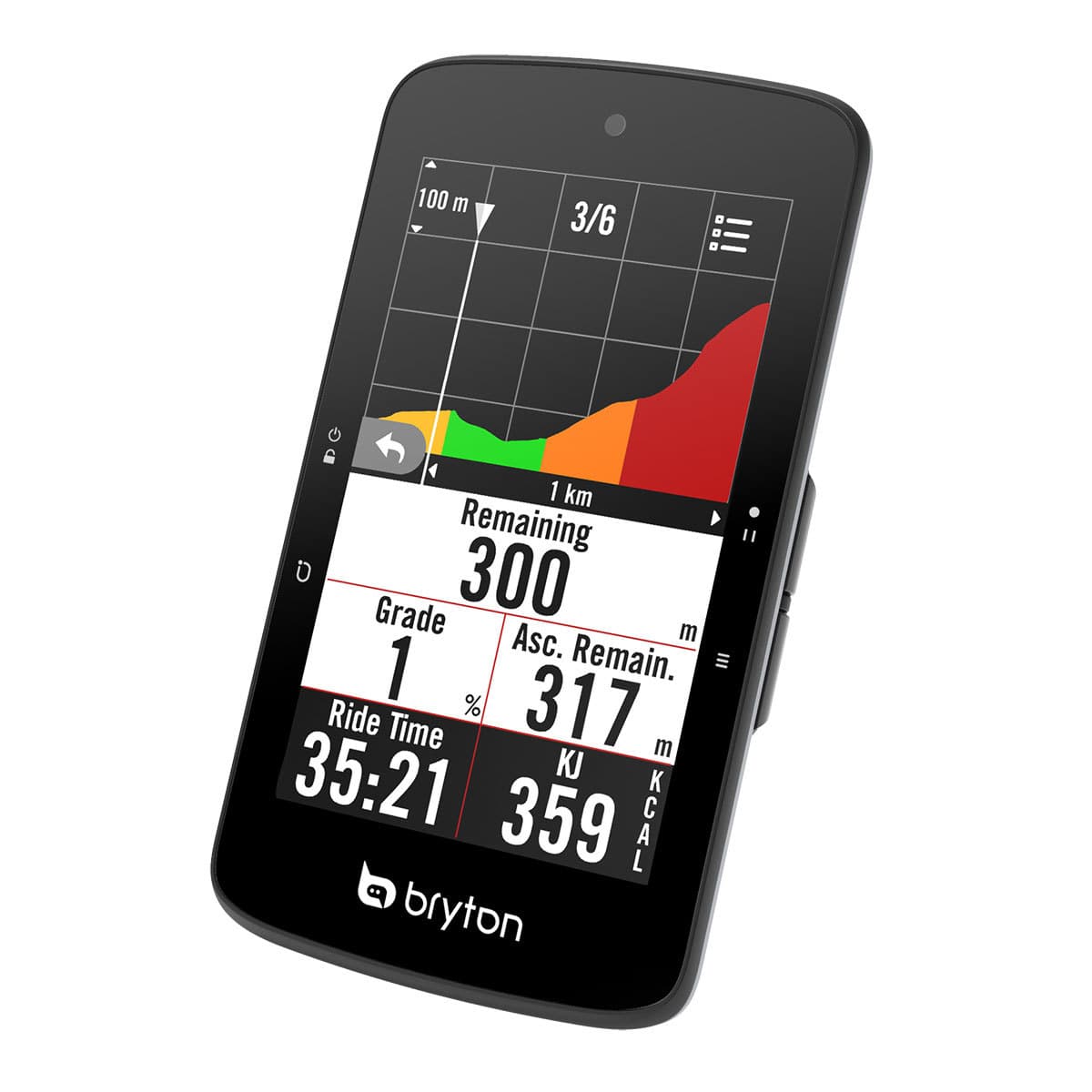
The Bryton Rider S800 is the value-oriented option in this group, offering a very large, clear display and core GPS navigation and training features at a significantly lower price than the Garmin and Hammerhead units. It forgoes the deep mapping and advanced analytics of the Edge series and the Karoo 3's premium screen responsiveness, but its long battery life, broad sensor compatibility and straightforward interface make it technically attractive for budget-conscious riders.
Estimated$299 – $399
Why GPS Bike Computers Help Riders: Research-backed Benefits
Scientific and applied research in sports science and exercise physiology supports many of the benefits cyclists get from GPS bike computers. Studies and practitioner evidence show that objective feedback (power, heart rate, cadence), reliable route guidance, and consistent training records improve training quality, safety, and adherence. While individual results vary, the consistent theme across research is that accurate real-time metrics and structured training plans help riders pace efforts, measure progress, and reduce guesswork during rides and workouts.
Objective performance feedback improves training outcomes: research on power-based and heart rate-based training shows better control of intensity and measurable gains over time compared with unguided training.
Navigation reduces cognitive load and route errors: reliable turn-by-turn guidance and preloaded maps lower the need for phone checks and reduce the likelihood of getting lost during long rides.
Safety and incident sharing: devices that support live tracking and incident alerts can speed help when needed and increase rider confidence on remote routes.
Training adherence and motivation: tracking progress, structured workouts, and goal-setting in an integrated app ecosystem are linked to higher training consistency in observational studies.
Sensor integration yields richer context: combining power, cadence, and heart rate allows coaches and riders to better interpret performance and recovery needs.
Long-term data enables better planning: longitudinal data analysis helps identify trends in fitness and fatigue, aiding periodization and event preparation.
Conclusion
We hope this guide helps you find the GPS bike computer that matches your riding style and goals in Canada. Our top picks for 2026 include the Garmin Edge 1050, Garmin Edge 840, Wahoo ELEMNT ROAM V2, Hammerhead Karoo 3, Wahoo ELEMNT BOLT V2, Garmin Edge 540, and Bryton Rider S800. For most riders seeking the most complete package of navigation, battery life, and training features, the Garmin Edge 1050 is the standout choice. If you want a lighter or more focused option, the Edge 840 and Edge 540 skew toward riders prioritizing road performance, the Wahoo ELEMNT ROAM V2 and Hammerhead Karoo 3 emphasize mapping and usability, the ELEMNT BOLT V2 balances aerodynamics and simplicity, and the Bryton Rider S800 offers strong value for budget-conscious cyclists. If you did not find exactly what you need, refine or expand your search using the search box to filter by battery life, mapping, sensor compatibility, or budget. We hope you found what you were looking for.