

Top 6 Wearable Running Sensors and Foot Pods in Canada for 2026
The short answer: if you want lab-grade running power, the Stryd Running Power Meter (Next Gen) is still the pod to beat in Canada; COROS watch owners are better served by the 5.6 g COROS POD 2, and runners who only need cadence can spend far less. As runners increasingly seek to improve performance and enhance training, wearable running sensors and foot pods have surged in popularity across Canada. These compact devices deliver precise metrics such as cadence, stride length, ground contact time, and running power that many wrist-only trackers miss. Canadian runners and coaches value accuracy, battery life, reliable pairing with watches and phones, and actionable insights that translate into better pacing, more efficient workouts, and lower injury risk. The expanding trail and road running communities from Vancouver to Halifax are driving demand for sensors that work in all conditions, indoors and out. From the data-minded marathoner to the beginner focused on consistency, the leading foot pods and sensors on the market are now optimized for usability, cross-platform compatibility, and durable design, making them a practical addition to any training kit in 2026.
Inception's AI took the time to understand this market in Canada · · How we pickWe may earn a commission on purchases. It never affects our rankings.
Top Picks Summary
Stryd Running Power Meter Next Gen
Stryd Running Power Meter (Next Gen) is best-in-class for runners who prioritize power-based training, offering one of the most refined and consistent running power algorithms alongside advanced metrics like leg spring stiffness and ultra-stable cadence/GCT data. It carries a higher upfront cost than the Garmin and Coros pods but delivers superior telemetry, broader third-party training-platform support and a training-focused ecosystem that appeals to athletes and coaches seeking lab-grade power without laboratory equipment. The device is released and available for purchase.
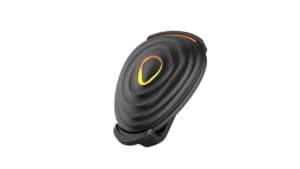
Estimated$279 – $349
Garmin Running Dynamics Pod
The Garmin Running Dynamics Pod (model 010-12520-00) earned wide adoption thanks to seamless integration with Garmin's extensive watch and training ecosystem, making running dynamics and cadence metrics effortlessly accessible to the largest user base. It was typically more affordable than Stryd's premium hardware, and while it doesn't emphasize dedicated running power, it provides dependable core biomechanics (ground contact time, vertical oscillation, cadence) for everyday runners and multisport athletes. Note that Garmin has discontinued this pod, so it is now sold only through remaining retailer inventory.

Estimated$89 – $129
NURVV Run Smart Insoles
NURVV Run Smart Insoles deliver best-in-class data granularity with dual pressure-sensing insoles and per-foot metrics that provide running form, contact time and real-time coaching — ideal for runners focused on technique and injury prevention. They are more expensive and shoe-dependent than pods like Garmin or Wahoo, but their high-resolution pressure maps and coaching features are technical advantages that can justify the higher cost for data-driven athletes.

Estimated$249 – $349
Polar Stride Sensor Bluetooth Smart
Polar’s Stride Sensor Bluetooth Smart stands out for accurate stride-length and cadence data in a compact, affordable package that plugs directly into Bluetooth ecosystems. It lacks Stryd’s power and NURVV’s high-resolution pressure mapping but delivers excellent battery life and cost-effectiveness for runners who want reliable gait metrics without the complexity or expense of insole systems.

Estimated$80 – $119
Wahoo RPM Cadence Sensor
The Wahoo RPM Cadence Sensor is a low-cost cadence solution notable for easy pairing via Bluetooth and ANT+ and long battery life. Designed mainly for cycling, it can also be clipped to a shoe to capture running cadence. It doesn't provide the depth of data from Stryd or NURVV, and while it is an economical way to track cadence, note that Wahoo has discontinued the RPM sensor, so availability is limited to remaining retailer stock.

Estimated$45 – $69
Coros Pod 2
COROS POD 2 targets the value-conscious runner by delivering accurate running dynamics in a 5.6 g package that undercuts the Stryd price while integrating tightly with COROS watches. It can be worn two ways — clipped to the shoe or at the waist — and the pod auto-detects which, adjusting the metrics it reports. Technically it sits between Garmin's mass-market convenience and Stryd's power specialisation: it sharpens instant pace and effort pace, ground time, left/right balance, stride height and stride ratio, and helps COROS watches compute running power more accurately, though the pod itself is not a standalone power meter. The catch is the walled garden — POD 2 is designed to pair with COROS watches rather than with third-party head units or apps, so it only makes sense if you already run COROS.

We may earn a commission on purchases. It never affects our rankings.
$139.00CAD
What research says about running sensors and why they help
Scientific and applied sports research supports the use of objective running metrics to guide training and reduce injury risk. Studies in sports science and biomechanics show that metrics like running power, cadence, and ground contact time relate to running economy, fatigue, and mechanical load. Reliable wearable sensors give runners continuous feedback outside the lab so they can test training strategies, track progress, and identify changes in form before they become injuries. For beginners, these devices translate complex biomechanical data into simple, actionable coaching cues.
Running power correlates with metabolic demand and can be used for consistent pacing across varying terrain, making it a useful complement to heart rate and pace-based training.
Cadence and stride length adjustments have been linked to changes in impact loading; small cadence increases can reduce peak loading and the risk of certain overuse injuries.
Validated foot pods and inertial sensors offer strong agreement with lab-based gait measures for cadence and stride length, and they are often more accurate than wrist-based algorithms for step and stride metrics during running.
Gait retraining protocols guided by objective sensor feedback have been shown to reduce pain and modify loading patterns in runners recovering from common injuries.
Field-validation studies emphasize the importance of firmware updates and proper sensor placement for maintaining accuracy over time.
Frequently Asked Questions
What is the best running sensor overall in Canada for 2026?
For most runners the Stryd Running Power Meter (Next Gen) is the best overall choice on this page. It delivers accurate real-time running power plus form metrics and works across watch and app platforms, making it the top pick for precision-focused training. The Coros Pod 2 is a strong lower-cost alternative for runners in the Coros ecosystem, and the NURVV Run Smart Insoles offer the deepest full-gait insight.
Is the Garmin Running Dynamics Pod still available?
No. Garmin has discontinued the Running Dynamics Pod (model 010-12520-00), so it is only available through remaining retailer stock. It clips to the waistband and reports running dynamics such as cadence, ground contact time, vertical oscillation, and stride length when paired with a compatible Garmin watch. Newer Garmin watches capture many of these metrics on their own.
Is the Wahoo RPM a running sensor?
The Wahoo RPM Cadence Sensor is primarily a cycling cadence sensor. It pairs over Bluetooth and ANT+ and can be shoe-mounted to capture running cadence, but it does not provide the power or full running-dynamics data that dedicated pods like Stryd, Coros Pod 2, or NURVV offer. Wahoo has since discontinued the RPM sensor, so availability is limited to remaining retailer stock.
Does the Coros Pod 2 measure running power?
The Coros Pod 2 improves the accuracy of running power, but the pod itself is not a standalone power meter — Coros watches calculate running power natively and the pod refines pace, cadence, stride length, ground contact time, and left/right balance. Weighing about 5.6 g with up to 25 hours of continuous run time, it is a lightweight, value-focused option for runners in the Coros ecosystem.
Conclusion
This curated list highlights six wearable running sensors and foot pods available in Canada in 2026: Stryd Running Power Meter (Next Gen), Garmin Running Dynamics Pod, NURVV Run Smart Insoles, Polar Stride Sensor Bluetooth Smart, Wahoo RPM Cadence Sensor, and Coros Pod 2. Each device serves different needs — from the advanced power-focused metrics of the Stryd Running Power Meter (Next Gen) to the reliable cadence sensing of the Wahoo RPM Cadence Sensor and the full gait insights of the NURVV Run Smart Insoles. For most runners aiming to combine precision, platform compatibility, and long-term training value, the Stryd Running Power Meter (Next Gen) is the best overall choice on this page. Check the connection standard before you buy: the Polar Stride Sensor is Bluetooth Smart only and the COROS POD 2 pairs with COROS watches, while Stryd works across both Bluetooth and ANT+ platforms. Note too that the Garmin Running Dynamics Pod and the Wahoo RPM sensor are older accessories that Garmin and Wahoo have since discontinued, so check current availability before buying. You can refine or expand your search using the site search to compare features, check local availability in Canada, or filter by compatibility with your watch or training app.