

Top 10 Electrotherapy and Electrical Stimulation Devices in Canada 2025: Best TENS, NMES, EMS & Microcurrent Options
Electrotherapy and electrical stimulation devices use technologies such as TENS, NMES, EMS, and microcurrent stimulation to reduce pain, stimulate muscle contraction, and support rehabilitation protocols. These devices serve both home users and clinical settings, offering options from simple portable TENS units to multi-channel, app-controlled systems designed for advanced physical therapy. In Canada the market for 2026 shows strong demand for wireless electrode pads, smartphone app integration, rechargeable batteries, and devices that combine pain management and muscle training in one platform. Consumers typically choose products based on clinical evidence, ease of use, electrode quality, safety certifications, durability, and compatibility with their rehabilitation plan or athletic goals. Price, warranty, and local availability also shape buying decisions, while many users and clinicians prefer units that can store programs or integrate with physiotherapy protocols for consistent outcomes.
Inception's AI took the time to understand this market in Canada · · How we pickWe may earn a commission on purchases. It never affects our rankings.
Top Picks Summary
TENS 7000 is a long-established, clinician-favored device known for its straightforward, powerful outputs and repairable, no-frills design that keeps purchase and lifetime operating costs low. Compared with consumer-oriented plug-and-play units, it gives clinicians and experienced users fine-grained control and durability at a modest price, making it attractive for those who prioritize raw adjustability and cost-effective long-term use.
Show More Transcutaneous Electrical Nerve Stimulation (TENS) Devices
We may earn a commission on purchases. It never affects our rankings.
$45.95CAD
The Marc Pro Plus focuses on active recovery with a proprietary waveform that promotes non-fatiguing muscle contractions to accelerate recovery and reduce soreness, a protocol trusted by many professional teams. Compared with broader-purpose stimulators like Compex or PowerDot, Marc Pro sacrifices program variety for a specialized recovery effect and can be more expensive per-use, yet is often chosen where targeted recovery efficacy is the primary goal.
Show More Neuromuscular Electrical Stimulation (NMES) Devices
Estimated$1,200 – $1,500
The Compex SP 8.0 is positioned as a premium, performance-grade EMS unit that stands out with a broad set of training and recovery programs and advanced auto-tuning features for individualized stimulation. It justifies a higher price point compared with mid-range app-driven units by offering deeper configurability and athlete-focused protocols, making it the choice for users who prioritize clinical-style control over the simpler portable options in this list.
Show More Electrical Muscle Stimulation (EMS) Devices
We may earn a commission on purchases. It never affects our rankings.
Estimated$700 – $1,000
The MyoLift QT Plus is an FDA-cleared, at-home microcurrent device from 7E Wellness known for a higher current output, multiple electrode/mask options, and durable build compared with entry-level units. It sits above NuFACE and FOREO on power and customization, but like them it is sold direct-to-consumer for home use rather than as clinic or salon equipment, with app-free guided routines and optional membership coaching support.
Show More Microcurrent Stimulation Devices
Estimated$300 – $460
The InTENSity Select Combo targets the budget-conscious clinic or advanced home user with a straightforward, value-focused combination of TENS, IFC and other electrotherapy modes that emphasizes ease of use and affordability. It lacks some of the advanced connectivity, expandability and industrial construction of the Legend XT and CX4 but undercuts them on purchase price and replaceability of consumables, making it attractive for small practices, homecare programs or as a secondary treatment device. When the priority is low capital outlay and simple, reliable electrotherapy functionality rather than extensive clinical workflows, the Select Combo delivers strong financial value.
Show More Combination Electrotherapy Systems
Estimated$129 – $249
The PowerDot 2.0 Duo is a market-leading consumer wireless electrode pad system thanks to its polished app ecosystem, user-friendly program library and strong brand integration with Therabody’s recovery tools. It strikes a balance between technical capability and price, offering many EMS/TENS functions comparable to higher-end devices like the Compex but in a more accessible, subscription-friendly model that appeals to everyday users. Compared with budget devices such as iReliev and the OMRON Avail, PowerDot typically offers smoother app control and firmware support, making it a go-to choice for users who want modern wireless convenience without professional-level complexity.
Show More Wireless Electrode Pad Systems
We may earn a commission on purchases. It never affects our rankings.
See price at Sport Chek
Compex Ayre Compression Shorts
Compex Ayre Compression Shorts combine graduated compression with integrated neuromuscular electrical stimulation (NMES) electrodes to deliver a discreet, everyday wearable for recovery and light performance support. They hold a best-in-class position for users who prioritize seamless daily wear and a strong value proposition versus full-body systems — technically simpler and significantly less costly than enterprise suits like TESLASUIT while offering more garment-integrated convenience than pad-based devices such as PowerDot. Compared with clinical-focused units like Marc Pro, the Ayre shorts trade some clinical waveform sophistication for comfort and on-the-go usability.
Show More Wearable Muscle Stimulation GarmentsThe Intelect Legend XT is positioned as a clinic-grade workhorse because of its modular platform that combines electrotherapy, ultrasound and extensible treatment modules, making it financially attractive for clinics that want upgrade paths instead of replacing whole systems. Its intuitive touchscreen and robust evidence base make it easier to train staff and integrate into high-throughput practices, offering broader modality coverage than single-purpose units on this list. Compared with competitors here, its modular economics and proven multi-modality workflow are its standout advantages.
Show More Clinic Grade Electrotherapy Systems
We may earn a commission on purchases. It never affects our rankings.
Estimated$4,000 – $8,000
The HealthmateForever YK15AB is a budget-minded, multi-channel electrotherapy unit that provides a broad selection of modes and included electrode channels, delivering strong value for home users who need flexible TENS/EMS options. It competes on price and accessory count rather than on clinical-grade build or precision, making it a practical alternative to pricier devices while typically not matching the professional performance of the Marc Pro Plus or Compex models.
Show More Portable Home Electrotherapy Units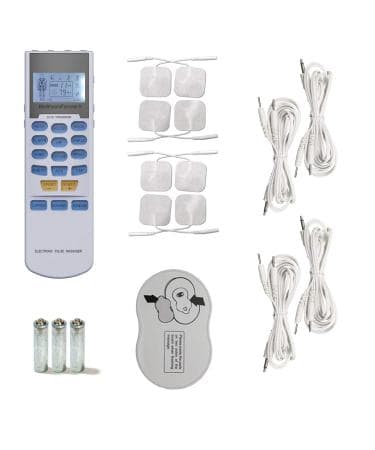
Estimated$80 – $160
Goo Gone Original Liquid is widely regarded as best-in-class for household adhesive residue cleaning because its citrus-based solvent formula removes stickers, tape glue, and label residue with minimal scrubbing and low surface aggression. It holds this position through broad retail availability and a low price point that makes it more economical for everyday use than industrial-strength options like 3M, though it is less effective on heavily cured or industrial adhesives. Compared with specialized gels such as Tensive Parker or Torbot TacAway, Goo Gone trades some technical strength for convenience and cost savings for typical consumer tasks.
Show More Electrodes and Accessories
Estimated$6 – $12
What the Research Says: How These Devices Work and Their Proven Benefits
Electrotherapy devices work through a few established mechanisms: TENS (transcutaneous electrical nerve stimulation) is thought to reduce pain by activating large-diameter nerve fibers and descending inhibitory pathways; NMES and EMS produce controlled muscle contractions that help maintain muscle mass, improve strength, and support motor re-education; microcurrent uses very low amplitude currents that may support tissue repair and cellular healing. A substantial body of clinical research, including randomized controlled trials and systematic reviews, examines these modalities across acute pain, chronic pain, postoperative rehabilitation, and sports recovery. Evidence quality varies by indication and device type, but consistent themes are that TENS often provides short-term pain relief, NMES reliably assists with muscle activation and rehabilitation after surgery or injury, and combined protocols plus exercise yield better functional outcomes than passive treatment alone. Safety and contraindications are well documented, and best practice is to use these devices as part of a supervised rehabilitation plan when possible.
TENS: Multiple randomized trials and systematic reviews show TENS can provide short-term pain relief for a range of acute and chronic conditions, though effectiveness varies between individuals and stimulation parameters.
NMES: Research supports NMES for muscle re-education, reducing atrophy, and improving strength after orthopedic surgeries such as ACL repair and total knee replacement when used alongside exercise.
EMS: Studies in sports medicine show EMS can be a useful adjunct for supplemental muscle conditioning, but evidence for direct performance gains is mixed and depends on program design and athlete level.
Microcurrent: Early clinical studies and pilot trials suggest microcurrent may help tissue repair and reduce pain in certain soft tissue injuries, but higher-quality trials are needed for conclusive recommendations.
Combined modalities and app-guided programs: Trials and implementation studies indicate that devices offering integrated programs, biofeedback, or remote monitoring improve adherence and can enhance clinical outcomes in home-based rehab.
Safety and contraindications: Clinical guidance consistently advises against use over implanted cardiac devices or directly over the chest in people with pacemakers, during pregnancy over the abdomen, and in uncontrolled epilepsy; consultation with a healthcare professional is recommended for complex cases.
Frequently Asked Questions
Which device should I choose for post-exercise recovery?
Choose Marc Pro Plus for post-exercise recovery because it’s engineered for non-fatiguing muscle contractions with wide intensity range and long biphasic waveforms, rated 4.6 and priced at CA$1,730.28.
What exact feature does the TENS 7000 offer?
The TENS 7000 Digital TENS Unit has dual-channel operation so you can treat two areas simultaneously, with simple reliable controls and adjustable pulse width and rate, rated 4.3 and priced at $62.99 CAD
Is Compex SP 8.0 worth its higher price in Canada?
Compex SP 8.0 is rated 4.6 and costs CA$0.00 in the provided list data, but it offers Mi-Scan muscle sensing plus wireless control and multi-channel capability for simultaneous multi-muscle stimulation.
Does Marc Pro Plus come with any warranty details?
The provided information for Marc Pro Plus lists rating 4.6 and price CA$1,730.28 but does not include any warranty duration, so warranty coverage can’t be confirmed from the data given.
Conclusion
In Canada in 2026, electrotherapy and electrical stimulation devices remain a practical and growing option for pain management, rehabilitation, and supplemental muscle training, with an increasing number of wireless, app-driven, and multi-modality products for both home and clinic use. We hope this overview helped you understand the category and identify the right features to look for. If you did not find exactly what you were looking for, refine or expand your search using the search box to filter by device type, intended use, price range, or clinical features.