

Top 5 Quick Change Interfaces in Canada, 2026 — Fast, Repeatable Tool Changers for Industry 4.0
Quick Change Interfaces are standardized mechanical, electrical, and fluid connections that let manufacturers swap end of arm tooling quickly and repeatably in automation cells. In Canada these interfaces are increasingly popular because they reduce downtime, support small-batch and mixed-model production, and simplify maintenance across distributed facilities. Canadian buyers favor solutions that offer robust repeatability, secure locking for safety, modular signal and power connections for Industry 4.0 compatibility, and strong local support or distribution. The result is faster line changeovers, higher throughput, and easier integration with plant-level automation and data systems.
Inception's AI took the time to understand this market in Canada · · How we pickWe may earn a commission on purchases. It never affects our rankings.
Top Picks Summary
ATI Industrial Automation QC-11 Tool Changer
The ATI QC-11 is a widely adopted, cost-conscious quick-change interface known for its compact footprint, reliable mechanical locking and integrated electrical/pneumatic coupling options. It holds its position by balancing high repeatability and low mass — making it a practical choice where payload and cycle-time matter — and is generally less expensive to deploy and maintain than higher-end, fully integrated systems like Staubli. Compared with heavier-duty offerings from Schunk or cam-lock simplicity from DESTACO, the QC-11 often delivers the best upfront value for robotic end effector swaps in light- to medium-duty automation.
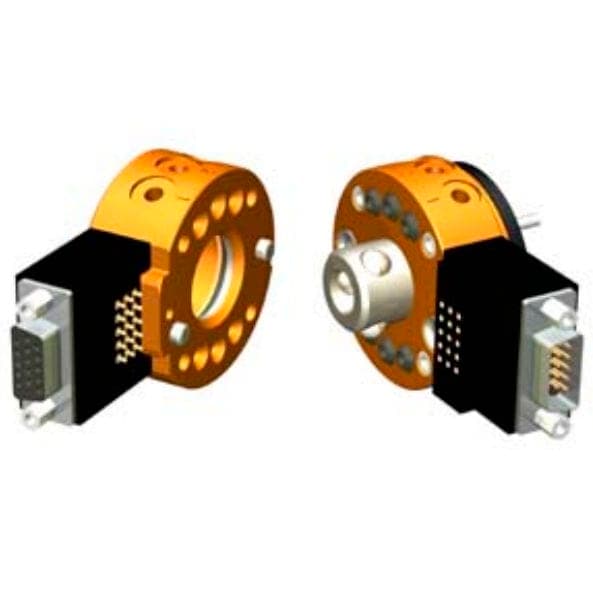
Estimated$3,000 – $8,000
Schunk SWS Quick Change System
The Schunk SWS is a modular, high-stiffness quick-change system designed for heavy-duty tooling and applications demanding tight positional repeatability and high payloads. It earns market leadership on technical grounds — exceptional rigidity and modular accessory ecosystem — which reduces rework and lifetime integration costs compared with lower-cost alternatives like Zimmer or DESTACO. For users prioritizing machining-level accuracy or large end-of-arm tooling, Schunk typically offers lower total cost of ownership despite a higher initial price than simpler changers.

Estimated$5,000 – $15,000
Zimmer Group HWR Quick Change System
The Zimmer HWR family focuses on compact, pneumatic quick-change interfaces that deliver very fast cycle times and straightforward, serviceable designs at a competitive price point. It stands out for being cost-effective and easy to maintain compared with more complex electromechanical systems like Staubli or Schunk, making it attractive for mid-range payloads and high-throughput lines. Where upfront budget and simplicity matter, HWR often undercuts premium offerings while still delivering the repeatability and robustness required for many pick-and-place and assembly applications.
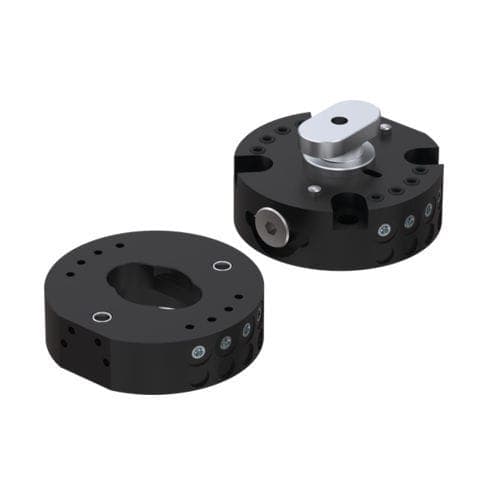
Staubli MPS Tool Changer
Staubli's MPS is a high-end, multi-utility quick-change interface engineered for demanding robotics applications, with integrated electrical, pneumatic and fluid couplings and industry-leading repeatability and durability. It commands a premium because it minimizes integration complexity and downtime — a financial advantage for high-availability operations where lost production is costly — and typically outperforms simpler mechanical systems in precision and lifecycle reliability. Compared to modular alternatives like Schunk or budget-friendly camlocks from DESTACO, the MPS targets customers who prioritize turnkey performance and minimal maintenance.
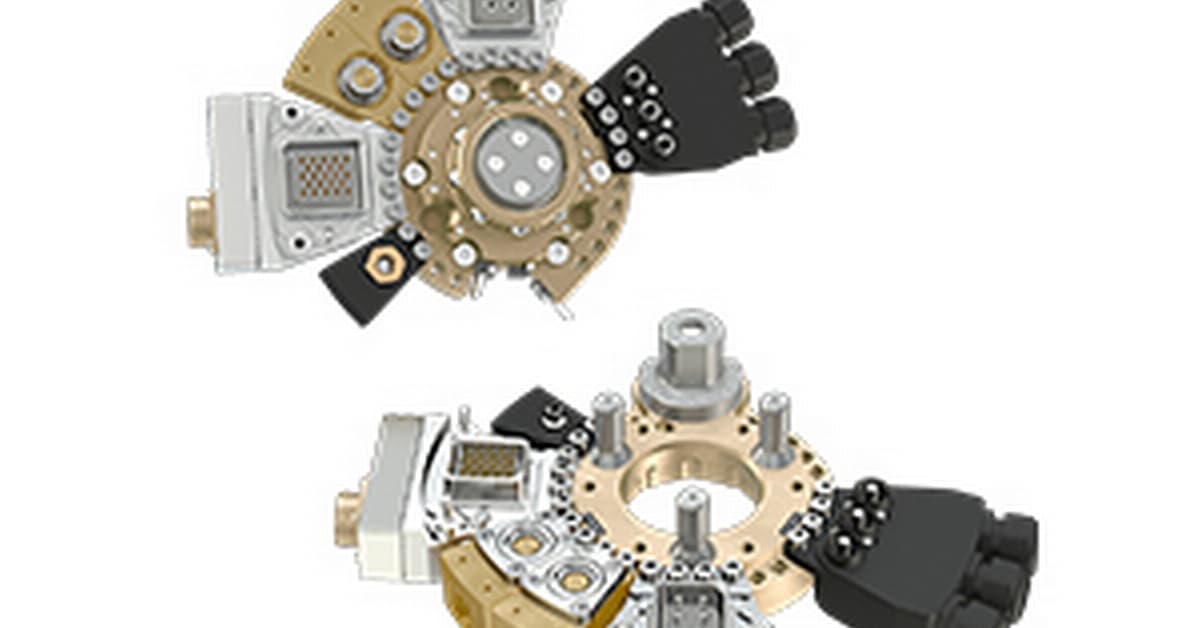
DESTACO Camlock Quick Change System
DESTACO's Camlock quick-change offerings emphasize rugged simplicity and low capital cost, using proven cam-lock mechanics for heavy tooling and manual or semi-automatic changeovers. They are positioned as an economical, durable option for shops that need dependable mechanical locking without the expense or complexity of full multi-utility interfaces, making them an attractive retrofit or backup choice alongside the more feature-rich systems from Staubli or Schunk. For projects constrained by budget or seeking minimal integration overhead, DESTACO often delivers the lowest total upfront investment.
What Research and Industry Evidence Shows
Academic studies, vendor white papers, and industry case studies consistently show that standardized quick change interfaces improve operational performance by reducing manual interventions, lowering changeover time, and improving positional repeatability. Research on automation best practices highlights measurable benefits for throughput, overall equipment effectiveness (OEE), and workforce safety when modular tool changers are used. Evidence also points to faster ROI for small and medium manufacturers adopting modular tooling, especially where frequent product changeovers or high-mix production are common.
Changeover time reductions: industry case studies report reductions in changeover time often ranging from 50% to 90%, depending on process complexity.
Repeatability and accuracy: many modern quick change interfaces deliver repeatability measured in tens of microns, enabling consistent part handling and vision alignment.
Higher uptime and throughput: reduced manual rework and faster swaps lead to measurable gains in OEE and throughput in high-mix manufacturing.
Safety and ergonomics: reduced manual handling of heavy tooling lowers injury risk and improves worker ergonomics.
Industry 4.0 readiness: integrated signal, power, and fluid connections allow condition monitoring and easier robotic cell orchestration.
Return on investment: shorter changeovers and higher asset utilization often produce payback periods that are attractive for SMEs and large manufacturers alike.
Frequently Asked Questions
Which quick change interface should I buy for robotics?
For most automation cell swaps, the ATI Industrial Automation QC-11 Tool Changer is a practical choice thanks to its low-profile, lightweight design and automatic electrical and pneumatic connections with reliable docking (average rating 4.6).
What capability does the Schunk SWS Quick Change System provide?
The Schunk SWS Quick Change System uses robust mechanical locking with integrated power, air, and data connections, and it’s designed for high payloads with rapid tool change cycles in automated cells (average rating 4.7).
Is the Zimmer Group HWR Quick Change System better value?
The provided info describes the Zimmer Group HWR Quick Change System as cost-effective and easy to maintain compared with more complex electromech options, with an average rating of 4.4; no exact price is listed for it in the data.
What’s the warranty for the ATI QC-11 Tool Changer?
The warranty duration for the ATI Industrial Automation QC-11 Tool Changer isn’t provided in the supplied data, so I can’t confirm it from here (average rating 4.6).
Conclusion
In Canada the right quick change interface can transform a production cell by combining repeatable alignment, secure locking, and integrated electrical and fluid connections for smarter automation. The top options to consider are the ATI Industrial Automation QC-11 Tool Changer, Schunk SWS Quick Change System, Zimmer Group HWR Quick Change System, Staubli MPS Tool Changer, and DESTACO Camlock Quick Change System. For most Canadian manufacturers seeking the best mix of availability, modularity, and price to performance, the Schunk SWS Quick Change System stands out as the top choice. We hope you found what you were looking for — refine or expand your search using the site search to compare specs, distributor support, and compatibility with your robotic platforms.