

Top 8 End of Arm Tooling (EOAT) Solutions in Canada for 2026
End of Arm Tooling (EOAT) in Canada has evolved into a category focused on lightweight, modular systems that combine welding torches, gun changers, grippers, positioners, and quick-change interfaces engineered for precision, cooling efficiency, and reduced maintenance. By 2026 Canadian buyers prioritize modular designs that allow fast reconfiguration, sensor integration for in-process quality assurance, automatic gun exchange to minimize downtime, and cross-process compatibility for MIG/MAG, TIG, plasma and robotic welding applications. These features address core market demands across automotive, aerospace, heavy equipment, fabrication, and oil and gas sectors in Ontario, Quebec, Alberta and British Columbia. Customers choose modular EOAT because it maximizes uptime, lowers operating costs through improved cooling and faster maintenance cycles, reduces scrap with sensor-driven feedback, and simplifies integration with major industrial robots and shop-floor controls. In short, the category appeals to Canadian manufacturers who need flexible, durable tooling that supports Industry 4.0 connectivity and local serviceability.
Inception's AI took the time to understand this market in Canada · · How we pickWe may earn a commission on purchases. It never affects our rankings.
Top Picks Summary
The Magnum Pro Curve is a modular, workhorse-style torch family that emphasizes ruggedness, easy field serviceability, and a broad aftermarket parts ecosystem to keep uptime high and replacement costs predictable. Versus the Fronius and Abicor Binzel premium robotic options it is generally more cost-effective up front and simpler to maintain in North American shops, making it a strong market-leader choice where durability and parts availability drive purchasing decisions.
Show More Modular Welding Torches
Schunk's SWS Quick Change System delivers high repeatability and modular connectivity tailored to welding gun automation, with robust signal, coolant and pneumatic routing that simplifies multi-tool cells. It generally costs more than ATI but provides finer alignment and a larger accessory ecosystem, offering superior integration flexibility compared with single-purpose gun changers while trailing Staubli only slightly on absolute ruggedness.
Show More Automatic Gun Changers
Estimated$10,000 – $25,000
Staubli's MPS is a high-end, multi-utility quick-change interface engineered for demanding robotics applications, with integrated electrical, pneumatic and fluid couplings and industry-leading repeatability and durability. It commands a premium because it minimizes integration complexity and downtime — a financial advantage for high-availability operations where lost production is costly — and typically outperforms simpler mechanical systems in precision and lifecycle reliability. Compared to modular alternatives like Schunk or budget-friendly camlocks from DESTACO, the MPS targets customers who prioritize turnkey performance and minimal maintenance.
Show More Quick Change Interfaces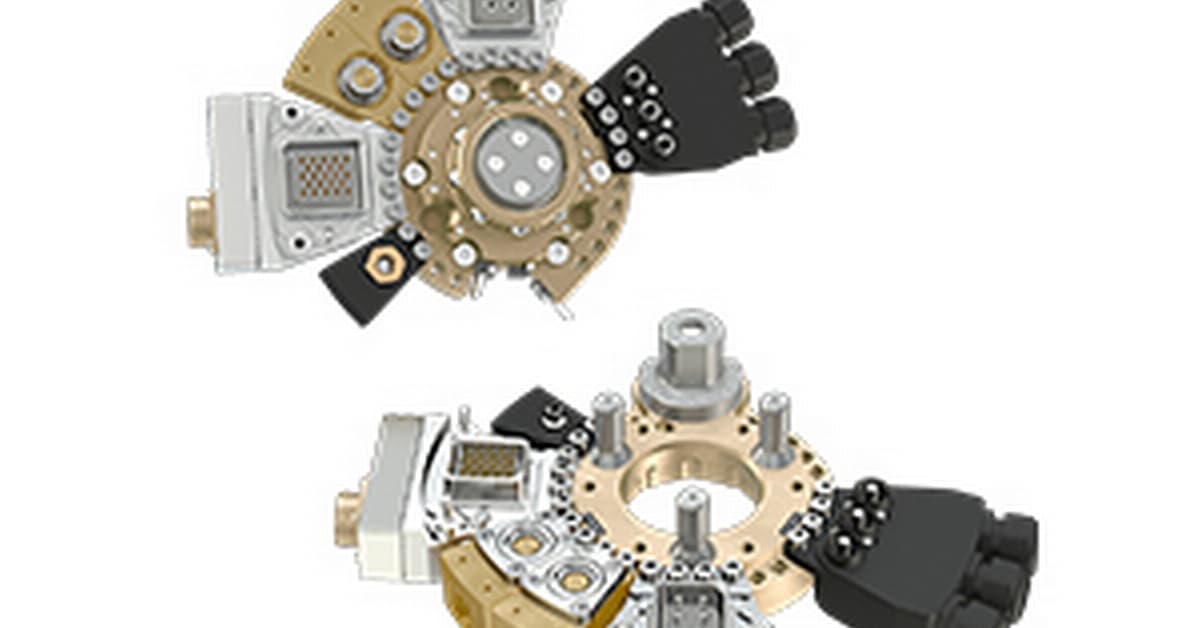
The Coolmate 3.5 is a market-leading portable cooling module known for reliable, quiet operation and broad compatibility with Miller and third‑party torches, making it a go-to choice where mobility and low lifecycle service costs matter. Financially it undercuts high‑end industrial units like the Fronius CU 1100i while delivering better energy efficiency and user ergonomics than many budget units such as the Cool Arc 40, though it lacks the ultra-high continuous duty cooling capacity of the Fronius and the plasma‑specific tuning found in the Thermal Dynamics Ultra-Cool 2.
Show More Cooling and Thermal Management Modules
Estimated$1,000 – $1,600
Fronius WeldCube Premium is positioned as a market-leading analytics-first sensor module, delivering deep weld-data capture, advanced visualization and trend analysis that justify its premium price for high-mix, data-driven production environments. Against the other products it differentiates on software sophistication and long-term process optimization potential, trading higher upfront or subscription costs for richer technical insight and stronger predictive maintenance capabilities.
Show More Sensor Integrated Modules
Binzel ROBO WH Torch Cable Assembly
Binzel ROBO WH is a welding-torch-focused cable assembly engineered for reliable coolant, gas and power routing under high-heat, high-abrasion conditions, delivering predictable uptime for robotic welding cells. Its torch-specific construction and optimized connectors reduce rework and consumable costs compared with general robot dresspacks from Leoni or Sumitomo, while complementing protective systems like Triflex R and Conductix-Wampfler by addressing the most demanding torch-service needs. Financially, the ROBO WH lowers process waste and torch replacement frequency, making it a cost-effective choice where welding throughput matters most.
Show More Cable and Hose Management Systems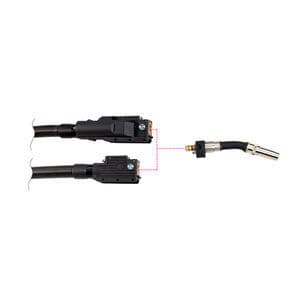
Estimated$300 – $900
ATI Industrial Automation Tool Changer Plates
ATI Industrial Automation tool changer plates are market-leading for rugged, high-payload tool changing and broad cross-vendor compatibility, delivering a cost-effective solution for heavy-duty fixtures and robotic end-effectors. They excel technically on load capacity and standardized interfaces, making them a practical alternative to more integrated but expensive systems like Schunk when electrical/pneumatic integration is less critical. Financially, ATI's mature ecosystem and wide adoption lower customization risk and spare-parts cost for manufacturers deploying large fleets of robots.
Show More Mounting Adapters and Custom Fixtures
Estimated$1,000 – $4,000
Why modular, sensor-enabled EOAT works
There is strong practical and experimental evidence that modular EOAT with active cooling and sensors delivers measurable improvements in productivity, product quality, and maintenance efficiency. Research and industry case studies demonstrate how lighter tooling reduces robot wrist inertia and energy use; how active cooling extends torch and consumable life; and how sensor data enables faster fault diagnosis, seam tracking, and closed-loop process control. For teams new to EOAT, the most important lessons are that modular design lowers total cost of ownership, quick-change systems dramatically shorten changeovers, and integrated sensors support predictive maintenance strategies.
Reduced downtime: Case studies across multiple manufacturers show that automatic gun changers and quick-change adapters reduce changeover time and line stoppages compared to manual changeovers.
Longer tool life with cooling: Controlled cooling of torches and consumables reduces thermal wear and prolongs service intervals, lowering replacement costs.
Improved weld quality: Integration of vision, temperature, and force sensors supports seam tracking and closed-loop adjustments that lower scrap rates.
Energy and cycle gains: Lightweight EOAT decreases robot inertia, enabling faster cycles and reduced energy per part without sacrificing precision.
Predictive maintenance: Sensor telemetry and edge analytics help detect wear patterns early, enabling scheduled maintenance instead of reactive fixes.
Cross-process flexibility: Modular tooling architectures allow shops to switch between welding processes with minimal retooling, improving capacity utilization.
Frequently Asked Questions
Which EOAT solution should I choose for robot welding?
Choose the Fronius Robacta Drive CMT if you run CMT robot welding and want ultralow spatter plus thin-sheet performance, with a modular robotic torch architecture; it’s rated 4.7.
What feature does the Staubli MPS tool changer provide?
The Staubli MPS Tool Changer includes a precision multiconnector system for power, signal, and fluid lines, with automatic mechanical locking and high repeatability; it’s rated 4.8.
How much is the Fronius Robacta Drive CMT?
The provided details don’t list a price for the Fronius Robacta Drive CMT, but they do confirm it combines CMT arc control with a modular quick-change front end and has a 4.7 rating.
Is the Schunk PGN-plus gripper good for part families?
Yes—the Schunk PGN-plus Universal Gripper has a highly modular design with wide stroke-size selection and sensor options so integrators can standardize across many part families; it’s rated 4.7.
Conclusion
If you are looking for reliable EOAT options in Canada for 2026, these modular welding torches, gun changers, grippers, positioners, and quick-change systems represent industry trends toward lighter, sensor-rich, and low-maintenance tooling. We hope you found the overview useful. Use the site search to refine by feature, compatibility, or region, or expand your search to compare warranties, local service providers, and integration support.