

Canada's Top 6 Automated Welding Material Handling and Feed Systems for 2026
Automated welding material handling and feed systems streamline part flow and reduce cycle times in welding cells by combining conveyors, rotary positioners, AGVs, pallet systems, and automated feeders. In Canada these solutions are increasingly adopted across automotive, aerospace, heavy equipment, fabrication shops, and energy sectors because they deliver consistent weld quality, lower per-part labor costs, and enable safer, more ergonomic workplaces. Current 2026 trends emphasize flexible fixturing that adapts to mixed production runs, synchronized motion with robotic welders for smoother handoffs, automated wire and consumable supply to minimize stoppages, and full integration for lights-out operation. Canadian buyers favor modular, serviceable systems with local support, bilingual documentation, CSA-compliant safety features, and Industry 4.0 connectivity for remote monitoring, predictive maintenance, and energy optimization.
Inception's AI took the time to understand this market in Canada · · How we pickWe may earn a commission on purchases. It never affects our rankings.
Top Picks Summary
Bosch Rexroth VarioFlow plus Chain Conveyor
The Bosch Rexroth VarioFlow plus Chain Conveyor brings industrial-grade chain robustness and integrated control options suited to welding cells exposed to sparks, heat and heavy fixtures; its hardened components, sealed chain options and high load capacity reduce downtime in harsh environments. While typically more capital intensive than belt or pallet modules like Dorner and mk, VarioFlow plus offers superior load-bearing and thermal resilience and provides a continuous-flow alternative to Camco's indexed pallet approach when throughput and durability are prioritized.
Show More Conveyor Systems for Welding Automation Robotic Cells
The ABB IRBP Positioner offers advanced multi-axis indexing and energy-efficient drives that pair tightly with ABB robot controllers to deliver precision weld sequencing and complex part manipulation, making it a market leader for sophisticated automated welding cells. It typically commands a premium but offsets that with finer motion control, strong safety and diagnostics, and streamlined integration for customers already standardizing on ABB systems—advantages that can justify the investment over more welding-focused or single-axis positioners.
Show More Rotary and Indexing Positioners for Welding Automation Robotic Cells
Bosch Rexroth TS 2plus Transfer System
Bosch Rexroth TS 2plus Transfer System leads on precision, scalability and drive integration, providing servo-controlled indexing and seamless connectivity for complex robotic welding cells that demand high repeatability and cycle rates. While it carries a higher acquisition cost than lighter modular systems, its technical advantages — advanced motion control, diagnostics and vendor ecosystem — reduce long-term integration and optimization expense for large automated welding lines.
Show More Pallet and Transfer Systems for Welding Automation Robotic Cells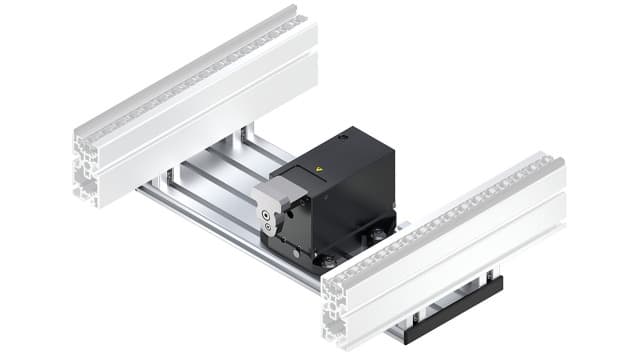
Estimated$30,000 – $150,000
FANUC M-20iD/25 Robotic Cell with Integrated Part Loading
The FANUC M-20iD/25 cell pairs a proven high-speed 25 kg industrial arm with an integrated part loading solution to deliver maximal throughput for welding robotic cells; its durability and uptime make it a market leader where cycle time and long-term total cost of ownership matter. Compared with modular tenders like ABB FlexLoader M it trades some flexibility for superior repeatability and cycle performance, and offers higher throughput than collaborative options like the UR10e while avoiding the large footprint and CAPEX of gantry systems such as Lincoln Electric's loader.
Show More Automated Part Loading and Unloading Systems for Welding Automation Robotic Cells
Estimated$120,000 – $220,000
Lincoln Electric Power Feed 84
The Lincoln Electric Power Feed 84 is positioned as a rugged, industrial-grade wire feed designed for high-throughput robotic welding cells; its proven mechanical durability and competitive price-performance make it a favored choice for integrators prioritizing uptime and lower initial capital outlay. Compared with the precision-focused Fronius and the servo-smooth Miller units, the Power Feed 84 trades some advanced digital features for simpler integration and lower service complexity, while offering better upfront cost than highly modular SKS systems and comparable robustness to ESAB with slightly lower lifecycle spend in conservative deployment scenarios.
Show More Automated Wire Feed and Consumable Supply Systems for Welding Automation Robotic Cells
FANUC R-30iB Plus Controller with Coordinated Motion
The FANUC R-30iB Plus is positioned as a market-proven, high-throughput controller that delivers deterministic coordinated motion and tight cycle times ideal for welding automation robotic cells. Its mature ecosystem, extensive field support and single-cabinet architecture reduce integration time and total cost of ownership compared with more complex multi-robot systems, while offering better out-of-the-box stability than welding‑centric integrators. For users prioritizing uptime and low integration risk in high-volume arc welding, FANUC’s balance of performance and predictable operational costs makes it a leading choice.
Show More Flexible Fixturing and Modular Clamp Systems for Welding Automation Robotic Cells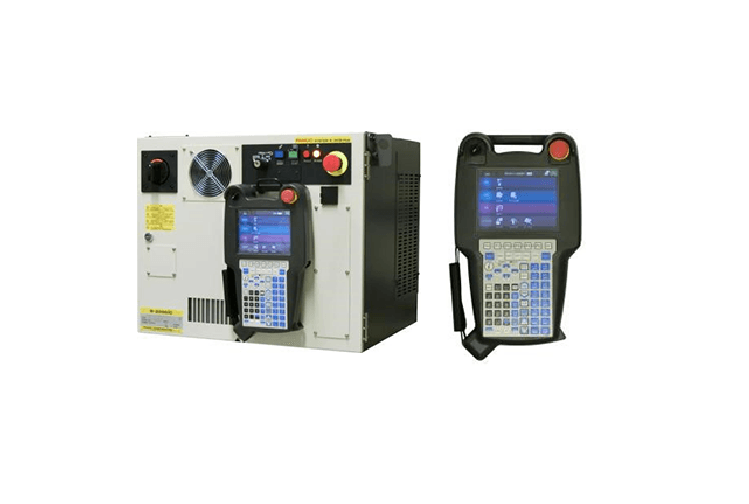
Estimated$50,000 – $120,000
Research and evidence: How automation improves welding material handling
A variety of industry reports and applied research demonstrate the practical benefits of automating material handling in welding cells. Studies from manufacturing technology centers, national research organizations, and independent case studies show improvements in cycle time, repeatability, safety, and total cost of ownership when conveyors, positioners, AGVs, and automated feeders are designed and integrated correctly. The most consistent findings point to gains coming from synchronized motion control, reduction of manual part handling, better consumable management, and data-driven maintenance.
Cycle time and throughput: Multiple case studies report typical cycle time reductions in the range of 20 to 50 percent after adding synchronized conveyors, rotary positioners, and automated feeders that eliminate manual loading delays.
Quality and repeatability: Research in robotic welding integration shows that synchronized part transfer and positioner indexing reduce weld variation and rework, improving first-pass yield and consistency across batches.
Safety and ergonomics: Ergonomics studies find significant reductions in repetitive strain and handling injuries when automated feeders and AGVs replace manual part movement, contributing to lower lost-time incidents and improved workforce retention.
Consumables and uptime: Automated wire feed systems and integrated consumable dispensers reduce unplanned stops and material waste, increasing effective welding cell uptime and reducing per-part consumable cost.
Predictive maintenance and data: Industry 4.0-enabled systems that capture usage and sensor data support predictive maintenance models that lower unscheduled downtime and optimize spare parts inventory.
Return on investment: Financial analyses from manufacturing centers indicate that medium-to-large shops typically recover automation investments within 2 to 4 years through labor savings, higher throughput, and reduced rework, though exact returns depend on volume, product complexity, and local labor rates.
Frequently Asked Questions
Which automated conveyor fits tight robot welding cells best?
Dorner 2200 Series Precision Move Conveyor is the best pick for tight robot cells because it uses a low-profile precision belt for repeatable part positioning and has an average rating of 4.6.
What precision spec does the Dorner 2200 conveyor provide?
The Dorner 2200 Series Precision Move Conveyor includes a low-profile precision belt for repeatable part positioning in tight robot cells, with an average rating of 4.6 and stainless or abrasion-resistant belt options for welding spatter.
How does the ABB IRBP positioner price compare for welding work?
The provided data does not list any price for the ABB IRBP Positioner, but it shows an average rating of 4.8 and plug-and-play communication designed for ABB robot controllers.
Is the FANUC R-30iB Plus compatible with coordinated motion welding cells?
Yes—the FANUC R-30iB Plus Controller with Coordinated Motion is built for high-speed deterministic coordinated motion with external-axis synchronization, works with FANUC robots, and has an average rating of 4.6.
Conclusion
Automated welding material handling and feed systems are a practical, proven way for Canadian manufacturers to raise throughput, improve quality, and reduce operating risk. We hope this overview helps you find the right solution for your shop in 2026. If you want to narrow results by industry, system type, or budget, use the search to refine or expand your query and discover suppliers, case studies, and comparison guides.