

Top 5 Automated Part Loading and Unloading Systems for Welding Cells in Canada, 2026
Automated part loading and unloading systems for welding automation robotic cells combine robotics, vision, and mechanical fixturing to enable hands-free transfer of parts into and out of welding cells. In Canada these solutions address common manufacturing challenges such as labour shortages, operator safety, inconsistent part presentation, and the need to maximize uptime across both high-mix and high-volume operations. Popular system types include vision-guided bin picking for random part presentation, cooperative cobot tending for flexible small-batch work, gantry loaders for large payloads and extended reach, and automated chucks and fixtures for fast changeovers. Canadian buyers tend to prioritize proven reliability, strong local aftersales support, modular flexibility for future process changes, and measurable return on investment, which makes integrated systems that simplify deployment particularly appealing across automotive subcontracting, fabrication, and OEM welding lines.
Inception's AI took the time to understand this market in Canada · · How we pickWe may earn a commission on purchases. It never affects our rankings.
Top Picks Summary
FANUC M-20iD/25 Robotic Cell with Integrated Part Loading
The FANUC M-20iD/25 cell pairs a proven high-speed 25 kg industrial arm with an integrated part loading solution to deliver maximal throughput for welding robotic cells; its durability and uptime make it a market leader where cycle time and long-term total cost of ownership matter. Compared with modular tenders like ABB FlexLoader M it trades some flexibility for superior repeatability and cycle performance, and offers higher throughput than collaborative options like the UR10e while avoiding the large footprint and CAPEX of gantry systems such as Lincoln Electric's loader.

Estimated$120,000 – $220,000
ABB FlexLoader M Automated Tending System
ABB FlexLoader M emphasizes modularity and fast integration, providing flexible part feeding, vision-enabled handling, and safety features tailored to welding automation cells, which reduces engineering hours and shortens ROI timelines. It competes with FANUC on industrial robustness but pulls ahead for mixed-batch or evolving production needs, and offers a higher payload/throughput alternative to cobot-based bin-picking while generally requiring less factory space than a full gantry loader.

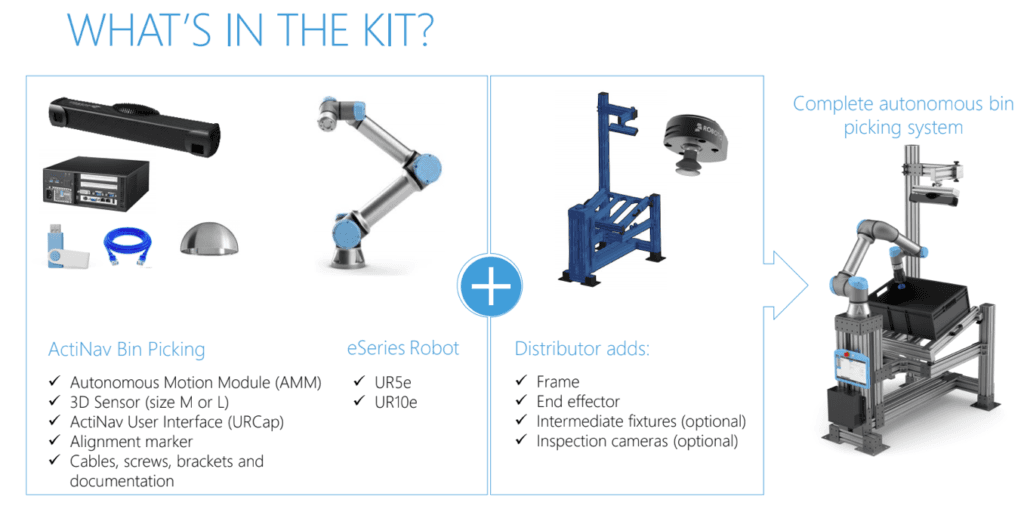
Universal Robots UR10e Cobot with ActiNav Bin Picking
The UR10e with ActiNav bin-picking is a low-barrier, flexible solution suited to small-to-medium batch welding cells that need quick deployment and safe human-robot collaboration; its lower capital cost and simplified programming make it attractive to shops upgrading incrementally. While it cannot match the cycle speed and payload of heavy industrial arms from FANUC, ABB or Yaskawa, it delivers the best payback for labs and SMEs by minimizing integration cost and enabling mixed-part handling without expensive fixturing.
Estimated$60,000 – $120,000
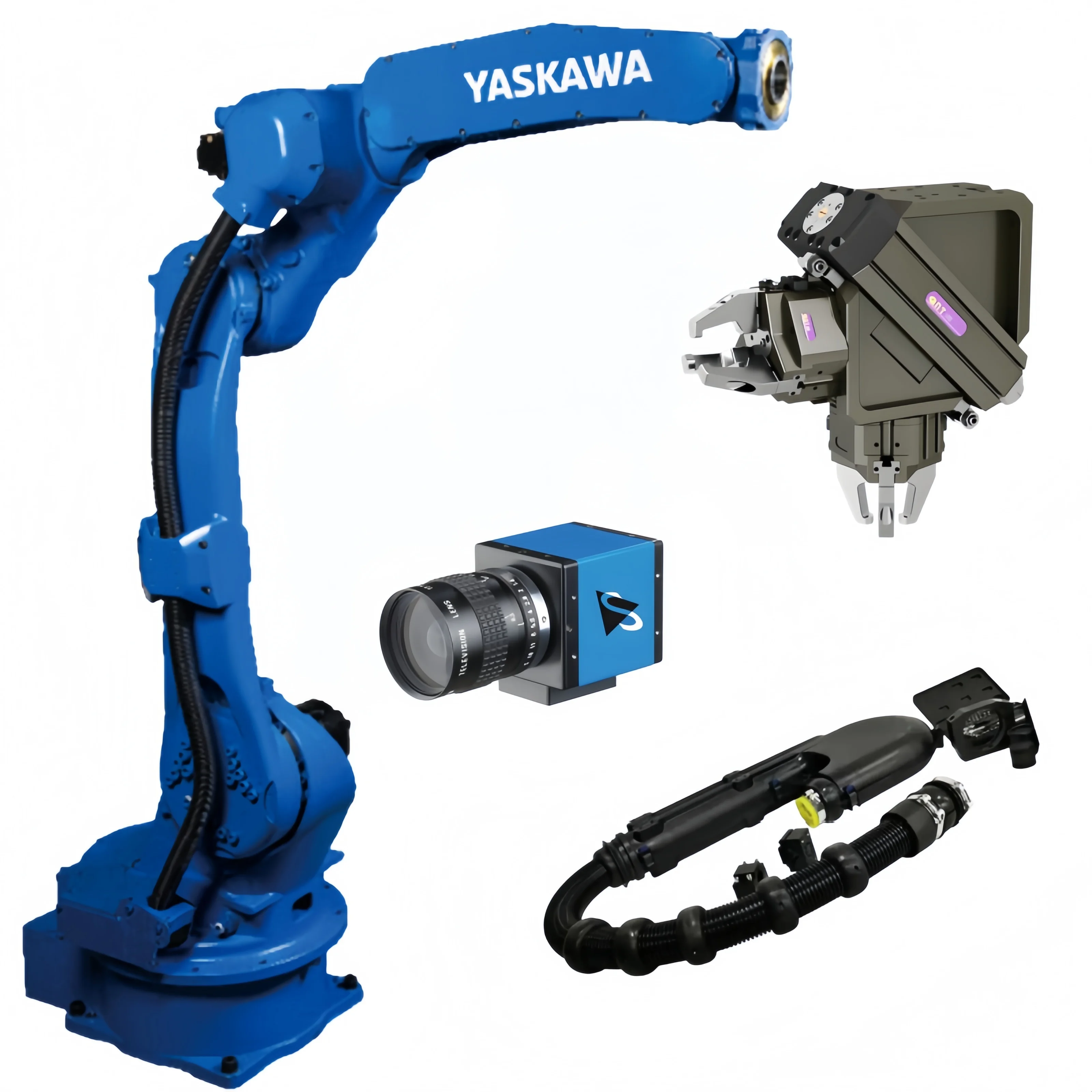
Yaskawa Motoman GP25 with MotoMini Loading System
The Yaskawa Motoman GP25 combined with a MotoMini-based loading subsystem offers a balanced industrial solution that emphasizes dynamic motion, precise path control, and compact loading automation for welding cells, delivering close performance to FANUC at a competitive price point. Its strength lies in motion control and tight integration with Motoman welding peripherals, making it a strong choice where path accuracy and weld-process synchronization matter more than the collaborative benefits of cobots or the large part capacity of gantry systems.
Estimated$110,000 – $200,000
Lincoln Electric Gantry Loader for Welding Automation
Lincoln Electric's Gantry Loader is tailored for heavy or large-format weldments, integrating material handling, positioners and welding power sources to minimize manual handling and cycle interruptions in large fabrication cells; this makes it the preferred option where part size and weld-process integration drive value despite higher upfront capital. Compared to arm-based cells from FANUC/ABB/Yaskawa and cobot solutions, the gantry offers superior payload and fixture flexibility, delivering the best long-term throughput and weld consistency for heavy industrial applications.

We may earn a commission on purchases. It never affects our rankings.
Estimated$90,000 – $250,000
What the Research and Industry Evidence Say
A combination of academic research, industry white papers, and field case studies supports the benefits of automated loading and unloading for welding cells. Evidence emphasizes improved throughput, reduced ergonomic injury risk, fewer weld defects from consistent part positioning, and lower total cost of ownership when systems are matched to application complexity. Vision-guided systems and modern bin-picking algorithms have reduced part pick error rates and pre-processing time, while collaborative cobots have expanded safe human-robot workflows for high-mix lines. Safety standards and documented return-on-investment frameworks from automation specialists help planners size systems and estimate payback.
Throughput and consistency: Industry reports and case studies frequently report throughput improvements and cycle-time reductions when manual tending is replaced or augmented by automated tending.
Quality and rework: Consistent part presentation and automated fixturing reduce variations that lead to weld defects and rework.
Ergonomics and safety: Automation lowers repetitive manual lifting and exposure to welding hazards, supporting occupational health and compliance goals.
Technology improvements: Advances in machine vision, AI-assisted bin picking, and force-aware cobots have improved first-time pick success and reduced integration time.
Economic outcomes: Typical payback windows reported in field studies range from one to three years depending on part mix, volume, and integration scope.
Standards and best practice: Compliance with industry safety guidelines such as industrial robot and collaborative robot safety practices is essential during deployment and commissioning.
Frequently Asked Questions
Which automated part loading system fits welding cells best?
Choose the FANUC M-20iD/25 Robotic Cell with Integrated Part Loading if your welding cell needs maximal throughput, since it pairs a 25 kg arm with integrated part-loading hardware for repeatable pick-and-place and streamlined robot-to-welder communications; rating 4.7.
What exact capability does the ABB FlexLoader M provide?
ABB FlexLoader M is a modular tending platform designed for automated loading/unloading with easy conveyor and pallet interfaces, and it supports scalable modules for high throughput and rapid changeovers; rating 4.6.
How does price and value compare for UR10e with ActiNav?
The Universal Robots UR10e Cobot with ActiNav Bin Picking is positioned as a low-barrier, flexible solution with a 12.5 kg payload and 1.3 m reach, using onboard vision to reduce integration complexity; rating 4.4 (price not provided).
Is the Universal Robots UR10e with ActiNav good for operators?
Yes—the UR10e with ActiNav bin-picking is suited to small-to-medium batch welding cells needing deployment close to operators, leveraging cobot form-factor safety and onboard vision for autonomous bin picking; rating 4.4 (warranty not provided).
Conclusion
In Canada the right automated loading and unloading solution depends on your part mix, throughput targets, and service needs. This page highlights five leading systems for 2026: FANUC M-20iD/25 Robotic Cell with Integrated Part Loading, ABB FlexLoader M Automated Tending System, Universal Robots UR10e Cobot with ActiNav Bin Picking, Yaskawa Motoman GP25 with MotoMini Loading System, Lincoln Electric Gantry Loader for Welding Automation. For most medium to high throughput welding operations seeking a balance of performance, scalability, and local support in Canada, the ABB FlexLoader M Automated Tending System is the best overall choice among these options because of its flexible integration capabilities and strong service network. We hope you found what you were looking for. You can refine or expand your search using the search tools on this site to narrow by payload, cell footprint, vision capability, or Canadian service coverage.