

Top 5 Pole and Rooftop Access Support Utility Trucks in Canada — 2026 Guide
Pole and rooftop access support utility trucks are medium-duty vehicles fitted with mast lifts, stabilizing outriggers, ladder storage, and rooftop support equipment designed for safe antenna and small cell installation work. In Canada, demand for these rigs is driven by accelerating 5G rollouts in dense urban corridors, stricter workplace safety expectations, and a preference for machines that balance reach, maneuverability, and low urban impact. Buyers prioritize compact footprints for tight job sites, integrated fall protection anchors, adjustable boom systems for varied rooftop geometries, reliable service networks across provinces, and options that reduce local emissions or offer hybrid/electric drive components. For contractors and utilities focused on fast, safe small cell and antenna deployments, these trucks reduce setup time, lower risk during elevated work, and simplify transport and storage of ladders and rooftop hardware.
Inception's AI took the time to understand this market in Canada · · How we pickWe may earn a commission on purchases. It never affects our rankings.
Top Picks Summary
Terex Hi-Ranger TL50
The Terex Hi-Ranger TL50 is positioned as a dependable mid-to-high reach option for pole and rooftop access, offering a balance of 50-foot working height and proven durability that keeps lifecycle costs predictable. Compared with shorter units like the Altec AT40G it gives more reach for rooftop work, while remaining more cost-efficient and easier to spec than the longer-reach Elliott L60R for crews that do not require extreme height. Its reputation for parts availability and simple serviceability makes it a strong choice for fleets focused on uptime and total cost of ownership.

Estimated$170,000 – $260,000
Altec AT40G
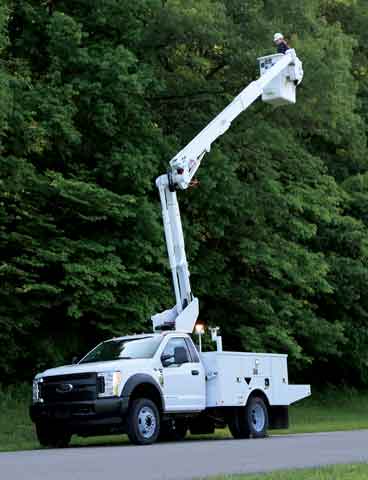
The Altec AT40G is a compact, nimble 40-foot platform designed for tight urban pole and rooftop access where maneuverability and a small vehicle footprint matter most. Financially it can be a lower-capex option versus larger-reach models on this list, and technically it competes by offering fast setup and good maneuvering compared with larger footprint machines like the Dur-A-Lift DPM2-52. For utilities and contractors working in congested areas, the AT40G trades top-end reach for lower operating and parking costs while still providing safe insulated options.
Estimated$160,000 – $240,000
Elliott L60R HiReach
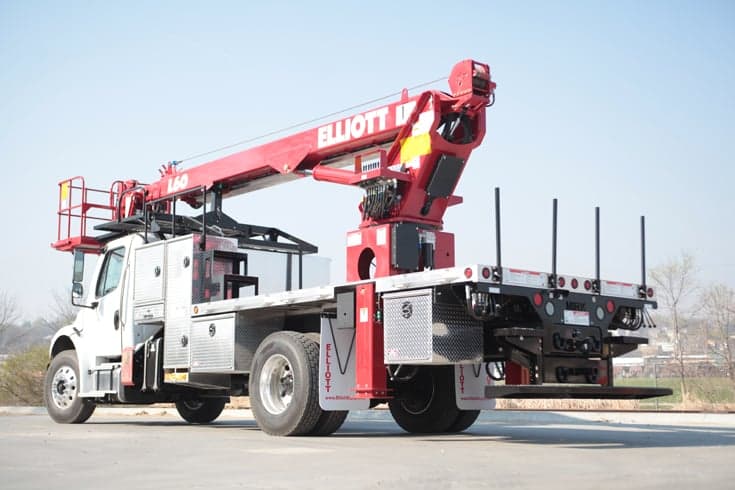
The Elliott L60R HiReach stands out as the long-reach leader in this set, delivering roughly 60 feet of working height combined with a rotating upper structure that eases positioning for pole and rooftop tasks. Technically it exceeds competitors such as the Terex TL50 and Altec AT40G in reach and rotation capability, making it the go-to when access envelope or working radius is the primary requirement, though that capability usually comes with higher initial acquisition cost. For fleets needing maximum reach and reduced need for repositioning, the L60R can reduce labor time and accessory rigging compared with shorter-boom trucks.
Estimated$220,000 – $360,000
Versalift SST-40-EIH
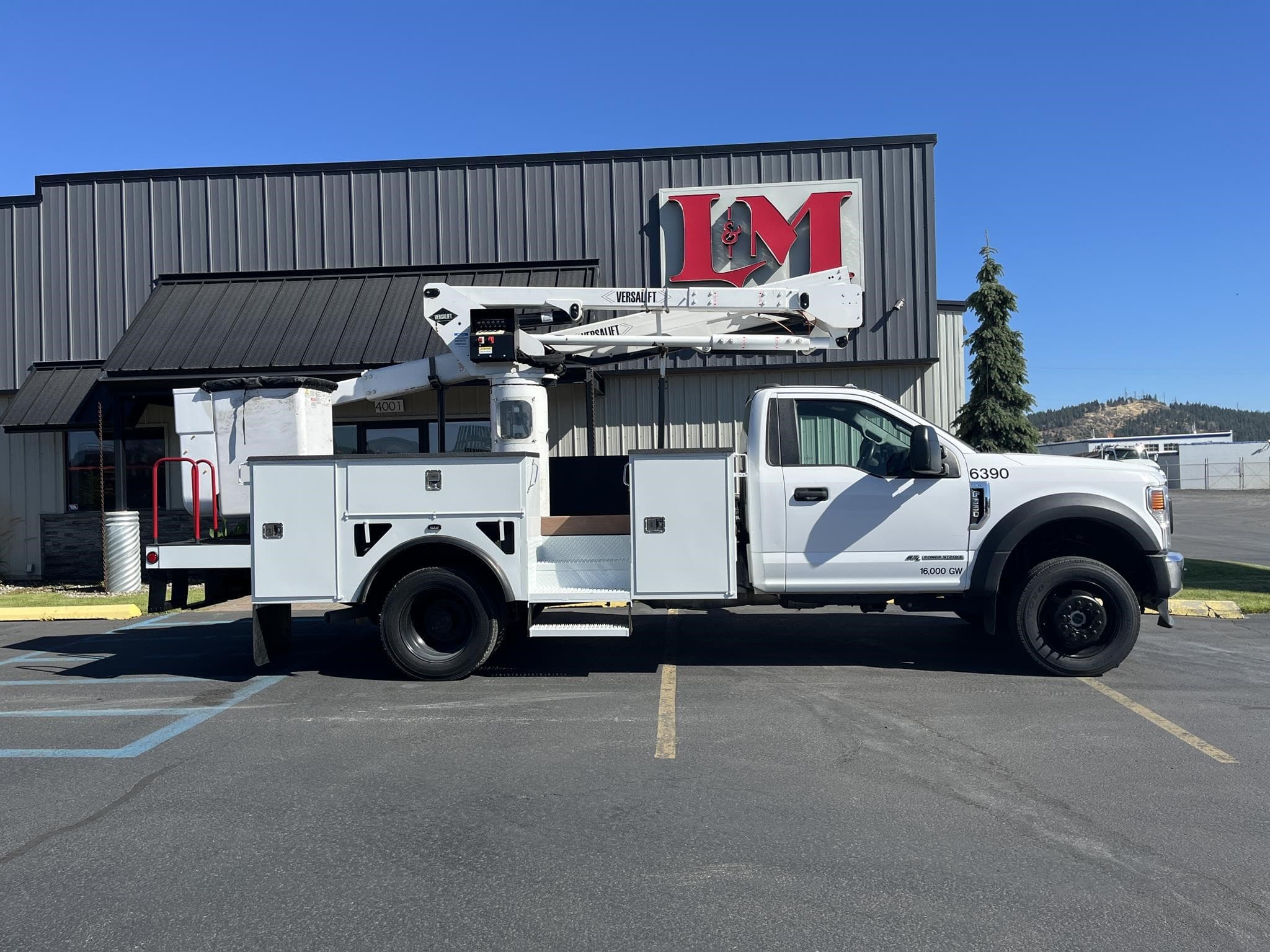
The Versalift SST-40-EIH targets operators who prioritize electrical safety and lower operating emissions by combining a 40-foot service platform with insulated components and hybrid or electric-assisted drive/auxiliary systems. Compared with conventional diesel-only units like the Elliott and Terex models, it can deliver measurable fuel and emissions savings and reduced onsite noise, which is increasingly valuable for municipal and commercial rooftop jobs. While its reach is comparable to the Altec AT40G, the Versalift’s focus on insulation and energy efficiency can lower long-term operating expenses and improve worker safety on live-line or near-line work.
We may earn a commission on purchases. It never affects our rankings.
Estimated$180,000 – $280,000
Dur-A-Lift DPM2-52
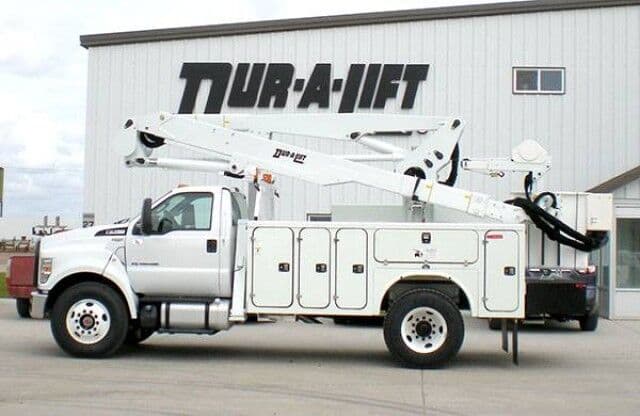
The Dur-A-Lift DPM2-52 offers a 52-foot working height in a package aimed at providing strong reach for rooftop and pole work while remaining one of the more budget-friendly options for medium-duty fleets. It sits between the Terex TL50 and Elliott L60R on reach, delivering many of the same technical capabilities at a lower purchase price and simplified chassis choices that can reduce procurement complexity. For organizations that need extended reach without the premium cost of full long-reach specialty trucks, the DPM2-52 represents a pragmatic balance of capability and capital efficiency.
Estimated$190,000 – $310,000
Research and evidence supporting pole and rooftop access support trucks
Multiple industry reviews, safety guidance from Canadian workplace safety authorities, and ergonomics research support the primary benefits of properly specified access support utility trucks. The key advantages backed by research and practical field studies include reduced fall risk when using anchored work platforms, improved installation efficiency when a vehicle integrates lifting and storage systems, and lower on-site environmental impact where hybrid or electric components are used. Telematics and condition monitoring have also been shown to improve uptime and preventive maintenance outcomes, which matters for fleets operating across Canada's wide geography.
Fall protection and anchored platforms: Occupational safety analyses indicate that integrating fall protection anchors with boom and mast systems substantially reduces fall-related incidents compared with ad hoc rooftop work.
Outriggers and stability systems: Engineering reviews and field tests show that properly designed stabilizing outriggers improve platform stability on uneven surfaces, decreasing overturn and load-shift risks during lifts.
Efficiency gains from integrated storage: Case reports from utility fleets find that trucks with built-in ladder storage and organized rooftop hardware can cut on-site setup time and the number of personnel required for small cell installs.
Telematics and maintenance: Fleet studies demonstrate that telematics-enabled vehicles have higher uptime and lower lifecycle costs due to timely preventive maintenance and remote diagnostics.
Electrification and emissions: Urban pilot projects in Canadian cities reveal that hybrid and electric lift systems reduce idling emissions and noise during tight job-site operations, supporting municipal low-emission objectives.
Frequently Asked Questions
Which truck should I pick for rooftop pole work?
Choose the Elliott L60R HiReach if you need long reach: it’s rated for 60 ft working height with 360° rotation to position for rooftop and pole servicing, and it scores an average 4.6 rating.
How much working height does the Terex Hi-Ranger TL50 provide?
The Terex Hi-Ranger TL50 provides a 50 ft working height telescopic boom, designed for extended pole and rooftop access, and it has an average 4.6 rating.
Is the Altec AT40G a better value than TL50?
The data only states a potential value angle: the Altec AT40G can be a lower-capex option versus larger-reach models like the Terex Hi-Ranger TL50, but no exact prices are provided to compare directly.
Is the Altec AT40G suitable for tight urban jobs?
Yes—the Altec AT40G is built as a compact, maneuverable 40 ft working-height platform for tight urban pole and rooftop access, with an average 4.5 rating.
Conclusion
This selection highlights five leading pole and rooftop access support utility trucks tuned to Canadian needs in 2026: Terex Hi-Ranger TL50, Altec AT40G, Elliott L60R HiReach, Versalift SST-40-EIH, and Dur-A-Lift DPM2-52. Each offers a different balance of reach, compact footprint, and safety features. For dense urban 5G deployments where low emissions, compact size, and modern safety integration matter most, the Versalift SST-40-EIH stands out as the best overall choice on this page. We hope you found the right option for your fleet; you can refine or expand your search using the site search to compare specifications, provincial service coverage, or electrification options.