

Canada's Top 6 Reptile & Amphibian Filter Media for 2025 — Expert-Backed Guide to Clear Water, Healthy Biofilms, and Odour Control
This category covers mechanical, biological, and chemical filter media engineered specifically for aquatic and semi-aquatic reptile and amphibian enclosures. It includes common options such as sponges, bio-balls, ceramic rings, ceramic noodles, activated carbon, and specialty bio-foam — each chosen to support water clarity, beneficial bacterial colonization, and odour control while being compatible with tanks, paludariums, and breeding tubs. Canadian hobbyists and professionals value media that balance high surface area for nitrifying bacteria, reliable particulate capture, low maintenance, and climate-appropriate supply. Popular preferences in Canada emphasize durable reusable media, options that reduce transport-related carbon footprint (locally available or long-lasting), and products suited for sensitive species and seasonal temperature fluctuations.
Inception's AI took the time to understand this market in Canada · · How we pickWe may earn a commission on purchases. It never affects our rankings.
Top Picks Summary
Zoo Med ReptiFilter Replacement Sponge
Zoo Med ReptiFilter Replacement Sponge is designed specifically for reptile enclosures, with open-cell foam that handles heavier organic loads such as substrate and shed skin without collapsing. Its durability and ease of rinsing make it a practical choice for keepers needing frequent maintenance, and it competes well against aquarium-first sponges by prioritizing mechanical robustness over maximal biological surface area.
Show More Mechanical Filter Sponges for Reptile and Amphibian Filters
Marina Bio-Carb Ceramic Cartridge
Marina Bio-Carb is an all-in-one cartridge that pairs ceramic bio-media with activated carbon, designed for quick swaps in the small filters commonly used in terrariums and paludariums. It is the most budget-friendly and user-friendly option on the list, trading some raw surface area and long-term denitrifying capacity found in Seachem Matrix or Eheim Substrat Pro for odor control and convenience. For reptile and amphibian keepers who prioritize easy maintenance and immediate water clarity over maximum biological capacity, Marina provides clear financial and practical advantages.
Show More Biological Ceramic Rings for Reptile and Amphibian Filters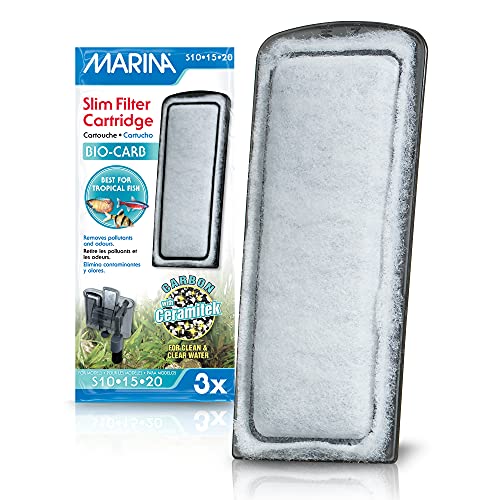
AquaClear BioMax Filter Insert
AquaClear BioMax Filter Insert is a practical, mid-priced cartridge solution that blends mechanical filtration with BioMax biological media to simplify maintenance in terrariums and small amphibian pools. Its main advantage is convenience — ready-to-install inserts deliver consistent performance with minimal handling compared to loose ceramic rings or Seachem Matrix granules, though they typically offer less customizable surface-area-per-dollar than bulk media alternatives.
Show More Biological Bio Balls and Porous Media for Reptile and Amphibian Filters
Seachem Purigen is a high-capacity, synthetic adsorbent polymer that polishes water by removing soluble organic waste and is fully regenerable, positioning it as the premium, long-term choice for reptile and amphibian filters. Its higher initial investment is offset by repeated reuse and consistent performance, distinguishing it from single-use or single-target media such as Fluval Ammonia Remover and Exo Terra Activated Carbon.
Show More Chemical Adsorbent Media for Reptile and Amphibian Filters
We may earn a commission on purchases. It never affects our rankings.
$15.99CAD$18.99
20% below its usual priceUsual price $19.99: the median of the daily prices we observed at this store over the last 60 days, 29 days of dataExo Terra Repti Clear F250 Replacement Cartridge
Exo Terra's Repti Clear F250 cartridge is best-in-class for terrarium-specific filtration, offering a compact pre-filled blend of mechanical and biological media optimized for low-flow, high-humidity amphibian and reptile environments. Versus Zoo Med and Fluval products it emphasizes gentle flow and enhanced biological support to protect delicate species, providing a cost-competitive, purpose-built cartridge for Exo Terra filter systems while trading off some raw capacity found in larger canister solutions.
Show More Pre Filled Replacement Filter Cartridges for Reptile and Amphibian Filters
Estimated$10 – $20
Aquaclear Nylon Filter Media Bag
A reusable nylon media bag with a fine mesh and secure closure engineered to hold ceramic rings, sponge pieces, or carbon for medium-to-large enclosures; its durability and reusability make it a cost-effective choice for frequent maintenances. Compared to nano-focused options like Fluval Spec and slim disposables like Marina, it sacrifices compact specialization for broader capacity and longer service life.
Show More Filter Media Bags and Retainers for Reptile and Amphibian Filters
We may earn a commission on purchases. It never affects our rankings.
$5.99CAD
What Research Says About Filter Media Benefits
Scientific literature and applied aquaculture practice consistently show that effective filtration combines mechanical removal of solids, biological conversion of nitrogenous wastes, and targeted chemical adsorption to manage dissolved organics and odours. For amphibians and reptiles kept in aquatic or semi-aquatic setups, stable water chemistry and low suspended solids reduce physiological stress and lower disease risk. Research in aquarium science and aquaculture demonstrates that media with high specific surface area and appropriate porosity promote rapid colonization by nitrifying bacteria, while mechanical and chemical layers protect that biofilm and maintain visual and chemical water quality.
Nitrification support: Media with high surface area (ceramic rings, ceramic noodles, and porous bio-foam) provide attachment sites for ammonia-oxidizing and nitrite-oxidizing bacteria that convert toxic ammonia to less harmful nitrate, improving long-term water stability.
Mechanical filtration importance: Sponges and coarse foam effectively trap particulates and uneaten food, reducing turbidity and the organic load that drives oxygen demand and bacterial blooms.
Activated carbon function: Carbon and specialty chemical resins adsorb dissolved organics, pigments, and odour-causing compounds — useful after treatment changes or to remove tannins from natural substrates.
Bio-balls and aerobic flow: Smooth-surfaced bio-balls are effective in trickle or high-flow filters, promoting oxygenation of the biofilm and supporting aerobic nitrifying communities when properly staged with finer biological media.
Species and life-stage considerations: Sponge filters are widely recommended for amphibian larvae and small reptiles because they provide gentle filtration and mechanical protection for fry and delicate skin/gills.
Combined media strategy: Peer-reviewed practice and aquaculture guides indicate that multi-stage filtration (mechanical -> biological -> chemical) outperforms single media types for maintaining low ammonia and stable parameters in closed systems.
Conclusion
In the Canadian context, choosing the right combination of sponge, bio-ball, ceramic ring, and activated carbon is key to keeping aquatic and semi-aquatic reptiles and amphibians healthy year-round. We hope this guide helped you find the type of filter media you need; use the site search to refine by species, tank size, or media lifespan if you want to expand or narrow your options.