

Top 5 Chemical Adsorbent Media for Reptile & Amphibian Filters in Canada (2025) — Top Options, Safety Notes, and How to Choose
Chemical adsorbent media for reptile and amphibian filters include activated carbon, zeolite, ion-exchange resins, and specialty adsorbents designed to remove odors, discoloration, dissolved organics, and ammonia-related compounds. These media are especially appealing to hobbyists and professional keepers because reptiles and amphibians are often housed in smaller, closed systems where water chemistry can change rapidly; targeted adsorbents help maintain clarity, reduce toxic nitrogen compounds, and control smells without altering mechanical filtration. Market trends in Canada favor pet-safe blends, long-life or regenerable formulations, low-dust and low-chemical-leach products, and media that specifically target phosphate or ammonia for species that are particularly sensitive. Consumers also prioritize ease of use, compatibility with common filter cartridges and canister filters, and clear guidance about when media should be replaced or regenerated.
Inception's AI took the time to understand this market in Canada · · How we pickWe may earn a commission on purchases. It never affects our rankings.
Top Picks Summary
Fluval Ammonia Remover
Fluval Ammonia Remover is a granular adsorbent formulated to quickly reduce free ammonia in reptile and amphibian filter systems, making it a practical emergency or short-term control option. Compared with Purigen and Zorb, Fluval delivers a lower upfront cost and focused ammonia removal but does not offer the regenerability or broader organic-polishing capacity that premium media like Purigen provide.

Seachem Purigen
Seachem Purigen is a high-capacity, synthetic adsorbent polymer that polishes water by removing soluble organic waste and is fully regenerable, positioning it as the premium, long-term choice for reptile and amphibian filters. Its higher initial investment is offset by repeated reuse and consistent performance, distinguishing it from single-use or single-target media such as Fluval Ammonia Remover and Exo Terra Activated Carbon.

We may earn a commission on purchases. It never affects our rankings.
$15.99CAD$18.99
20% below its usual priceUsual price $19.99: the median of the daily prices we observed at this store over the last 60 days, 29 days of dataAPI Bio-Chem Zorb
API Bio-Chem Zorb is a zeolite-based chemical media designed to selectively sequester ammonia and other nitrogenous wastes in terrarium filtration, offering an effective and budget-conscious option for amphibian and reptile keepers. Technically it sits between broad-spectrum carbon and premium regenerable media—more targeted at ammonia control than general activated carbon but typically less reusable than Seachem Purigen.

We may earn a commission on purchases. It never affects our rankings.
$17.09CAD
10% below its usual priceUsual price $18.99: the median of the daily prices we observed at this store over the last 60 days, 28 days of dataMarina Bio-Clear
Marina Bio-Clear is a combined biological and chemical cartridge aimed at small reptile and amphibian setups, delivering convenient, low-cost maintenance and balanced mechanical, biological and light chemical polishing in a single unit. While it does not match Purigen's capacity or the targeted ammonia adsorption of Fluval and Zorb, Bio-Clear is attractive for hobbyists seeking an all-in-one, affordable maintenance solution.

Exo Terra Activated Carbon
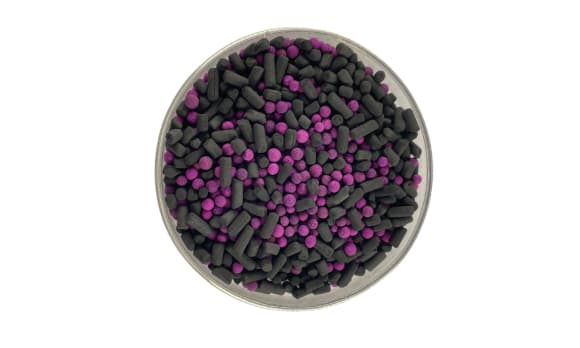
Exo Terra Activated Carbon is a terrarium-specific activated carbon media formulated to control odors and remove volatile organics and discoloration common in reptile enclosures. It is often the most economical routine choice for odor control compared with specialty ammonia adsorbents, but it provides less targeted ammonia removal than Fluval or API Zorb and lacks the regenerability of Seachem Purigen.
We may earn a commission on purchases. It never affects our rankings.
What the Research Says About Adsorbent Media
Scientific and applied research supports the basic functions of common adsorbent media and explains how to match media to your enclosure's risks. In plain terms: activated carbon is effective at removing dissolved organics and discoloration; zeolite and certain ion-exchange resins are proven to reduce ammonium/ammonia levels; and modern synthetic resins and specialty polymer media can offer high capacity plus regenerability. Performance depends on contact time, particle size, water temperature, and competing ions in the water. Importantly, some adsorbents will also remove trace medications or beneficial organics, so using them selectively and understanding when to remove them (for treatments or breeding) is good practice.
Activated carbon adsorbs dissolved organic carbon (DOC) and staining molecules; its effectiveness increases with higher contact time and appropriate pore size distribution.
Natural zeolites and clinoptilolite-type materials exchange ammonium ions and are commonly used in aquaculture and aquarium applications to lower toxic ammonia-related compounds.
Ion-exchange resins can be engineered for ammonia or phosphate selectivity; their capacity is affected by water chemistry and they may be regenerated in some formulations.
Synthetic specialty media (for example, polymer-based resins) often provide higher capacity and can be chemically regenerated, extending service life and reducing waste.
Studies and industry tests emphasize that media performance varies with tank size, stocking density, and feeding regimes — heavier bio-loads need more frequent replacement or higher-capacity media.
Because some adsorbents will remove medications, hormones, or beneficial dissolved organics, many practitioners recommend removing chemical media during treatments or breeding events.
Frequently Asked Questions
Which adsorbent should I buy for ammonia spikes?
Choose Fluval Ammonia Remover for quick ammonia control; it’s zeolite-based for selectively removing ammonia and has an average rating of 4.2 for terrarium filter systems when used per instructions.
Does Seachem Purigen remove dissolved organic waste?
Yes—Seachem Purigen is a synthetic macroporous polymer that removes dissolved organic waste to improve water clarity, and it’s fully regenerable with a bleach soak and rinse.
Is Purigen cheaper than Fluval Ammonia Remover?
Purigen costs $25.22 CADversus Fluval Ammonia Remover at $25.22 CADand Purigen is described as a high-capacity, fully regenerable polishing adsorbent for soluble organics.
Are API Bio-Chem Zorb and Fluval compatible?
API Bio-Chem Zorb is for terrarium filtration, while Fluval Ammonia Remover is safe for use in aquatic and terrarium filter systems when used per instructions; both are positioned for reptile and amphibian setups.
Conclusion
In the Canadian context for 2025, chemical adsorbent media remain a practical tool to keep reptile and amphibian enclosures clean and safe—especially where space and water volume limit natural dilution. The five options highlighted here—Fluval Ammonia Remover, Seachem Purigen, API Bio-Chem Zorb, Marina Bio-Clear, and Exo Terra Activated Carbon—cover the main approaches: ammonia-targeted resins, regenerable synthetic adsorbents, general chemical absorbers, and brand-specific activated carbon. For hobbyists looking for a balance of capacity, ease of use, and longevity, Seachem Purigen stands out as the best overall choice among these five because of its high capacity and regenerability for routine maintenance. I hope you found what you were looking for; use the site search to refine by product name, target concern (ammonia, phosphate, odors), or expand to substrate- and biofiltration-focused options.