Canada 2025: Top 5 Screw Presses for Barn Manure Solids Separation — Practical Comparisons, Capacity Ranges, and Field-Proven Buying Advice
Published on Monday, August 25, 2025
Screw presses use progressive cavity or auger-driven compression to separate liquids and solids from manure, offering robust handling of fibrous material. They are valued for simple operation, low maintenance and effective performance with variable feedstocks. For Canadian livestock and dairy producers, screw presses appeal because they reduce hauling and storage volumes, concentrate nutrients for easier spreading or sale, and integrate with composting, bedding reuse and anaerobic digestion systems. Buyers in Canada tend to prioritize ease of service, cold-weather reliability, parts availability, and energy efficiency. Scale is also a factor: these machines are selected across small family farms, mid-size operations, and larger confinement barns based on throughput, total solids output, and onsite service networks.
Top Picks Summary
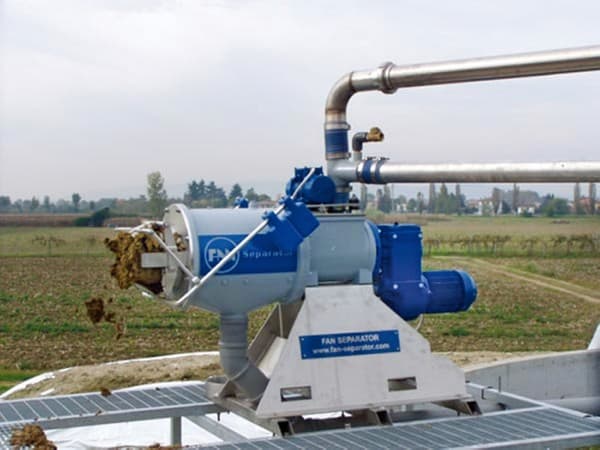
FAN PSS 3.3 Screw Press Separator
The FAN PSS 3.3 is a high-capacity screw press engineered for large barns and commercial manure management programs, delivering strong throughput and high dry solids capture that shortens payback periods on big operations. Its larger compression zone and integrated polymer dosing reduce operating costs per ton compared with smaller units like the PSS 2.2 and many compact competitors, while offering a higher initial capex than retrofit-oriented models such as the Daritech SP16.
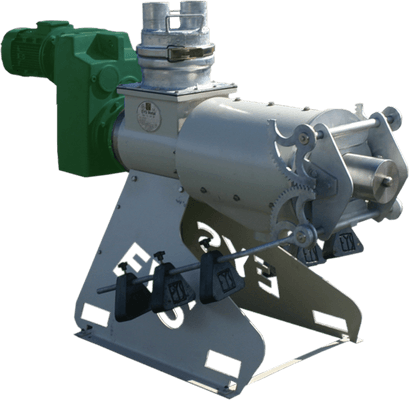
Daritech SP16 Screw Press
The Daritech SP16 is a compact, cost-conscious screw press widely used in North American dairy and livestock barns for straightforward solids separation and low-energy operation. It is designed for easy installation and minimal maintenance, making it financially attractive for small-to-medium farms compared with higher-capacity, higher-capex options like the FAN PSS 3.3 or McLanahan SP-180, although it typically yields slightly lower cake dryness at very high throughputs.
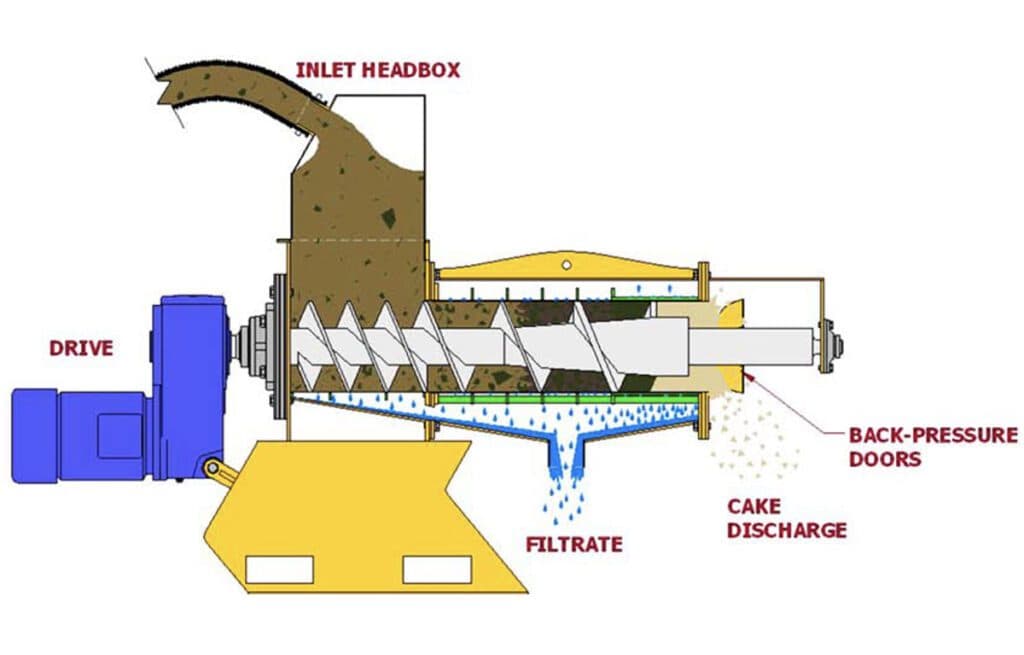
McLanahan SP-180 Screw Press
The McLanahan SP-180 is a heavy-duty screw press built for continuous, industrial-strength manure separation with proven reliability and long wear life, giving it an advantage on large farms and municipal-organic processing sites. While its upfront cost can be higher than compact designs such as the Daritech or Bauer S855, its robust construction and service network lower lifecycle costs through reduced downtime and longer intervals between part replacement, producing dryer cakes comparable to top-performing PSS models.
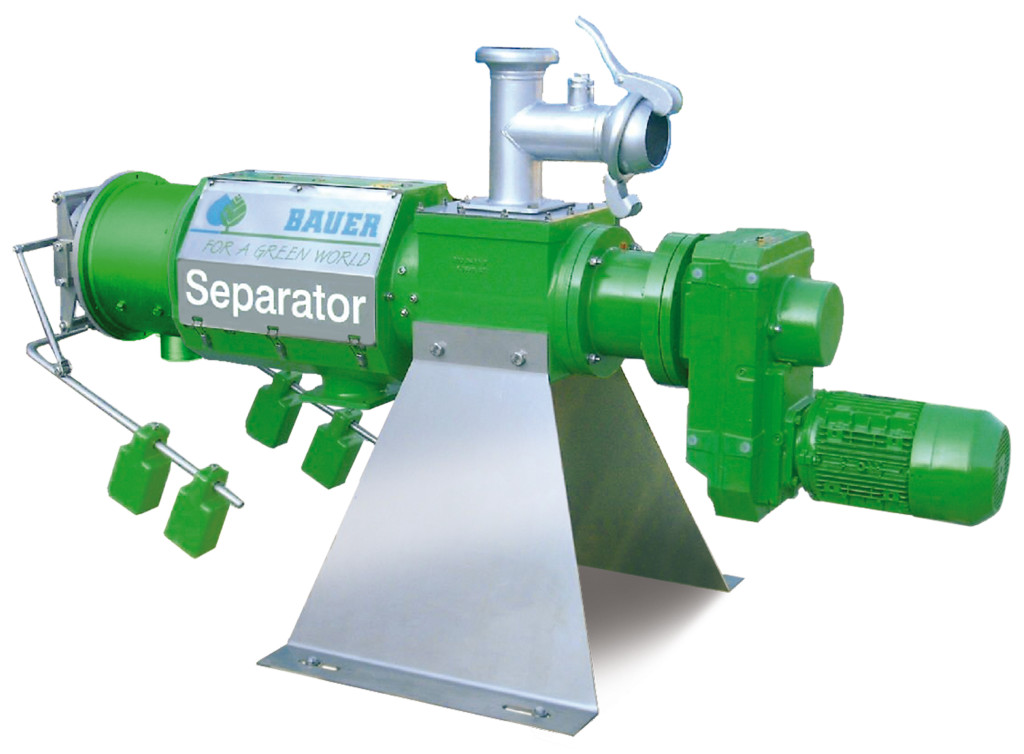
Bauer S855 Separator
The Bauer S855 offers a compact footprint and hygienic construction tailored to farms with limited space that still need effective solids separation and consistent cake quality. It typically has a competitive purchase price and balanced energy use, making it an appealing middle ground between lightweight presses like the SP16 and high-capacity machines like the PSS 3.3 or SP-180, especially where installation speed and lower site modification costs are priorities.
GEA FAN PSS 2.2 Screw Press
The GEA FAN PSS 2.2 is a smaller-capacity variant of the PSS line optimized for small-to-mid sized barns, combining the same proven compression-press technology as the 3.3 model with lower capital expenditure and reduced energy consumption. It delivers a strong solids-to-liquid separation performance for its size and is economically attractive for farms that want GEA-level engineering without the higher throughput and capex of the PSS 3.3, though it will not match large-unit throughput or throughput-driven payback periods.
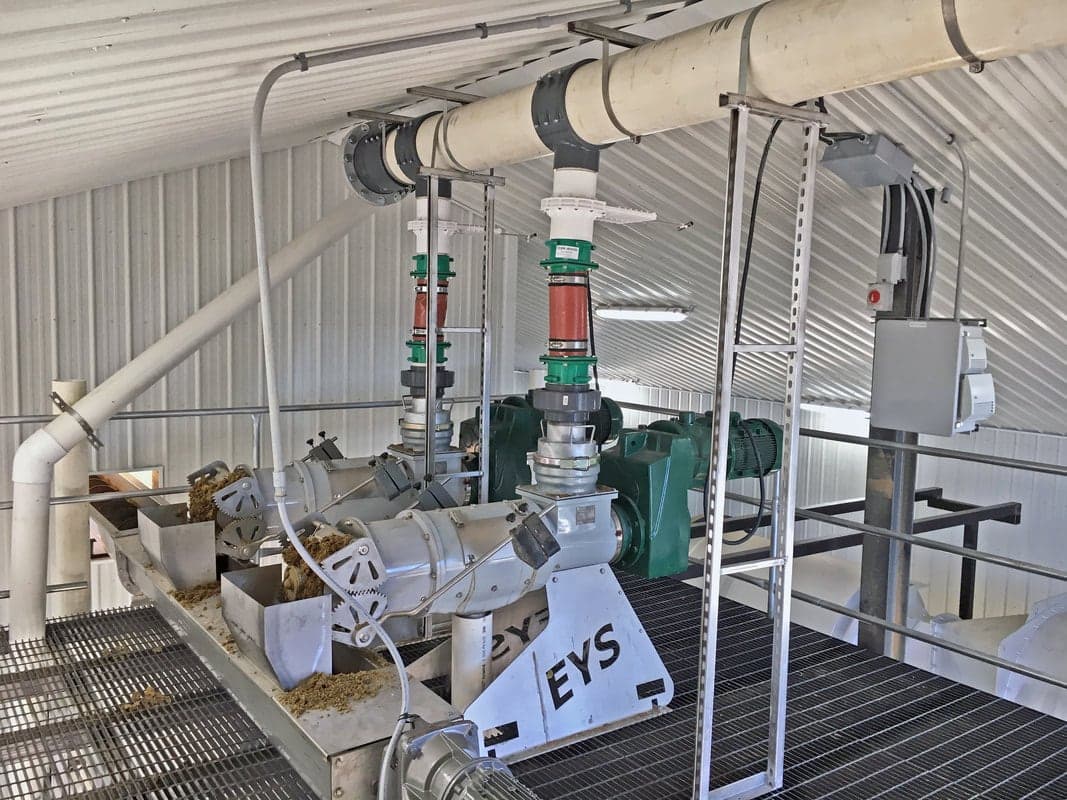
What the Research and Extension Literature Say
Extension agencies and peer-reviewed research consistently evaluate screw presses for their ability to increase solids concentration, reduce slurry volume, and improve downstream handling. Results vary by manure type, bedding content, and preconditioning, but general findings support screw presses as a practical mechanical separation option that balances capital cost and operational simplicity. Canadian extension bodies and university programs have published field reports and performance summaries that producers use to estimate expected solids capture, energy use, and nutrient distribution between liquid and solid fractions.
Typical solids concentration gains: Extension reports and field studies commonly show increases from low single-digit total solids in raw manure to double-digit total solids in the separated cake, often in the 15 percent to 30 percent total solids range depending on feedstock and press configuration.
Volume and transport savings: Multiple studies document meaningful reductions in storage and haul volumes after mechanical separation, which lowers fuel and labour costs and supports more efficient nutrient management.
Energy and operating trade-offs: Comparative assessments indicate screw presses generally use less energy than some high-pressure or thermal systems but produce a wetter cake than some belt or filter presses; overall life cycle energy and emissions outcomes depend on local transport distances and downstream uses.
Nutrient partitioning: Research shows phosphorus and organic matter tend to concentrate in the solid fraction, while nitrogen remains more soluble in the liquid fraction; this partitioning supports targeted nutrient management strategies and can reduce runoff risk if applied correctly.
Feedstock sensitivity: Peer-reviewed and extension data stress that bedding type and fibrous content strongly influence performance. Pre-screening, maceration, or addition of mechanical scrapers can improve throughput and cake dryness.
Canadian-relevant sources: Guidance and data summaries from Agriculture and Agri-Food Canada, provincial extension programs (for example Ontario and Alberta), and university research groups provide region-specific performance ranges and best-practice recommendations for cold-climate operations.
Frequently Asked Questions
Which screw press should I buy for big barns?
For large barns and commercial manure management, the FAN PSS 3.3 Screw Press Separator is the best fit, with a high-capacity, continuous design plus an integrated polymer dosing feature for strong throughput and high dry-solids capture.
What feature does the FAN PSS 3.3 include for polymer?
The FAN PSS 3.3 Screw Press Separator supports polymer dosing and includes an integrated polymer dosing feature, alongside adjustable cake dryness and robust stainless-steel construction.
Is the Daritech SP16 cheaper than the FAN PSS 3.3?
The provided data lists ratings only—Daritech SP16 is 4.1 and FAN PSS 3.3 is 4.4—so there’s no Canada price information to compare value directly.
Which screw press has the highest average rating?
McLanahan SP-180 Screw Press has the highest average rating at 4.5, and it’s described as a heavy-duty, continuous manure separation unit with a heavy-duty frame and drive components for high-capacity throughput.
Conclusion
In the Canadian context, screw presses remain a practical, cost-aware choice for barn manure solids separation as nutrient costs, regulation and sustainability goals push farms toward better on-farm processing. The five options profiled here — FAN PSS 3.3 Screw Press Separator, Daritech SP16 Screw Press, McLanahan SP-180 Screw Press, Bauer S855 Separator, and GEA FAN PSS 2.2 Screw Press — cover a range of capacities, service footprints and price points. For most Canadian barn applications seeking a balance of throughput, reliability and local support, the FAN PSS 3.3 Screw Press Separator stands out as the most balanced choice among these models. We hope you found the comparisons and guidance you were looking for; use the site search to refine by capacity, budget, or service region or expand your search to include accessories, pre-treatments and financing options.