

Top 7 Medical Rehabilitation Treadmills in Canada for 2025 — Clinical-Grade Gait Training & Rehab Solutions
Medical rehabilitation treadmills are specialized devices designed for clinical and therapeutic use, offering features such as precise speed control, very low starting speeds, safety rails, harness and body weight support systems, programmable training protocols, and medical-grade durability. These models support physical therapy, gait training, balance rehabilitation, and post-injury recovery by enabling clinicians to deliver repeatable, task-specific walking practice in a controlled environment. In Canada, purchasers — including hospitals, outpatient clinics, rehabilitation centers, and private therapists — prioritize devices with proven safety features, local service and warranty support, Health Canada compliance, and validated clinical outcomes. Patients and therapists value the combination of safety, adjustable assistance, and measurable progress tracking that these treadmills provide, while institutional buyers look for reliability, training resources, and integrations with gait analysis tools or electronic medical records.
Inception's AI took the time to understand this market in Canada · · How we pickWe may earn a commission on purchases. It never affects our rankings.
Top Picks Summary
The AlterG Anti-Gravity Treadmill M320 is the market-leading choice for body weight support treadmills because its patented differential air-pressure chamber provides exceptionally precise, repeatable unweighting and a sealed environment for gait training. Compared with harness-style systems like the Biodex Gait Trainer 3 or LiteGait LG500, the M320 delivers finer control and a stronger evidence base for clinical outcomes, though it commands a premium price—an investment often justified by reduced treatment times and strong manufacturer service and training.
Show More Body Weight Support Treadmills
Estimated$90,000 – $130,000
Gaitway 3D offers a turnkey, mid-market instrumented treadmill solution that bundles 3D analysis capabilities and force sensing into a compact package, making it attractive for clinics and smaller research groups. Compared with heavyweight research systems like Bertec or AMTI it aims to reduce installation and per-study costs while still providing clinically useful kinetics and kinematics, positioning it as a cost-effective alternative for routine gait analysis. Its balance of integrated software and hardware reduces setup complexity for users moving from clinical assessment toward more advanced analyses.
Show More Instrumented Gait Analysis Treadmills
Estimated$80,000 – $140,000
The Hydro Physio AquaJogg is designed as a compact, transportable underwater treadmill focused on gait retraining and lower-cost deployment for small clinics and community rehab centers; its lower purchase price and reduced installation complexity make it an economical alternative to larger systems. While it lacks some of the advanced monitoring and jet configurations of HydroWorx or SwimEx, it outperforms simple pool-based rehab by delivering controlled, repeatable treadmill therapy in facilities that cannot justify a full-size therapy pool.
Show More Underwater Rehabilitation Treadmills
The WOODWAY 4Front Medical holds a best-in-class position for bariatric rehabilitation because its proprietary slat-belt design and industrial-grade construction deliver exceptional durability, low-impact shock absorption and long-term service life—qualities clinics pay a premium for but that reduce lifecycle replacement costs. Compared with the other treadmills on this list it trades a higher upfront price for superior track longevity and stability under sustained heavy loads, making it ideal for programs that prioritize durability and low-maintenance operation for bariatric patients.
Show More Bariatric Rehabilitation Treadmills
The LiteGait LG300 Pediatric is best-in-class for pediatric rehabilitation because it pairs a child-specific dynamic body-weight support harness with a highly portable frame that enables early overground gait practice and hands-on therapist facilitation. Compared with larger, higher-cost anti-gravity systems it delivers similar functional gains at a lower capital and installation cost, and its ease of use and pediatric-focused harness make it especially efficient for clinics balancing throughput and ROI.
Show More Pediatric Rehabilitation Treadmills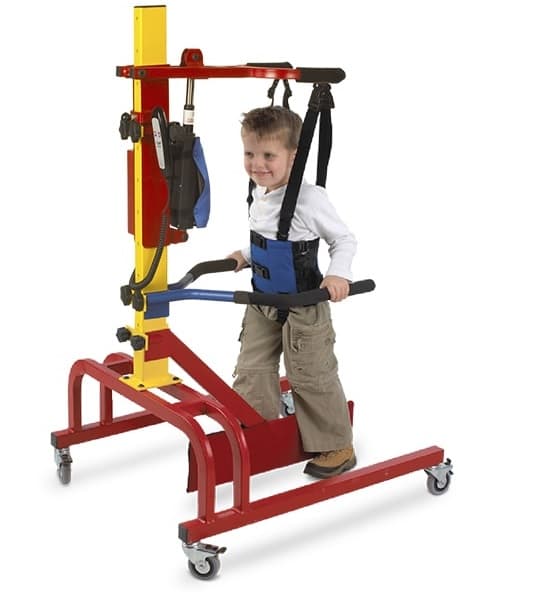
Estimated$40,000 – $60,000
The NxStep Unweighing System is a flexible, modular unweighting solution designed to convert existing treadmills into neurological rehab tools by providing reliable partial body-weight support without a full treadmill replacement. Its main advantage over dedicated devices on this list is financial flexibility: clinics can upgrade incrementally and achieve unweighting outcomes at a lower upfront cost while retaining compatibility with their preferred treadmill platforms. Technically it offers straightforward setup and adaptable harnessing that suits varied patient sizes and therapy goals.
Show More Neurological Rehabilitation Treadmills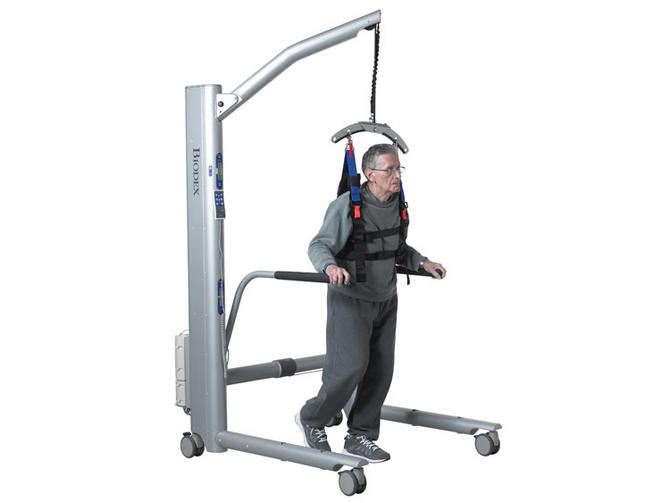
Estimated$45,000 – $75,000
The Biodex Gait Trainer 3 is a market-leading gait training device widely used for progressive overground and treadmill-assisted stepping with robust safety-rail integration and easy transfer options. It is technically optimized for staged gait retraining and typically sits at a mid-range price compared with the premium anti-gravity AlterG and the analytics-heavy TecnoBody, making it a practical choice for many clinics seeking specialized gait therapy without extreme capital expense.
Show More Treadmills With Safety Rails And Transfer Systems
Estimated$35,000 – $55,000
What the Research Says: Evidence-Based Benefits of Treadmill Rehabilitation
A substantial body of clinical research supports treadmill-based rehabilitation for improving walking function after neurologic injury, orthopedic surgery, and in age-related gait decline. Studies and systematic reviews show that task-specific treadmill training, often combined with body weight support or high-intensity protocols, can speed recovery of walking speed, endurance, and functional independence. Evidence also highlights the importance of training intensity, repetition, and early initiation in many patient groups. Many Canadian and international clinical guidelines encourage using treadmill and locomotor training as part of a comprehensive rehabilitation program, while noting that therapy should be individualized by trained clinicians.
Randomized controlled trials and meta-analyses report improved walking speed, distance, and functional mobility in post-stroke patients who receive treadmill-based gait training compared to usual care alone.
Body weight support systems allow earlier and safer gait practice by reducing load and fall risk; studies show this enables higher repetition and better motor learning during rehabilitation.
Intensity and task specificity matter: more frequent and higher-intensity treadmill sessions yield larger gains in gait speed and endurance than low-intensity or non-specific exercise.
Split-belt and variable-speed treadmills have demonstrated benefits for addressing asymmetric gait patterns and promoting neuromuscular adaptation in patients with unilateral weakness.
Treadmill training has positive outcomes in other populations too, including people with Parkinson disease, incomplete spinal cord injury, and deconditioned older adults, improving stride length, balance, and walking endurance.
Clinical guidelines, including Canadian stroke rehabilitation recommendations, emphasize incorporating repetitive, task-specific walking practice such as treadmill training into individualized therapy plans.
Frequently Asked Questions
Which treadmill should my clinic choose for gait training?
Choose the AlterG Anti-Gravity Treadmill M320 if you need precise, repeatable body-weight support for gait training; it uses differential air pressure to unload body weight in 1% increments and has an average rating of 4.6.
Does the AlterG M320 support precise unweighting control?
Yes—the AlterG Anti-Gravity Treadmill M320 unloads body weight using differential air pressure in 1% increments, with integrated data tracking and preset protocols for progressive rehabilitation; it has an average rating of 4.6.
How does the HydroWorx 2000 Series price compare for value?
The HydroWorx 2000 Series value can’t be compared here because no price is provided; it’s rated 4.7 and includes an adjustable-speed, adjustable-depth underwater treadmill with variable water jets and resistance settings.
Is the Motek GRAIL for VR-based neurorehabilitation protocols?
Yes—the Motek GRAIL is built for instrumented treadmill gait tasks with an immersive virtual-reality environment, split-belt programmable perturbations, and synchronized force/kinematic measurement; it has an average rating of 4.6.
Conclusion
In the Canadian context, choosing a medical rehabilitation treadmill means balancing clinical features, local service and warranty, Health Canada considerations, and the evidence base for patient outcomes. We hope this top-seven overview helped you identify suitable clinical-grade treadmills for 2026. If you need to narrow results by budget, clinical population, or features like body weight support or split-belt capability, use the search or filters to refine or expand your search.