

Top 5 Neurological Rehabilitation Treadmills in Canada for 2025 — Best Gait Trainers & Body-Weight Support Systems
Neurological rehabilitation treadmills are purpose-built treadmill systems for clinical gait retraining that combine programmable therapy protocols, synchronized feedback, and integrated body weight support to help patients recover mobility after stroke, spinal cord injury, Parkinson's disease and other neurological conditions. These systems are popular in Canadian hospitals, rehabilitation clinics and private practices because they enable high-repetition, task-specific training with objective progress tracking, reduce fall risk during early mobilization, and support incremental, measurable improvements in gait symmetry, speed and endurance. Consumers and clinical decision makers typically prioritize safety features, reliable unweighting or anti-gravity support, robust data capture for outcome measurement and billing, straightforward clinician controls, local service and warranty coverage in Canada, and a balance between clinical capability and footprint/cost that fits their program needs.
Inception's AI took the time to understand this market in Canada · · How we pickWe may earn a commission on purchases. It never affects our rankings.
Top Picks Summary
Biodex Gait Trainer 3
The Biodex Gait Trainer 3 is a best-in-class neurological rehabilitation treadmill known for its robust, clinician-focused gait analysis and programmable training protocols that accelerate recovery for stroke and spinal cord injury patients. It stands out versus the list for integrated objective outcome measures and multi-directional gait support, offering a balance of advanced functionality and long-term cost efficiency for busy clinics compared with higher-capital systems like AlterG. Its precise control and reporting make it particularly valuable where documentation and reproducible progression are critical.

Estimated$40,000 – $60,000
AlterG Anti-Gravity Treadmill M320
The AlterG M320 is the market leader in anti-gravity treadmill technology, delivering highly precise body-weight support via differential air pressure that enables early, high-quality gait training while minimizing joint load. Compared with mechanical unweighting systems in this list, AlterG provides unparalleled fine-grain weight adjustments and patient comfort, albeit at a higher capital price — an investment that many centers justify through faster patient throughput and reduced secondary injuries. For neurological rehab it is especially advantageous where gradual load progression and safe early ambulation are treatment priorities.

Estimated$95,000 – $140,000
Woodway LokoHelp
Woodway LokoHelp pairs WOODWAY's proven treadmill mechanics with gait-assist add-ons to create a heavy-duty platform tailored to neurological rehabilitation and intensive locomotor training. It competes strongly on durability and low-maintenance operation compared with lighter or more complex systems here, delivering excellent long-term value for high-volume facilities that prefer a stable, clinic-grade deck and modular support rather than expensive sealed chambers or full-body enclosures. Technically, its large belt and superior shock absorption reduce gait-altering vibrations, improving assessment fidelity.

NxStep Unweighing System
The NxStep Unweighing System is a flexible, modular unweighting solution designed to convert existing treadmills into neurological rehab tools by providing reliable partial body-weight support without a full treadmill replacement. Its main advantage over dedicated devices on this list is financial flexibility: clinics can upgrade incrementally and achieve unweighting outcomes at a lower upfront cost while retaining compatibility with their preferred treadmill platforms. Technically it offers straightforward setup and adaptable harnessing that suits varied patient sizes and therapy goals.
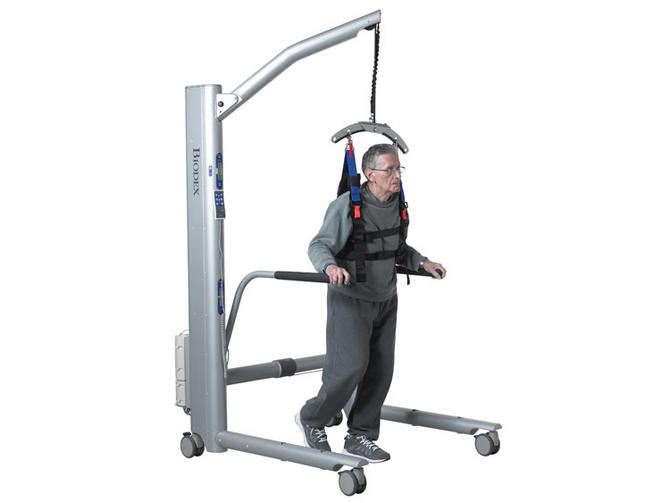
Estimated$45,000 – $75,000
LiteGait LG500
The LiteGait LG500 is a portable, ceiling-mounted gait training system optimized for pediatric and community rehabilitation settings where accessibility and caregiver ergonomics matter most. Compared with larger, fixed systems like AlterG or Biodex, LiteGait emphasizes mobility, quick install/remove operation, and a lower purchase price, making it an attractive option for outpatient clinics and home-visit programs. For neurological rehabilitation it delivers safe, hands-free support for early ambulation and functional task practice without the footprint or complexity of some market-leading units.
Why the Evidence Supports Neurological Rehabilitation Treadmills
A broad body of research supports using treadmill-based, task-specific gait training with body weight support or anti-gravity technology to enhance neuroplasticity and functional walking outcomes. Scientific reviews and randomized trials show that when treadmill systems are used as part of a structured rehabilitation program they can increase walking speed, stride length and endurance, reduce asymmetry, and accelerate safe early mobilization. Real-time feedback and objective metrics improve motor learning and help clinicians set measurable goals. While outcomes vary by diagnosis and intervention dose, the consensus across literature is that these devices are effective tools when combined with skilled therapeutic input and progressive, intensive practice.
Task-specific, high-repetition gait training supports neuroplastic changes that underlie motor relearning.
Body-weight support and anti-gravity systems allow higher step counts and earlier gait practice with lower fall risk.
Synchronized visual, auditory or haptic feedback enhances motor learning and gait symmetry.
Systematic reviews and randomized controlled trials report moderate improvements in walking speed and distance for stroke and incomplete spinal cord injury when treadmill training complements conventional therapy.
Objective metrics from treadmill systems aid goal-setting, documentation and reimbursement discussions in clinical practice.
Device selection in Canada is often influenced by local service, clinician training availability, and the ability to integrate with electronic health records or clinic workflows.
Frequently Asked Questions
Which treadmill should stroke patients choose for gait retraining?
Choose Biodex Gait Trainer 3 for stroke and spinal cord injury gait retraining, since it has clinician-focused gait analysis, programmable therapy protocols, and harness-based adjustable body-weight support with safety rails and therapist-accessible controls; rating 4.5.
Does AlterG M320 use air pressure for unweighting?
Yes—AlterG Anti-Gravity Treadmill M320 uses a differential air-pressure chamber for precise, graduated unweighting, with clinical-speed and incline controls plus programmable sessions; rating 4.6.
How does Biodex Gait Trainer 3 compare by price value?
Price isn’t provided for Biodex Gait Trainer 3 in the info given, so I can’t compare value by cost; it does list an average rating of 4.5 and harness-based adjustable body-weight support with programmable sessions.
Is Woodway LokoHelp suitable for neurological rehab clinics?
Woodway LokoHelp is designed for neurological rehabilitation and intensive locomotor training, pairing a low-impact slat-belt treadmill with an adjustable harness and body-weight support for smooth gait cycles; rating 4.3.
Conclusion
In Canada in 2025, clinics and clinicians choosing neurological rehabilitation treadmills can turn to leading options such as the Biodex Gait Trainer 3, AlterG Anti-Gravity Treadmill M320, Woodway LokoHelp, NxStep Unweighing System, and LiteGait LG500 to match program needs and budgets. Each of these models offers strengths—Biodex Gait Trainer 3 for focused gait training protocols, Woodway LokoHelp for proven clinical integration, NxStep Unweighing System for modular unweighting flexibility, and LiteGait LG500 for pediatric and community-rehab adaptability—but for most multidisciplinary programs seeking the best combination of versatility, progressive unweighting and clinical evidence, the AlterG Anti-Gravity Treadmill M320 stands out as the best overall choice. I hope you found what you were looking for; you can refine or expand your search using the site search to compare specifications, pricing and local Canadian suppliers or request demonstrations to confirm the right fit for your practice.